

Audio By Carbonatix
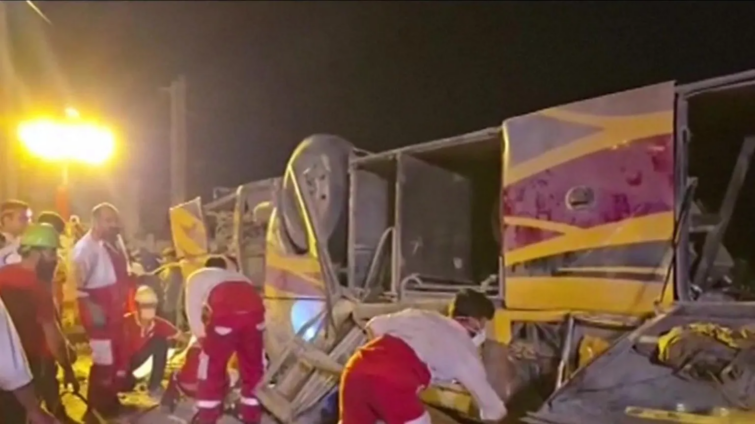
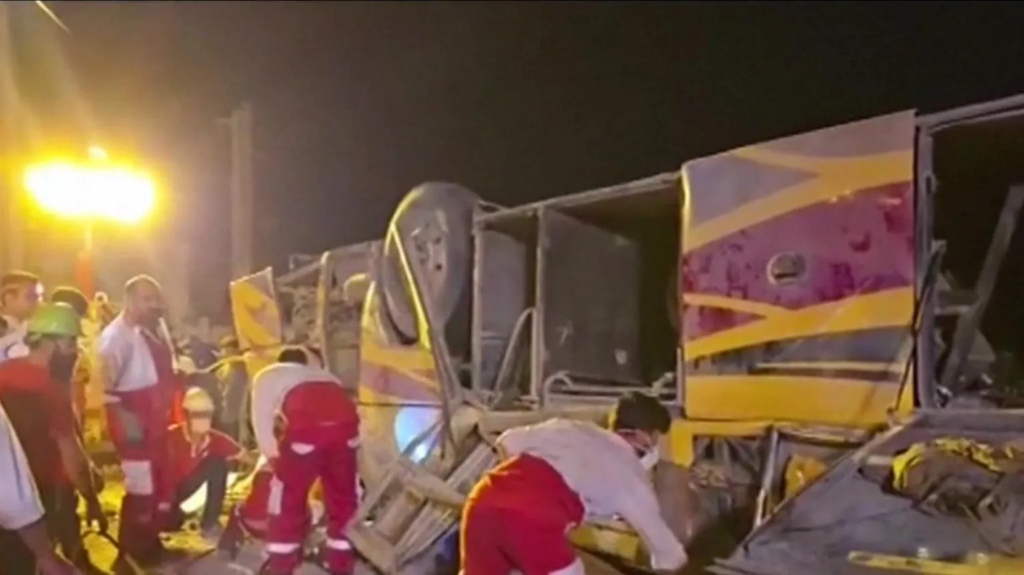
A bus carrying Pakistani pilgrims has overturned in Iran, killing at least 28 passengers, Iranian state media reports.
The crash happened on Tuesday night in the central Iranian province of Yazd and was due to a defective braking system, Reuters reported, citing a preliminary police investigation.
Another 23 passengers were injured, 14 of them critically, Pakistan's ambassador to Iran Muhammad Mudassir Tipu told the BBC.
The pilgrims were travelling from the Sindh province in Pakistan to Iraq's holy city of Karbala to commemorate one of the biggest events in the Shia calendar.
Around 50 people are believed to have been on the bus at the time of the crash, according to local media, including pilgrims from Larkana, Ghotki and cities in Sindh.
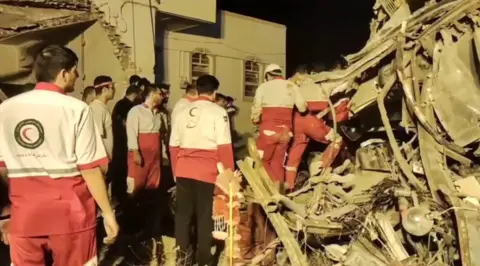
Eleven women and 17 men are among those who died in the crash, according to the crisis management director Ali Malekzadeh.
The bus caught fire in front of Dehshir-Taft checkpoint in Iran, around 681km (423 miles) south of the capital Tehran, according to reports by local media.
Mr Malekzadeh said the bus swerved off the road "due to lack of control by the driver of the vehicle, unfamiliarity with the road, high speed and technical problems".
"A bus carrying 51 Pakistani pilgrims overturned and caught fire in front of Dehshir-Taft checkpoint in the central province of Yazd on Tuesday night," Iranian state television reported.
Pakistan’s President Asif Ali Zardari said he was mobilising the foreign ministry to repatriate the bodies of those killed in the crash and provide aid to the injured.
Interior Minister Mohsin Naqvi, meanwhile, said: "We are deeply saddened by the loss of precious human lives in the bus accident in Iran."
Pakistan’s consulate in Iran has been asked to assist in recovery efforts. Mr Mudassir Tipusaid he was in touch with the Iranian government and local authorities in Yazd.
Iran is notorious for its poor traffic safety record, which is among one of the worst in the world.
The UN's road safety fund has an ongoing project looking into how Iran can improve its record.
The pilgrimage, known as Arbaeen (Arabic for the number 40), marks the end of a period of 40 days of mourning for Imam Hussein, the grandson of the Prophet Mohammed.
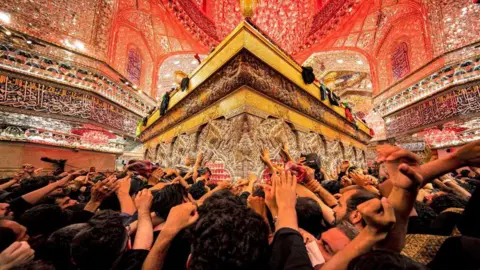
Iman Hussein died in the Battle of Karbala more than 1,000 years ago and this event still brings up feelings of deep sadness and grief to many believers.
Pilgrims from many parts of the world head to his tomb, which is concealed under a golden dome.
The ancient city of Karbala comes alive during the period, decorated with garlands of fairy lights, flowers and bunting.
Iraqis from Karbala pride themselves in hosting Arbaeen pilgrims - reflecting a tradition of hospitality.
During last year's pilgrimage, around 25 million people took part, making Arbaeen the largest annual pilgrimage on Earth.
By contrast, in the same year around 2.5 million pilgrims participated in the Hajj to Mecca.
Latest Stories
-
NPP leaders converge at party headquarters ahead of NEC meeting on polling station elections
1 minute -
Fuel prices may rise in Ghana despite global drops – Duncan Amoah
4 minutes -
‘No one is above the law’- Volta Chiefs condemn EOCO over handling of Council of State member case
6 minutes -
AMA creates alternative pedestrian routes at Kaneshie after footbridge closure
9 minutes -
Ghanaians were misled- NPP accuses NDC of politicising Anti-LGBTQ bill
10 minutes -
Photos: Mahama receives full state welcome in Paris ahead of talks with French President Macron
31 minutes -
Deputy Health Minister endorses Women in Medicine Fellowship
32 minutes -
Duncan Amoah pushes for Consumer Protection Bill amid VIP fare hike
44 minutes -
LMWG backs Damang lease award to E&P, demands transparency and results
49 minutes -
Volta Chiefs condemns EOCO over alleged disregard for court ruling in Council of State member case
50 minutes -
Matthew Perry’s stepmother says ‘Ketamine Queen’ should get maximum sentence
50 minutes -
Northern Regional Police Command intensifies anti-drug operations, arrests 217 suspects
51 minutes -
The architect of a healthier Ghana: Mahama’s vision and legacy in primary healthcare
53 minutes -
Israel carries out large wave of air strikes across Lebanon
59 minutes -
BBC upholds complaints over racial slur in Baftas broadcast
59 minutes