

Audio By Carbonatix
Cal Bank offered the cheapest lending rate of 15.97% in the banking industry, according to the Average Lending Rates of universal banks, published by the Bank of Ghana as of the end of July this year.
The listed bank per the figures from the Bank of Ghana offers lending rate lower than the regulator’s Reference Rate.
However, credit worthy clients will enjoy cost of credit lower than the 15.97%, but those considered as high risk will pay more interest for the loans acquired from the bank.
In 2nd place is Guaranty Trust Bank with an average cost of credit of 16.97%. Closely following GT Bank in third position is Bank of Africa with lending rate of 17.19%.
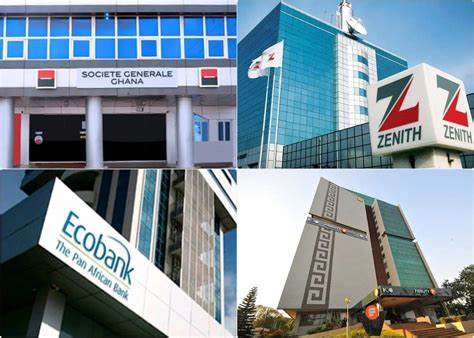
OmniBSIC and Ecobank Ghana were ranked 4th and 5th respectively with average lending rates of 17.95% and 18.41% respectively.
The Bank of Ghana’s policy rate presently stands at 14.5%. So these banks offered interest rates on loans of between 1.47 and 3.91 percentage points higher than the Central Bank’s base lending rate.
This means the spread between the policy rate and their average lending rates make reasonable sense. 14 out of the 23 banks offered lending rates of more than 20%.
Agricultural Development Bank rate of 24.89% was the highest in the banking industry.
It is followed by Societe Generale and Absa Bank with average lending rates of 23.61% and 23.59% respectively.
In conclusion, the Bank of Ghana said the publication of the rates is to help promote transparency in the pricing of loans by the universal banks.
Cost of loans fall further, as average lending rate pegged at 20.61% – BoG
Cost of loans continued to fall but marginally, as average lending rate stood at 20.61% per annum in June this year.
This was equivalent to 1.72% interest on loans per month.
However, the average lending rate varied among the banks and the respective sectors.
For instance, some banks offered loans as low as 17% per annum, whilst others charge rates as high as 27%. Overall, it depends on the risk profile of the customers.
Also, lending to the agriculture sector is considered riskier than the manufacturing sector, and therefore credit to the agriculture sector will be higher.
Latest Stories
-
A source of excellence across generations – Vice President Opoku-Agyemang lauds Mfantsipim
51 minutes -
(Photos) Mfantsipim School launches historic 150th anniversary
1 hour -
Knights and Ladies of Marshall group backs Catholic Bishops’ stance on anti-LGBTQ+
2 hours -
Bright Simons writes: All the Filla in the Ibrahim Mahama/E&P – Gold Fields Saga
3 hours -
Monetise Idiocy In Ghana
3 hours -
The Ghanaian prophet and the mysterious death of his scottish wife Charmain Speirs
3 hours -
Nearly 400 sentenced in Nigeria for links to militant Islamists
4 hours -
Ghana’s recovery supported by gold strength despite global oil price pressures – Standard Bank Research
4 hours -
Methodist Church hails Mfantsipim@150; calls for “fresh consecration” to excellence
4 hours -
‘Excellence is our inheritance’ – Nana Sam Brew-Butler hails Mfantsipim’s 150-year reign in leadership
4 hours -
Kwaku Azar writes: A-G vs OSP
4 hours -
Mfantsipim–Adisadel rivalry built excellence, not division – Sam Jonah
5 hours -
Vice President launches Mfantsipim’s 150 years of shaping Ghana’s greatest mind
5 hours -
I assure Otumfuo, Mahama will join him to commission KNUST Teaching Hospital by end of this year – Haruna Iddrisu
6 hours -
Barcelona dominate derby to extend La Liga lead
6 hours