

Audio By Carbonatix
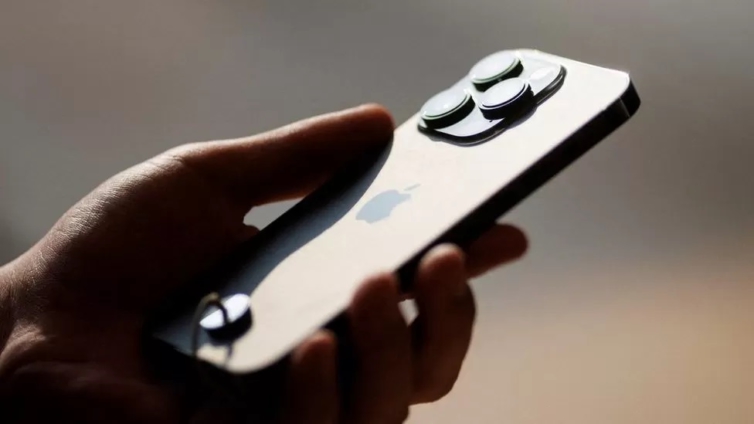
As I write this there are still several hours before Apple unveils the latest version of its best-selling product, the iPhone.
In the last few weeks we've seen the handset come under pressure separately from both the EU and China. Globally, smartphone sales in general are slowing, and Apple's highly anticipated virtual reality headset - which the firm seemed to be positioning as a potential future iPhone - won't go on sale until next year.
When it does it will have a whopping $3,500 (£2,780) price tag.
And so, in the meantime, we get to meet the 16th generation of a device which changed the smartphone landscape forever when it launched in 2007.
It may be, ahem, mature, but it still commands enormous interest today - there are already almost five billion Google search results for the phrase "iPhone 15", despite no official previews from Apple itself.
If you dive in and start reading the speculation and "leaks" buzzing around, you'll see that the iPhone 15 models are likely to be a little lighter than their predecessors, with an improved chip, better battery life, better camera and titanium chassis.
You may feel that I could have written something pretty similar this time last year, or the year before that. I probably did.
Apple handset generations, like most devices, tend to feature incremental improvements most of the time. It's one of the issues blamed for slowing sales worldwide. People are holding on to their devices longer - not only because they are expensive both financially and environmentally - but also because there's no longer the same burning justification to treat yourself to an upgrade.
"I think Apple probably realise they've reached a point where there's such a critical mass of iPhones that simply maintaining those volumes is a phenomenal achievement," Ben Wood, a smartphone expert at the analysts CCS Insight told me.
He agrees that while we probably won't see a radically different iPhone on stage at Apple's annual September event in the US this evening, what we will see is the theatre of a wealthy company well-versed in performing for its fan club.
Having said that, there is one physical development you won't have seen before, and if you're in Europe, you'll certainly notice it. The iPhone 15 will almost certainly have a USB-C charging cable point.
Currently iPhones rely on a proprietary lightning cable, while most other devices - including others made by Apple - tend to use USB-C. The crucial physical difference is that the two are different shapes. So if, for example, you have an iPhone and a Kindle, your iPhone charger won't fit in the port for your Kindle and vice versa.
Apple has long insisted that diversifying products always leads to greater innovation. It has also pushed wireless charging as an alternative for several years - all handsets since the iPhone 8 have been compatible.
Nonetheless, the EU has had enough, and declared that all portable devices need to be compatible with a universal charger by December 2024. And the rest of the consumer tech sector isn't about to convert to lightning, even if Apple were to allow it.
But you might be justified in adding that cable to your cable drawer (you know the one) rather than ditching it - Ben Wood says there's a booming market in second hand iPhones, especially in Africa.
"iPhones are getting into the hands of people who couldn't previously afford them… and it locks them into the Apple ecosystem," he said.
The EU isn't the only territory laying down the law. Last week China reportedly banned the iPhone from state-run buildings (as you can imagine, there are rather a lot of those) on security grounds.
This has less to do with the phone itself and more to do with the ongoing tech tussle between China and the US - but it caused Apple's share price to wobble. The majority of people in China use Android devices, but the iPhone is the best-selling premium (by which I mean top-dollar) handset.
It's additionally awkward for Apple because it still makes products there. It has been trying to move away - the iPhone 14 is assembled in India, for example - but it still needs Chinese-based companies and factories.
Apple still needs China then. But how much do the rest of us need - or want - the new iPhone? We're about to find out.
Latest Stories
-
Afenyo-Markin demands Interior Minister brief Parliament over security recruitment expansion
4 hours -
Felicia Boadu inspires gratitude with new song ‘Aseda’
4 hours -
Conflict of interest and the President’s use of a private jet: A constitutional perspective
4 hours -
Otto Addo names Black Stars squad for Austria and Germany friendlies
4 hours -
Rev. Stephen Wengam urges leaders to embrace ‘servant leadership’ to transform national institutions
4 hours -
Ghana Development Awards spotlight need for intentional socio-economic transformation
4 hours -
The Private Jet Debate: When generosity becomes an alleged “Scandal”
5 hours -
IGP Cyber Vetting arrests 20-year-old woman for false publication on social media
5 hours -
Overall government debt in sub-Saharan Africa stabilises but at high level – IMF
5 hours -
We will file an appeal against Freddie Blay’s remand – Lawyer
5 hours -
Tema crash: Safety record of microlight aircraft ‘very poor’ – Aviation expert
6 hours -
Only 5% of CHPS compound in Ghana are well tooled – Agotime Ziope MP
6 hours -
PwC Ghana , UGBS call on women to embrace collaboration and take up leadership roles
6 hours -
‘My mother cried out one last time’: Palestinian boy, 12, describes how Israeli forces killed his family in car
6 hours -
National Seed System Reset Programme launched at University of Ghana to boost 24-hour economy
6 hours