

Audio By Carbonatix
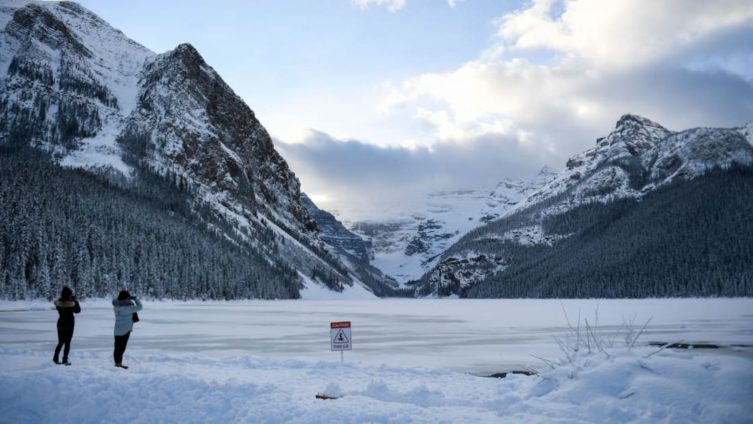
Canada was moved to the US Centers for Disease Control and Prevention's highest-risk category for travel on Monday.
The world's second-largest country by total area, Canada has seen a steep rise in cases as the Omicron variant spreads. The country recorded 294,437 new cases for the week ending January 8, according to Johns Hopkins University figures, its highest weekly total of the pandemic.
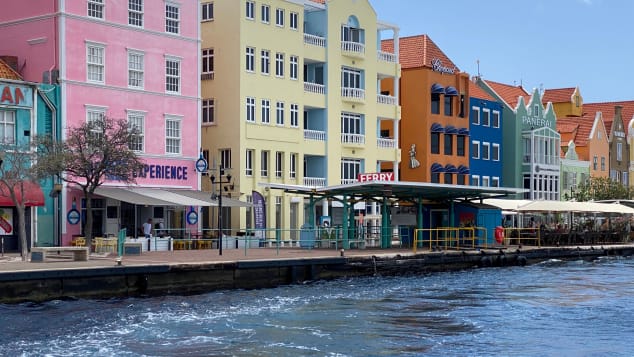
Canada was joined by one other destination -- the Caribbean island of Curaçao -- in moving up to the CDC's Level 4: Covid-19 Very High category on Monday.
The CDC places a destination at Level 4 when more than 500 cases per 100,000 residents are registered in the past 28 days. The CDC advises travelers to avoid travel to Level 4 countries.
Canada had previously been at Level 3 since August 30, 2021. Curaçao, a self-governing country within the Kingdom of the Netherlands, had been at Level 3 since November 22, 2021.
On December 15, Canada issued an advisory to its citizens asking that they avoid all nonessential international travel. Last week, a group of air travelers partying maskless en route to Mexico from Montreal earned a rebuke from Canadian Prime Minister Justin Trudeau.
Most international visitors to Canada are required to be vaccinated and to have a negative Covid-19 test result.
Daniel Slim/AFP via Getty Images
In addition to new entries Canada and Curaçao, some of the biggest travel names remain firmly lodged at the CDC's Level 4 for now:
• France
• Iceland
• Ireland
• Italy
• Netherlands
• Portugal
• South Africa
• Spain
• Switzerland
• United Kingdom
More than 80 destinations were rated Level 4 as of January 10. You can view the CDC's risk levels for global destinations on its travel recommendations page.
In its broader travel guidance, the CDC has recommended avoiding all international travel until you are fully vaccinated.
Cruising
Joe Raedle/Getty Images
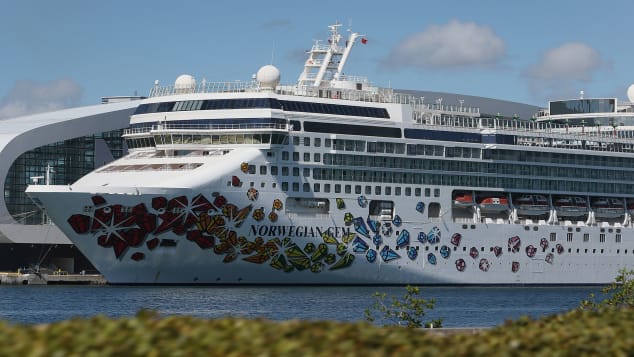
On December 30, the CDC increased the risk for cruise ship travel to Level 4 and said it should be avoided, regardless of vaccination status.Last week, two large cruise lines canceled upcoming sailings on numerous ships as Covid-related interruptions mounted.
Level 3 additions
The Level 3 category -- which applies to destinations that have had between 100 and 500 cases per 100,000 residents in the past 28 days -- saw 10 new additions on Monday from a variety of regions:
• Armenia
• Bahrain
• Belarus
• Cape Verde
• Ethiopia
• Lesotho
• Singapore
• United Arab Emirates
• Zambia
• Zimbabwe
The Level 3 designation was actually good news for Armenia and Belarus, which had previously been at Level 4.
It was also good news for Lesotho and Zimbabwe, two of eight southern African countries that landed at Level 4 at the end of November after the Omicron variant was discovered in the region.
The US travel ban affecting those countries was lifted on December 31.It was a move in the wrong direction for Bahrain, Cape Verde, Ethiopia and Zambia, which had been at Level 2.
The United Arab Emirates jumped up two risk levels from Level 1.And Singapore, which was listed as unknown last week because of a lack of information, moved into Level 3.
Level 2
Destinations carrying the "Level 2: Covid-19 Moderate" designation have seen 50 to 99 Covid-19 cases per 100,000 residents in the past 28 days.
That level saw eight new additions Monday, five of them in Africa:
• Democratic Republic of the Congo
• El Salvador
• Fiji
• Kuwait
• Liberia
• Rwanda
• São Tomé and Príncipe
• Togo
Level 1 and Unknown
In the category of "Level 1: Covid-19 Low" destinations, fewer than 50 new cases per 100,000 residents have been logged over the past 28 days. There were no updates to that category on Monday.
Finally, there are destinations for which the CDC has an "unknown" risk because of a lack of information. Usually, but not always, these are small, remote places. No new destinations were listed in the "unknown" category on Monday.
Considerations for travel
Transmission rates are important to consider when making travel decisions, but there are other factors to weigh as well, according Dr. Leana Wen, a CNN medical analyst, emergency physician and professor of health policy and management at the George Washington University Milken Institute School of Public Health.
"The transmission rates are one guidepost," Wen said. "Another is what precautions are required and followed in the place that you're going and then the third is what are you planning to do once you're there."
Are you planning to visit a lot of attractions and go to indoor bars? That's very different from you're going somewhere where you're planning to lie on the beach all day and not interact with anyone else. That's very different. Those are very different levels of risk.
"Vaccination is the most significant safety factor for travel since unvaccinated travelers are more likely to become ill and transmit Covid-19 to others, Wen said.
She said people should be wearing a high-quality mask -- N95, KN95 or KF94 -- anytime they're in crowded indoor settings with people of unknown vaccination status.
Before you travel, it's also important to consider what you would do if you end up testing positive away from home, Wen said. Where will you stay and how easy will it be to get a test to return home?
Latest Stories
-
Kwahu Business Forum 2026: Corporate citizenship, sustaining African businesses take centre stage with KGL as the case study
52 minutes -
Trump seeks $152m to reopen notorious Alcatraz prison
3 hours -
Ex-Chelsea player Oscar retires with heart issue
3 hours -
CA Foundation drives constitutional literacy in Kpone Katamanso municipality
3 hours -
GPRTU to hold talks with Transport Ministry over rising fuel costs
3 hours -
CUTS International urges gov’t to halt sachet water price hike pending cost review
3 hours -
Chief Justice: Efficient Judiciary essential to reducing business costs
3 hours -
Bayern grabs 99th-minute winner to cap superb fightback
3 hours -
Ahmed Ibrahim urges Ghanaians to reflect Easter values in nation-building
4 hours -
ECG inefficiencies undermining power supply -Mahama outlines reforms
4 hours -
Lewandowski scores as Barca fight back to defeat Atletico
4 hours -
Lack of private sector consultation undermining economic growth – Jerry Ahmed Shaib
4 hours -
Real Madrid seven points adrift after Muriqi’s late Mallorca winner
4 hours -
Ghana must lead AfCFTA implementation by example – Trade Minister Ofosu-Adjare
4 hours -
Strong Judiciary key to business confidence – Chief Justice Baffoe-Bonnie
4 hours