

Audio By Carbonatix
The Centers for Disease Control and Prevention is shortening the recommended quarantine period from 14 days after a person has been exposed to the coronavirus, offering two alternatives, the agency said Wednesday.
The first alternative is to end quarantine after 10 days if no symptoms are reported, Dr Henry Walke, the CDC’s Covid-19 incident manager, said on a call with reporters. The second option is to end quarantine after seven days if an individual tests negative and also reports no symptoms.
The decision is based on new research and modeling data, Walke said.
Shortening the length of quarantine "may make it easier for people to take this critical action, by reducing the economic hardship associated with a longer period, especially if they cannot work during that time," Walke said.
It's unclear how many Americans exposed to the virus have complied with the 14-day guidance since the pandemic began.
According to Walke, the CDC has heard "anecdotally from our partners in public health that many people are discontinuing quarantine ahead of time because there's pressure to go back to work, to get people back into school, and it imposes both a mental and possibly also physical burden on individuals."
A shorter quarantine period may also make individuals more likely to cooperate with contact tracers, he said.
Still, the shorter periods do come with a small risk that a person may be infected when he or she leaves quarantine. For the 10-day quarantine, the risk of being infected is about 1 per cent, Dr John Brooks, the CDC's chief medical officer for the Covid-19 response, said.
For the seven-day quarantine with a negative test, the risk is about 5 per cent.
Walke noted that a 14-day quarantine is still the best way to reduce the risk of spreading Covid-19.
The initial 14-day quarantine guidance was based on the incubation period for the virus, that is, the length of time it can take for a person to become infected after exposure.
Even with the shortened quarantine periods, people should monitor for symptoms for a full 14 days after exposure, the CDC advises.
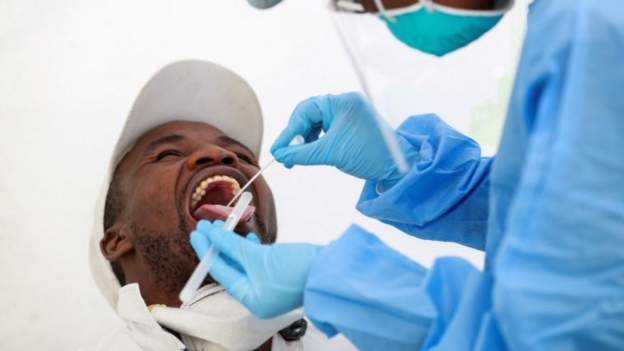
Either a PCR test or a rapid antigen test can be used to end quarantine after seven days. The test can be given anytime in the 48 hours before quarantine ends, Brooks said — meaning no earlier than day five of quarantine.
Even with a negative test on day five, however, a person still must complete the full seven days.
And if the test doesn't come back by the end of seven days, the person must quarantine until results come back, or until day 10.
The CDC also issued guidance for upcoming holiday travel, ultimately urging people to postpone travel if possible.
However, those who do choose to travel should get a coronavirus test one to three days before travel, then again three to five days after travel.
The testing after travel would be combined with a quarantine for seven days.
Latest Stories
-
Neglected traffic lights turn Awoshie–Anyaa highway into deadly hotspot
15 minutes -
EOCO declares Dr Gabriel Tanko Kwamigah-Atokple a fugitive over alleged gold fraud
26 minutes -
GSE records GH¢1.09bn trade in equity market; 10 stocks register gains
41 minutes -
Fuel prices: Ghana places 15th in Africa
47 minutes -
Africa must look inward: Reframing resilience in a shifting global economy
1 hour -
7 dead, 2 missing after boat capsizes on Volta Lake
1 hour -
Miss Diaspora Ghana 2026 launched to deepen diaspora ties and drive development
1 hour -
US issues travel warnings for Nigeria and São Tomé and Príncipe as security risks mount
2 hours -
Ivan Toney questions refereeing in Saudi Pro League title race after Al-Ahli draw
2 hours -
Angola appoint Aliou Cissé as new head coach
2 hours -
Virtual Security Africa showcases digital security vision at Kwahu Business Forum
2 hours -
EBID strengthens regional integration role amid global economic uncertainty
2 hours -
Two assault rifles, ammunition retrieved in Police probe of Tamale gang attack
3 hours -
EBID records strong financial growth with $722m disbursements in 2025 – President, Dr George Donkor
3 hours -
EBID to mobilise $2.69bn under new 2026–2030 growth strategy – Dr George Donkor
3 hours