

Audio By Carbonatix
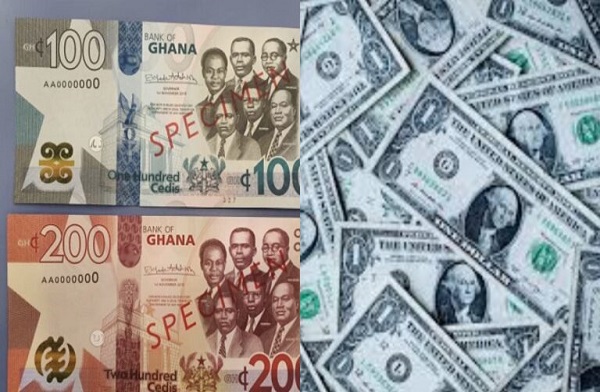
The Ghana cedi continued to gain more grounds against the US dollar today following an expected approval of a $3 billion Extended Credit Facility Arrangement for Ghana by the International Monetary Fund (IMF).
According to Bloomberg, the cedi has become the world’s best performer against the dollar over the past six months.
It has advanced 33% since November 2022, the biggest gain among about 150 currencies, reversing some significant losses.
Ghana’s dollar bonds have also delivered a strong performance too, providing investors with a return of almost 12%, more than the 3.6% average for emerging and frontier peers in a Bloomberg index.
The local currency has lost about 8.7 percent in value to the US dollar since the beginning of the year. This is far better than the interbank market.
Checks by Joy Business at the forex bureaus on May 17, 2023, indicate that the local currency is going ¢11.30 to the American greenback.
Cedi records relative stability since March 2023
Prior to Friday, May 12, 2023, the cedi recorded relative stability, trading around ¢11.7 and ¢11.9 to a dollar since late March 2023.
Investors were cautiously optimistic that Ghana would get the IMF deal approval during the second quarter, without ruling out a May 2023 approval per government's indications.
When Ghana obtained financing assurance from members of the G20 Common Framework, the market become buoyant with some investors willing to buy the dollars cheaply.
“Immediately on Friday [May 12, 2023], we saw that reflected in the Ghana cedi performance as the local currency gained 1.0% on Friday alone. The gains have continued into this week as the market expect the approval this week, roundly today, as communicated by government officials”, Economist Courage Martey, , told Joy Business.
“So, in sum, yes. The recent run appreciation of the Ghanaian cedi is due to the latest positive news effect from anticipated IMF programme approval”, he added.
Analysts worried about spread between buy-side and sell-side
Meanwhile, many analysts are worried about the spread between the buy-side and the sell-side.
“It appears the buy-side is falling faster than the sell-side and this is widening the spread. Essentially, traders want to buy the US dollar very cheap but are not willing to sell too cheap”, Mr. Martey pointed out.
“This means that the appreciation of the cedi is not yet supported by any strong improvement in economic fundamentals, but rather on sentiments and news effects”, he added.
Latest Stories
-
Ghana launches first maternal mental health policy
28 seconds -
Mahama issues three calls to action at One Health Summit
6 minutes -
KNUST secures $2.3m funding for research activities
10 minutes -
Ayigboe residents fear disaster as ECG delays repairs on live faulty cables
15 minutes -
PIAC urges investment as oil production falls
18 minutes -
Trump says US military to stay around Iran; threatens action if Tehran fails to comply with deal
1 hour -
Only 6% insured locally – Prof. Gyampo exposes cracks in import regime
1 hour -
Thousands of containers lost at sea – GSA’s Prof Gyampo warns importers are exposed to risk
2 hours -
Keep the money in Ghana – Gov’t enforces local cargo insurance
2 hours -
US Army veteran charged with leaking classified information to journalist
2 hours -
Dr Dre joins Forbes billionaires list as second-richest hip-hop artist with $1 billion fortune
2 hours -
Trump administration cannot nix legal status of 5,000 Ethiopians, US judge rules
2 hours -
Libya announces new oil and gas discoveries with three major energy companies
3 hours -
Oil rises as investors remain wary US-Iran ceasefire will open supply flow
3 hours -
Police arrest suspect over church threat video
5 hours