


Audio By Carbonatix
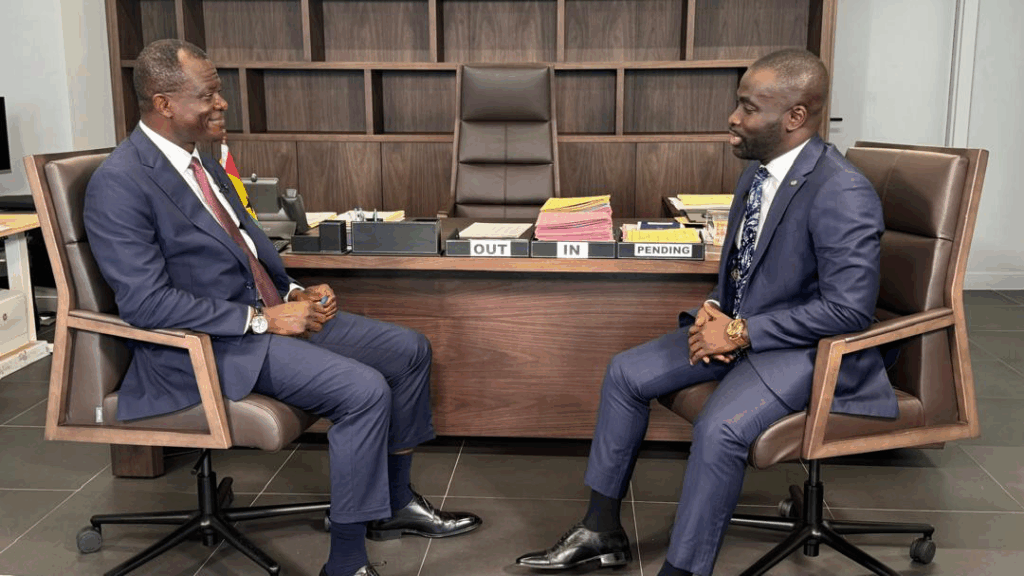
The First Deputy Governor of the Bank of Ghana (BoG), Dr. Zakari Mumuni, says the recent rally of the cedi is not due to artificial support by the central bank, but rather a result of strong, non-debt-creating reserves.
He said the central bank has found a strategic way of meeting market demand without drawing down its foreign exchange buffers.
“If we were that heavy in terms of support to the market, we would not be doing well with reserves,” Dr. Mumuni told host George Wiafe.
“But if there is one thing we’ve done well under the IMF programme, it is reserve accumulation.”
He described Ghana’s reserve performance as “very, very impressive.”
“Look at the IMF target—we have already achieved it. The target was three months of import cover. We’re now at 3.7 months using the IMF’s own metric,” he said.
“If you include petroleum funds, we’re even at 4.7 months.”
Dr. Mumuni dismissed claims that the central bank is depleting reserves to hold the cedi.
“Unfortunately, if this were the case, the market would have seen through it. Market players are very smart,” he said.
“They wouldn’t trust us, and the rally would be short-lived.”
He stressed that the current reserves are not based on debt or short-term inflows.
“These are organically accumulated reserves. At the end of April, we were above $10 billion. And we expect to hit $11 billion by the end of June,” he revealed. “This is way above what’s expected under the IMF programme. That’s what’s giving the market confidence.”
He noted that this level of reserve accumulation is not just a show of strength but a fundamental shift.
“This time is different,” he said.
The Deputy Governor insisted that the cedi rally is not just about reserves.
“You have the IMF Staff Level Agreement, which sent a strong signal to the world. You have inflation coming down from nearly 24% to 21.2%. You also have fiscal consolidation. Government borrowing is slowing,” he said.
He also pointed to aggressive liquidity management by the Bank of Ghana.
“We’ve sterilised three times the amount we did last year,” he said.
“That tells you we’re not flooding the market with cedi liquidity, but we’re still meeting forex demand.”
Dr. Mumuni described the central bank’s approach as balanced and effective.
“We are not intervening recklessly,” he said. “We’re supporting the market strategically while building buffers.”
He said the results speak for themselves.
“We are in a much stronger position today. And we’re determined to keep it that way.”
Latest Stories
-
Former ‘American Idol’ contestant sentenced to life without parole for wife’s murder
5 minutes -
Education Ministry commends Ghanaian teachers on World Teachers’ Day 2026
26 minutes -
NPP can reconcile with aggrieved members who want to return – Nana Akomea
38 minutes -
Tamale Child Deaths: Vehicle owner arrested as IGP deploys homicide team
54 minutes -
From ShattaFest to MoMo Fest: Entertainment takes centre stage in youth engagement
1 hour -
Nigerian military aircraft crashes, killing 32
1 hour -
MTN encourages Ghanaians to use MoMo for saving, investing and financial planning
1 hour -
Absa Bank Ghana names Stephen Ato Frimpong as Board Chair
1 hour -
Pickford ‘almost caused crash’ with careless driving
1 hour -
Author and former politician Jeffrey Archer dies aged 86
1 hour -
No education reform can succeed without teachers – Education Ministry
2 hours -
Gauff condemns racist abuse after China Open win
2 hours -
Medvedev disqualified for hitting spectator with ball
2 hours -
Oliseh scores twice in late comeback win for France
2 hours -
Pentagon stops using Anthropic AI tools after blacklisting company, BBC told
2 hours