

Audio By Carbonatix
The Chief Executive Officer of the Chamber of Bulk Oil Distributors (CBOD) has emphasised the need for government to rationalise the various levies on petroleum products.
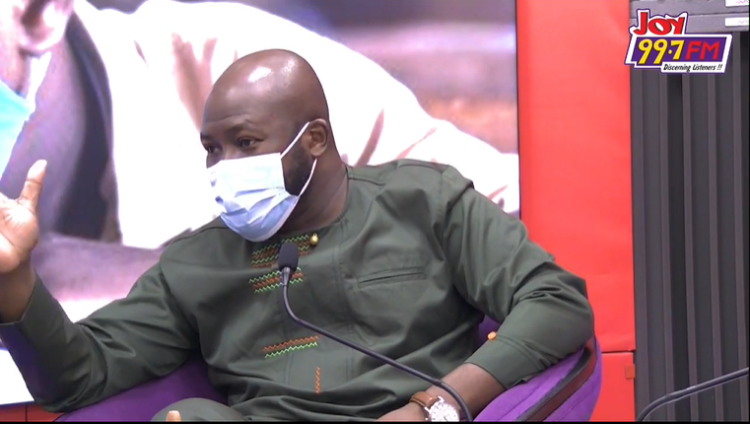
Speaking on the Super Morning Show on Tuesday, October 19, 2021, Senyo Hosi stressed that this has become necessary in order to stabilise fuel prices in the country.
"The Energy Sector Recovery Levy, Energy Debt Recovery Levy, Primary Distribution Levy, the Primary Distribution Margin, the Sanitation levy, all need to be rationalised," he said.
He explained that the Price Stabilisation and Recovery Levy, for instance, "has not been used for any stabilisation programme ever."
Also, "a fund like the Road fund should go down. When a fund like this is up, I don't see the strong sense for anyone to be paying tolls anywhere in this country. Road fund on prices and at the same time ask people to maintain the roads?" he questioned.
The comment comes on the back of the implementation of a 7% increment in fuel prices by the Oil Marketing Companies effective October 16, 2021 and the removal of Price Stabilisation and Recovery levy on fuel prices.
Following the announcement by the Oil Marketing Companies, there have been calls for government to intervene by scrapping levies imposed on petroleum products.
Mr Hosi who had earlier called for the BOST levy to be removed, said this needs to be done urgently.
He explained that the BOST margin was introduced for two reasons; maintenance and expansion of the network, "and we did that at the time because BOST was not a commercial entity."
"Today, BOST has transitioned. It is now trading, it is offering its facilities commercially to the public, etc. So the expansion of the facilities has to come from CAPEX funding which can only be justified by your revenue," he said.
Other measures he highlighted as part of ways to address the issue is for government to "optimise FX so that the cheap dollar coming from the Bank of Ghana does not go into the general market and can go into the oil sector and help minimize the impact on everybody."
In addition, he stated that instead of imposing sanitation taxes on fuel prices, government should consider introducing a polluter pay system to rake in revenue to manage sanitation in the country.
Latest Stories
-
Conflicts among care providers linked to maternal, neonatal deaths – Expert
2 hours -
GIS marks 10th TIME conference, champions improved teaching practices
2 hours -
BRICS Or Balance? What Ghana’s bid really means
2 hours -
GPRTU wants full TRAFFITECH-GH implementation to start in 2027
2 hours -
Mahama announces plans to import electric wheelchairs for PWDs
2 hours -
KGL U17 Colts 2026: Western beat Prempeh Elite Academy to set up final final with Greater Accra Region
3 hours -
Late Solanke strike salvages 10-man Spurs draw at Man United
3 hours -
Gender Ministry to monitor welfare of Nana Akua Addo’s children amid domestic violence case
3 hours -
Benedict Okyere Yeboah: Ghana’s football problem goes beyond sacking a coach
3 hours -
GPL 2026/27: Darkwah Wiafe’s winner sees All Blacks beat Kotoko
3 hours -
ITF World Tour : Patel Wins Boys’ Singles Final at J100 Accra
3 hours -
Ghana must pursue BRICS partnership if it brings economic benefits – Kpebu
4 hours -
Success and Wright Claims J100 Accra Girls’ Doubles Championship
4 hours -
ITF J100: America’s Wright wins J100 Accra Girls’ Singles Title
4 hours -
Expedition hopes to find aviator Amelia Earhart’s plane on remote island
4 hours