

Audio By Carbonatix
China may raise an additional 6 trillion yuan ($850 billion) from special treasury bonds over three years to stimulate a sagging economy, local media reported a figure that failed to revive sentiment in the country's stock market.
The Caixin Global report, which cited sources with knowledge of the matter, comes after Finance Minister Lan Foan on Saturday said Beijing will "significantly increase" debt, although the absence of details on the size and timing of the fiscal measures disappointed some investors.
The size of the expected fiscal package has been the subject of intense speculation in financial markets. Chinese shares hit two-year-highs earlier this month on news of the stimulus, before retreating in the absence of official details.
On Tuesday, stocks dipped about 0.3%, suggesting little excitement among investors about the reported amount, although analysts say it would at least stabilise growth in the near term.
"This is in line with our expectations," said Xing Zhaopeng, ANZ's senior China strategist. "For next year, we still think a growth target of around 5% is likely to be maintained. So, for a 5% growth rate, that should be enough."
Reuters reported last month that China planned to issue special sovereign bonds worth about 2 trillion yuan ($285 billion) this year as part of fresh fiscal stimulus.
Data in recent months, including Monday's trade and new lending figures for September, missed expectations, raising concern that China may not reach this year's roughly 5% growth target and will struggle to fend off deflationary pressures.
In late September, authorities unleashed monetary stimulus and property sector support measures. Soon after, a meeting of top Communist Party leaders, the Politburo, vowed the "necessary spending" to bring growth back on track.
"The probability of reaching a growth rate of about 5% at least in 2024 and 2025 would increase a lot," Bruce Pang, chief China economist at Jones Lang LaSalle, said of the impact of the reported 6 trillion figure.
The Caixin article published late on Monday said the funds would be partly used to help local governments resolve their off-the-books debts, according to the sources. The reported amount is equivalent to nearly 5% of China's economic output.
The International Monetary Fund estimates central government debt at 24% of economic output. But the fund calculates overall public debt, including that of local governments, at about $16 trillion, or 116% of GDP.
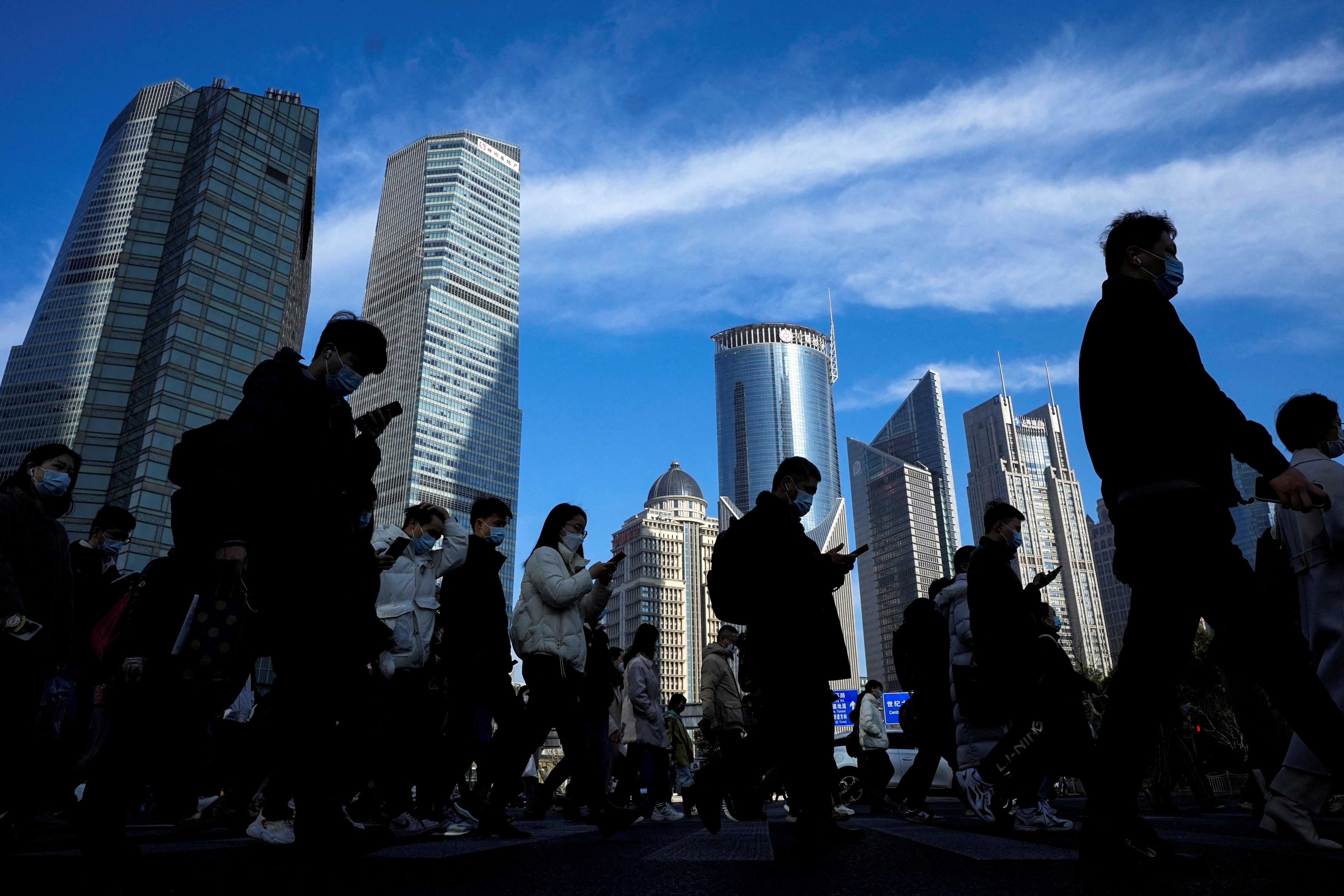
"Unless the central government voluntarily increases leverage, the investment will remain weak, as local governments are saddled with heavy debt and corporate balance sheets are being eroded by a weak economy," said Xia Haojie, a bond analyst at Guosen Futures.
'CHALLENGING TASK'
A severe downturn in the property sector since 2021 has shrunk local government revenues, as a large portion of their income had relied on auctioning land to real estate developers.
The property crisis has weighed on consumer and business activity, exposing China's overreliance on external markets and government-led, debt-driven investment in infrastructure and manufacturing.
Low wages, high youth unemployment and a feeble social safety net mean China's household spending is less than 40% of annual economic output, some 20 percentage points below the global average. Investment, by comparison, is 20 points above.
As a result, China contributes much more to the global economy as a producer than it does as a consumer, which has sparked trade tensions with the United States, Europe and a number of emerging markets. U.S. presidential candidate Donald Trump has called for 60% tariffs on all Chinese goods if he wins next month's election.
These imbalances are fanning concerns over China's long-term growth potential irrespective of the near-term fiscal impulse.
"Consistently hitting 5% over the next few years will still be a challenging task, especially if China faces a less supportive external demand situation," said Lynn Song, ING's greater China chief economist.
The finance ministry said the looming fiscal stimulus would provide subsidies to low-income households, support indebted local governments and the property market and replenish state banks' capital.
The remaining details are expected to emerge at a meeting of the Standing Committee of the National People’s Congress, the top legislative body, likely to be called in the coming weeks.
Latest Stories
-
Friends of Bridget Bonnie Marks her 35th birthday with donation to Kasseh Model Health Centre
33 minutes -
Landfilling waste management creates no value, it’s an economic waste
60 minutes -
Photos: Speaker Bagbin Commissions MPs constituency office under parliamentary decentralisation programme
1 hour -
Black Stars technical advisor Winfried Schäfer sacked as GFA shakes up backroom staff
1 hour -
Wenchi water project almost complete, critical to gov’t agenda – GWL MD
2 hours -
Anti-LGBTQ+ bill not part of government’s legislative agenda – Inusah Fuseini
2 hours -
Anti-LGBTQ Bill: Forget the rumour mongers, I’m a man of action, and will pass the bill – Speaker
2 hours -
Women and children among those killed in Sudanese army shelling of wedding celebration
2 hours -
President Mahama is not sincere with Ghanaians on LGBTQ bill matter – Hassan Tampuli
3 hours -
Gov’t to establish Prison Industrial Hub to equip inmates with income-generating skills – Prison Service boss
3 hours -
Alhassan Tampuli donates cement, roofing sheets to support storm victims in Gushegu
3 hours -
Alhassan Tampuli appeals for urgent support for storm victims in Gushegu
3 hours -
The hypocrisy must stop; pass Anti-LGBTQ+ Bill now – Alhassan Tampuli to Mahama
3 hours -
Imprisonment should be rehabilitative, not punitive – Ghana Prisons boss at UNGA
4 hours -
Ga Adangbe traditional priests petition Mahama over McDan aviation licence revocation
4 hours