

Audio By Carbonatix
China has tightened export controls on rare earths and other materials critical for advanced tech manufacturing as trade negotiations continue with the US.
It processes around 90% of the world's rare earths, which go into everything from solar panels to smartphones - a key bargaining chip ahead of an expected meeting between Chinese leader Xi Jinping and his US counterpart Donald Trump this month.
Beijing had already restricted processing technology and unauthorised overseas co-operation, but Thursday's announcement formalised the rules.
Foreign companies now need the Chinese government's approval to export products with even small amounts of rare earths and must explain their intended use.
The ministry announced similar restrictions on the export of lithium batteries and some forms of graphite, which are also essential components in the global tech supply chain and largely produced in China.
Beijing said the regulations are intended to "safeguard national security". One of the main targets of these controls appears to be overseas defence manufacturers, including those in the US, who rely on rare earths from China.
China had added several rare earths and related material to its export control list in April, as the trade war with Washington ramped up, which caused a major global shortage.
But the new announcement makes clear that licenses are unlikely to be issued to arms manufacturers and certain companies in the chip industry.
Even the technology used to mine and process rare earths, or to make magnets from rare earths, can only be exported with permission from the government, the Commerce Ministry said.
Chinese firms are also banned from working with foreign companies on rare earths without government permission.
The latest announcement also clarifies the specific technologies and processes that are restricted.
These include mining, smelting and separation, magnetic material manufacturing, and recycling rare earths from other resources.
The assembly, debugging, maintenance, repair, and upgrading of production equipment are also prohibited from export without permission, the announcement added.
This could have a major impact in the US, which has a significant rare earths mining industry but lacks processing facilities.
The new regulations create Beijing's version of US rules which block countries from selling chip-making equipment to China.
The US has used those measures to slow China's development of powerful chips that could be used for artificial intelligence (AI) with military applications.
Trade expert Alex Capri believes China's new regulations "are specifically timed" ahead of Xi and Trump's expected meeting later this month.
Beijing has targeted key vulnerabilities in US electronics and weapons manufacturing, mirroring America's earlier moves against China's chip industry, he added.
What are rare earths?
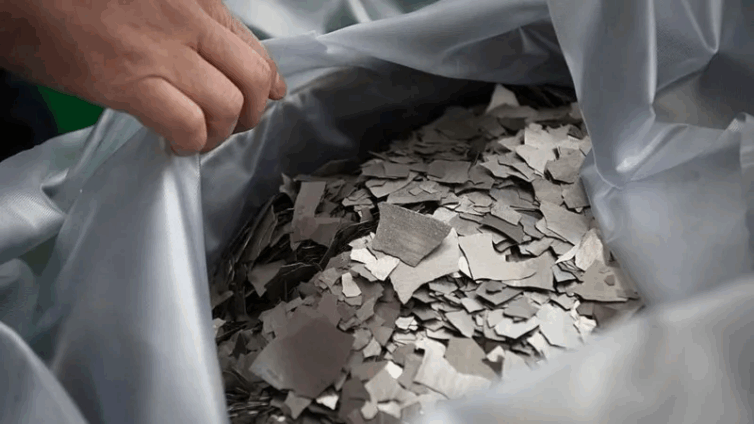
Rare earths are a group of 17 chemically similar elements that are crucial to the manufacture of many high-tech products.
Most are abundant in nature, but they are known as "rare" because it is very unusual to find them in a pure form, and they are very hazardous to extract.
Although you may not be familiar with the names of these rare earths - like neodymium, yttrium and europium - you will be very familiar with the products that they are used in.
For instance, neodymium is used to make the powerful magnets used in loudspeakers, computer hard drives, electric car motors and jet engines that enable them to be smaller and more efficient.
China has a near monopoly on extracting rare earths as well as on refining them - which is the process of separating them from other minerals.
The International Energy Agency (IEA) estimates that China accounts for about 61% of rare earth production and 92% of their processing.
Latest Stories
-
Prudential Life settles GH¢100,000 medical bills under its PRUCares Valentine Experience Initiative
2 hours -
Wa West Picnic: Peter Lanchene Toobu champions peace, health and unity in landmark celebration
2 hours -
Dr Mensah Market flooded after downpour in Kumasi
2 hours -
Armed men reportedly storm Adjen Kotoku Onion Market amid tensions
3 hours -
Tecco Mensah writes: Why football fans must look beyond statistics
4 hours -
Police recover stolen Honda CR-V in Kumasi within 48 hours
4 hours -
Apetorku Gbodzi 2026 Festival opens in Dagbamete with development focus
4 hours -
President Mahama arrives in Lyon to co-chair One Health Summit
4 hours -
Beverly View Plus Hotel draws crowds amid coastal Easter rush in Volta
4 hours -
Maiden Zongo Festival held in Wa amid calls to tackle drug abuse among the youth
5 hours -
FDA warns of fake HIV test kits on Ghanaian market
5 hours -
Africa urged to build resilient health systems as donor support tightens
5 hours -
Easter gesture: Ablakwa settles medical bills for 85 North Tongu constituents
7 hours -
Africa must harness its population strength—Titus-Glover
7 hours -
Visa-free access doesn’t mean unlimited stay – Lom Ahlijah
7 hours