

Audio By Carbonatix
Fati Mahami, the Tema Sub-Regional Director of the Commission on Human Rights and Administrative Justice (CHRAJ), has expressed concern over the slow pace of implementing the Disability Act of 2006, nearly two decades after its passage.
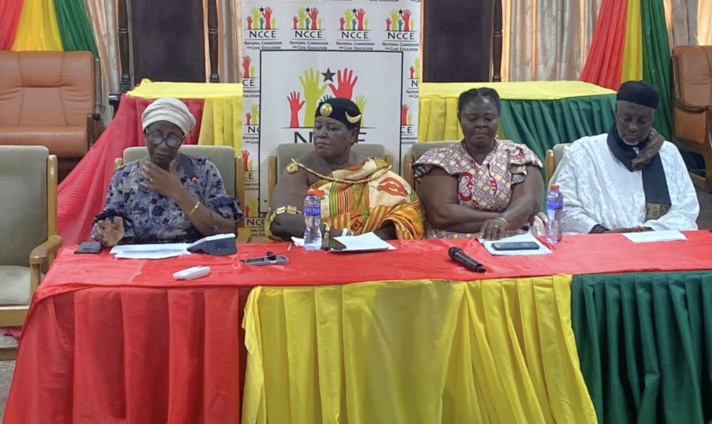
Mrs Mahami, speaking at a Social Audit meeting organised by the Tema Metro Office of the National Commission on Civic Education (NCCE), highlighted the persistent barriers facing Persons with Disabilities (PWDs) in accessing public infrastructure.
She noted that despite the law requiring building owners to redesign structures for accessibility, many institutions, including the very offices meant to protect rights, remained inaccessible.
“This law has been in operation since 2006, yet property owners haven’t redesigned their buildings. If a person with a disability comes with a complaint of a rights violation but cannot access a third-floor office, it is an affront to their dignity. We shouldn’t expect people to be carried; they must have independent access,” she stated.
Discussing the broader scope of public accountability, Mrs Mahami explained that the mandate of CHRAJ extended beyond anti-corruption to include administrative justice.
She said that it allowed the commission to intervene when public officers take arbitrary decisions regarding salaries, pensions, or dismissals without following due process.
She cautioned public officials against the temptation of personal interest, citing the case of a former Public Procurement Authority (PPA) boss who was investigated and barred from office for awarding contracts to his own companies.
“You don’t give state contracts to your own company; that is a clear conflict of interest. Public officers must be guided by Chapter 24 of the Constitution, which demands fair procedures and the regular declaration of assets to ensure transparency,” she added.
Mrs Mahami also touched on the protection of vulnerable groups, specifically mentioning the rights of widows who faced property dispossession and children whose right to life is sometimes threatened by the religious beliefs of their parents.
She remembered a landmark case where CHRAJ intervened to save a child’s life by authorising a blood transfusion that had been denied by a religious sect.
“Where your right begins or ends is where someone else’s right begins. We must be mindful not to put others at risk in the name of practising our religion or culture,” she cautioned.
She urged the public to utilise the various avenues for redress, including CHRAJ, Social Welfare, and Legal Aid, emphasising that the Commission remained committed to its three-fold mandate of promoting human rights, ensuring administrative justice, and fighting corruption.
Latest Stories
-
Financial Institutions must back local enterprises to spur growth – Deputy Minority Whip
3 minutes -
Photos: Gomoa Easter Carnival 2026 ends in a burst of colour and celebration
24 minutes -
Gomoa Easter carnival ends in colour as fashion, music and celebrity appearances light up final night
25 minutes -
Families pick Luv Fm Family Party to celebrate Easter Monday with music and more
52 minutes -
Legal and procurement red flags in Ghana Gas insurance change — IMANI
1 hour -
Kaneshie footbridge rehabilitation to take up to 9 months — AMA
1 hour -
AMA confirms trading will be banned on Kaneshie footbridge after rehabilitation
1 hour -
IMANI flags procurement concerns in state insurance placements
1 hour -
Mahama’s push for visa-free Africa reflects Nkrumah’s Pan-African vision – Rashid Tanko-Computer
2 hours -
Redefining sweetness: Why our celebrations must heal, not harm
2 hours -
IMANI urges Mahama to reaffirm his 2014 directive on competitive state insurance placements
2 hours -
Maiden Katon Praise comes off at Accra Sports Stadium on April 17
2 hours -
Families flock to Luv FM Easter party at Rattray park in Kumasi
2 hours -
Rural health worker laments overwhelming burden at CHPS compounds
3 hours -
Katon Meet to stream Accra stadium Katon Praise Concert worldwide
3 hours