


Audio By Carbonatix
A new UN report says the world needs to rapidly raise investment in early warning systems for extreme weather events.
Over the past 50 years, recorded disasters have increased five-fold, thanks in part to climate change.
The study warns that one in three people on Earth are not adequately covered by warning systems.
The numbers of people in need after natural disasters could increase by 50% over the next decade.
The State of Climate Services 2020 has been produced by experts from 16 international agencies and financial institutions, and co-ordinated by the World Meteorological Organization (WMO).
Over the past 50 years, it says, some 11,000 disasters involving weather, climate and water-related hazards have occurred claiming two million lives and causing more than $3.5 trillion in economic losses.
In 2018, around 108 million people sought help from international agencies to cope with natural disasters.
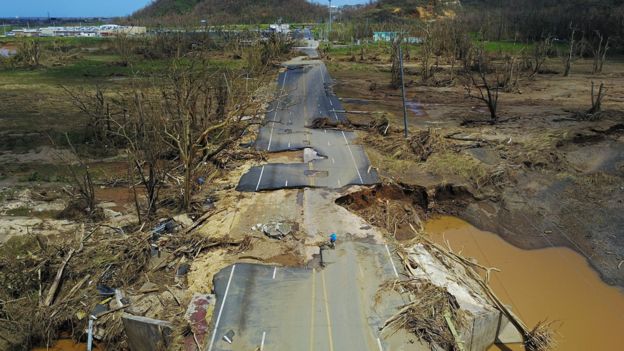
The authors of the new report say that by 2030 this number could increase by 50% at a cost of around $20bn a year.
Effective early warning systems are key says the study - And the researchers who have compiled it are calling for a change in emphasis from simply forecasting what the weather will be, to showing the impact of that weather system.
Good quality warning systems are critically needed in the least developed countries and in small island states.
These countries have lost billions to weather and climate related disasters over the past five decades.
Around 70% of the deaths connected to these disasters occurred in the poorest nations.
Yet according to the WMO, just 26% of weather observation networks in Africa meet their standards.
The advent of the coronavirus has made the building of early warning systems more difficult the report says.
But it shouldn't distract from the need to help poorer people to cope with natural disasters, made worse by climate change.
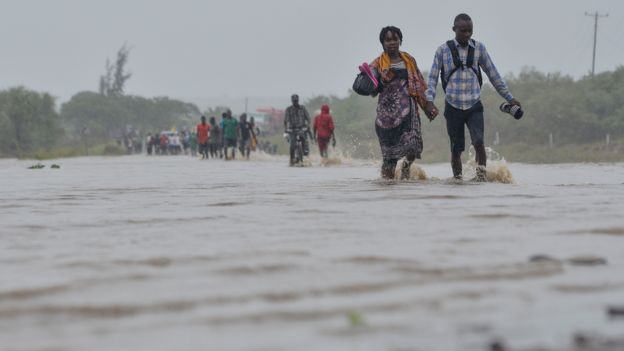
"Being prepared and able to react at the right time, in the right place, can save many lives and protect the livelihoods of communities everywhere," said WMO Secretary-General Prof Petteri Taalas.
"While Covid-19 generated a large international health and economic crisis from which it will take years to recover, it is crucial to remember that climate change will continue to pose an on-going and increasing threat to human lives, ecosystems, economies and societies for centuries to come," he said.
The report outlines six recommendations that the authors say are critical:
- Invest to fill the early warning systems capacity gaps, particularly in Africa's least developed countries and in small island states.
- Focus investment on turning early warning information into early action.
- Ensure sustainable financing of the global observing system that underpins early warnings.
- Track finance flows to improve understanding of where these resources are being allocated in relation to early warning system implementation needs and what impact this is having.
- Develop more consistency in monitoring and evaluation to better determine early warning systems effectiveness.
- Fill the data gaps, particularly in small island developing states.
"Covid-19 has made risk everybody's business," said Mami Mizutori, who is the special representative of the UN secretary-general for disaster risk reduction.
"We need to carry this understanding and momentum into the much bigger fight for our planet against the larger, stronger, more devastating climate emergency."
The report has been released on the International Day for Disaster Risk Reduction.
Latest Stories
-
“Pay this, pay that, and the patient dies” – Former UGMC boss demands end to cash-and-carry in emergency care
28 minutes -
Free Primary Healthcare: Gov’t floods clinics with 24,500 medical tools ahead of April 15 launch
40 minutes -
Agyarko bolsters NPP chairmanship bid with Henry Quartey and Osei-Owusu as campaign leads
1 hour -
Sky-high spectacle as 2026 Kwahu Easter Paragliding Festival takes flight
2 hours -
Asiedu Nketia supports AshantiFest 2026 art initiative with GH¢50,000
2 hours -
Former UGMC boss recounts ‘up and down’ hospital nightmare resulting in niece’s death
2 hours -
Artemis II crew take ‘spectacular’ image of Earth
3 hours -
Afenyo-Markin slams school feeding contractors for snubbing local rice farmers
3 hours -
This Saturday on Newsfile: Galamsey taxes, sole-sourcing probes, the Black Stars and presidential dialogue post-mortem
4 hours -
Guardiola wants Rodri to stay but says unhappy stars can go
5 hours -
[Playback] Gomoa Easter Carnival: Samini, Kofi Nti, and others deliver electrifying performances
5 hours -
US warns its citizens to leave Lebanon citing escalating security risks
7 hours -
Rapper Gucci Mane kidnapped and robbed by fellow artist, prosecutors say
8 hours -
Adom Kwahu Easter: Jerry Justice, Kwame Eugene win LaVonce all-male cooking contest
8 hours -
Ghana’s youth don’t need inspiration rhetoric, they need jobs – Chief of Staff
8 hours