

Audio By Carbonatix
Dr Peter Boamah Otokunor, Director of Presidential Initiatives in Agriculture and Agribusiness at the Office of the President, says frustrations among Ghana’s cocoa farmers did not begin with the recent reduction in producer prices, but stem from years of stagnant farmgate prices despite rising global cocoa values.
The Director of Presidential Initiatives in Agriculture and Agribusiness at the Office of the President said the cocoa pricing regime experienced very little growth for several years under the previous administration.
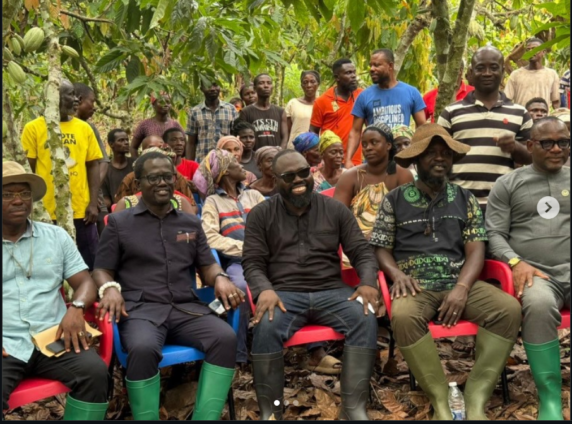
He made the remarks in an interview with JoyNews’ Gemma Appiah after completing a series of engagements with cocoa farmers in the Western Region.
According to him, concerns about pricing have been a recurring issue in farming communities, particularly because the producer price remained unchanged for several years.
“In 2017 to 2020, not a single cedi was added to the farmer’s producer price,” Dr Otokunor said.
He noted that although prices began to increase from 2020 onwards, the adjustments were inconsistent and did not adequately reflect global market conditions.
The engagements formed part of the Mahama administration’s efforts to explain recent pricing decisions and outline broader reforms for Ghana’s cocoa sector.
During a community meeting in Jejeti in the Atiwa East District, Dr. Otokunor also alleged that funds meant to support the education of cocoa farmers’ children had been diverted under the previous administration.
According to him, resources from the cocoa sector that were intended to support farming communities were instead used for road construction in areas that were not major cocoa-growing zones.
His comments come amid heightened debate over the state of the cocoa industry following the government’s decision in February 2026 to reduce the producer price from GH¢3,625 to GH¢2,587 per 64kg bag.
The Mahama government says the decision was driven by a sharp drop in international cocoa prices.
Global prices, which peaked at over $12,000 per tonne in late 2024, have since declined significantly to about $3,772 per tonne by early 2026.
Dr Otokunor has defended the price reduction as unavoidable, arguing that Ghana must align its producer price with developments on the international market.
Ghana’s cocoa sector supports about 800,000 farm families and remains one of the country’s most important sources of foreign exchange, generating roughly $2 billion annually.
Government officials say ongoing engagements across cocoa-growing regions are intended to address farmers’ concerns while building support for reforms aimed at stabilising the industry.
Latest Stories
-
Gender Ministry holds staff durbar, welcomes new Chief Director
4 minutes -
Unexpected illness sparked my radio career – Tommy Annan-Forson
6 minutes -
Bolt Ghana awards GH¢50,000 to women entrepreneurs through “She Moves to Win” campaign
9 minutes -
NRGI Country Manager questions speed of ministerial approval in Damang mining deal
17 minutes -
Publish the assessment — NRGI demands transparency in Damang mining deal award to E&P
33 minutes -
Tamale: Alhaji Hussein Fuzak funds construction of 3-storey classroom block at Ambariya Islamic School
60 minutes -
Gender Ministry holds staff durbar, welcomes new Chief Director
1 hour -
Anti-LGBTQ+: Mahama prioritises sentiments of development partners over Ghanaian values – Ntim Fordjour
1 hour -
CPA intensifies crackdown on fake diapers across public hospitals
1 hour -
Deputy Defence Minister urges failed GAF applicants to check medical disqualification reasons
1 hour -
Video: President Mahama’s speech at One Health Summit
2 hours -
Constitution review must protect Ghanaians values, not advance LGBTQ agenda — Haruna Mohammed
2 hours -
Foreign Affairs Ministry advises Ghanaians to take recommended vaccinations before traveling to Senegal
2 hours -
If you have fixed the economy, why hide behind basic needs to delay Anti-LGBTQ+ Bill? – Ntim Fordjour to Mahama
2 hours -
NACOC Central Regional Command partners with NSRA on drug awareness campaign
3 hours