

Audio By Carbonatix
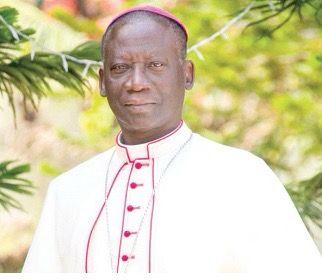
In a keynote address at the opening ceremony of the 2023 Plenary Assembly, Most Rev. Matthew Kwasi Gyamfi, President of the Ghana Catholic Bishops’ Conference (GCBC), expressed deep concern over the significant decline in the Catholic population in Ghana.
Addressing the audience at the Sunyani Diocese, President Gyamfi revealed alarming statistics, stating that the Catholic population in Ghana has dwindled from 15.1% in 2000 to a mere 10.1% in 2021.
The trend, he noted, has led to a loss of approximately 230,000 members within the last decade, emphasizing the urgency for collaborative efforts to reverse this decline.
The President traced the historical trajectory of Catholicism in Ghana, highlighting a consistent increase in the Catholic population until the 2000 census.
The subsequent decline to 13.1% in 2010 and the further drop to 10.1% in 2021 prompted the selection of the theme for the Plenary Assembly: "Fostering the Growth of the Catholic Church in Ghana through Collaborative Ministry."
Expressing the collective concern of the Church, President Gyamfi stressed the importance of addressing this disturbing trend.
He reminded attendees of the Church's mission to baptize and teach in all nations, towns, cities, villages, homes, and families, urging a united front in collaborative ministry to reignite growth.
After the sobering statistics presented by the President of the Ghana Catholic Bishops’ Conference (GCBC), he further provided during additional insights on potential causes and proposed solutions to the decline in Ghana’s Catholic population.
Church Research and Data: Concerns were raised about the reliance on decennial state-led censuses, prompting a call for the establishment of a research department at the National Catholic Secretariat. The proposal emphasises the importance of compiling and monitoring church data more frequently to address challenges in a timely manner. Reflecting on past guidelines, the bishops are urged to prioritize specific research to inform decisions and proposals for implementation.
Catechesis: The need for an aggressive catechesis initiative emerged as a key recommendation to deepen the knowledge of the lay faithful about their faith. Emphasising the importance of practical catechesis, the suggestion to adopt the Catechism of the Catholic Church (YouthCat) as a basic handbook for instructions aims to foster true conversion of heart and mind among the faithful. The call also highlights the urgency to educate the faithful about the dangers of the so-called Prosperity Gospel.
Diocesan Pastoral Plans: Recognising the absence of carefully plotted diocesan plans as a hindrance to church growth, the proposal calls for the development and implementation of short, medium and long-term Diocesan Pastoral Plans. These plans would target evangelisation efforts, aiming to strengthen and promote primary evangelisation in various jurisdictions and ultimately contribute to a national vision for the Church.
Youth Formation and Children Ministry: Identifying youth exodus as a critical threat, the need for well-structured catechetical and formation programs for youth and children is emphasized. The call extends to better resource chaplaincy units in both Catholic and non-Catholic educational institutions, ensuring trained and competent chaplains to support the spiritual needs of the youth.
Liturgical Celebrations and Evangelisation: Pope Francis's observation that liturgical celebrations should evangelize serves as a reminder to continuously encourage priests to plan and celebrate vibrant liturgies. The call is to avoid copying Pentecostal and Charismatic styles but rather focus on well-prepared and celebrated liturgies that effectively bring the faithful closer to God and each other.
Urbanisation and Catholic Population: Acknowledging the impact of rapid urbanization on the decline of the Catholic population, the proposal urges a careful study of the reasons behind the Church's struggle to retain members in urban centres. The need for dynamic pastoral approaches, including the concept of Small Christian Communities (SCCs), is emphasised to address the spiritual and other needs of Catholics in urban areas.
Media and Catholic Population: Highlighting the role of media in evangelization, the concern is raised about the inadequate presence of Catholic content. Urging heavy investment in traditional and social media, the call emphasises the need for the Church to make its voice heard in the public space. A specific plea for support for the Lumen Christ TV Project underscores the urgency of this task.
Latest Stories
-
‘We’ve become quite experienced in negativity’ – Liverpool’s Slot
14 minutes -
Legendary manager Lucescu dies days after resigning
34 minutes -
One dead as train travelling 99mph collides with lorry in France
44 minutes -
Airlines cut flights and hike fares as fuel prices surge
1 hour -
Kane inspires Bayern to first-leg advantage over Real Madrid at Bernabéu
1 hour -
Wireless Festival cancelled after Kanye West blocked from coming to UK
1 hour -
Wa West MP commissions five boreholes for the benefit of his constituents
1 hour -
Havertz’s late strike hands Arsenal narrow first-leg advantage over Sporting
1 hour -
Damang mine award: Minority not against Ghanaian participation; we’re asking for fair process – Konadu
2 hours -
NPA to enforce stricter registration rules for petroleum tankers
2 hours -
Manhyia South MP laments decline in hospitality operations in his constituency
2 hours -
How a simple clean charcoal innovation could benefit Ghana’s climate future
2 hours -
NPA, COMAC launch Safety Week 2026 to promote risk management in petroleum sector
2 hours -
Stakeholder engagement resolves onion trade impasse
3 hours -
Gender Ministry holds staff durbar, welcomes new Chief Director
3 hours