

Audio By Carbonatix
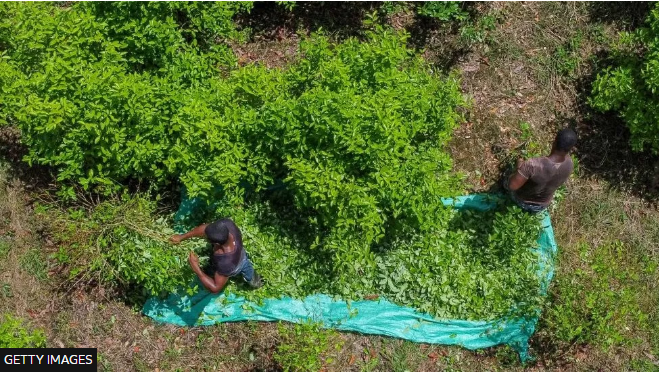
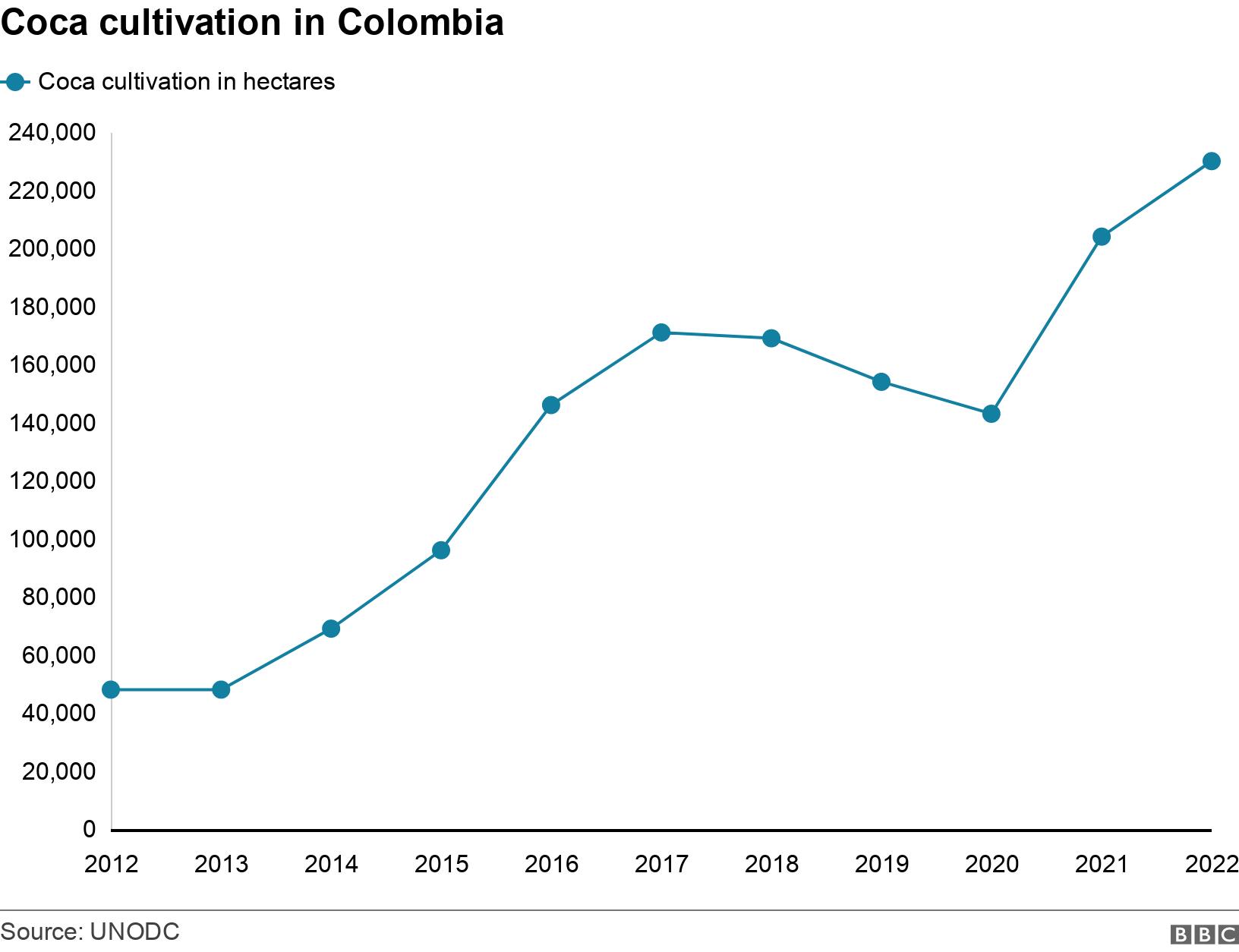
The area planted with coca bushes in Colombia reached a record high last year, an annual UN report says.
The United Nations Office on Drugs and Crime (UNODC) said that potential coca production had risen by 24% since 2021.
Coca leaves are the key ingredient in cocaine and Colombia has long been the top producer of the illegal drug.
The area planted with coca bushes rose by 13%, and the biggest increase was recorded in Colombia's border areas.
Almost two-thirds of the coca crops are found in the provinces of Nariño and Putumayo, which border Ecuador, and in Norte de Santander, on the Venezuelan border.
There has been a 77% rise in in coca cultivation in Putumayo, which shares a border with Peru and Ecuador.
Candice Welsch, UNODC's regional director, said that it was "worrying that each year there is an increase in coca crops in the country".
Colombian Justice Minister Néstor Osuna said that his country was "flattening the curve" and that the rate of increase was much lower than in 2021.
The UNODC's Leonardo Correa however warned that there had been a sharp rise in potential coca production in 2022.
"The crops that were young last year have now reached maturity and are now productive. In other words, the rate of growth in hectares is decreasing. But the rate of cocaine production is increasing," he said.
Both the size of the area planted with coca in Colombia and the potential coca production are at their highest since the UN began monitoring in 2001.
Colombia is the top coca cultivator in the world, producing 60% of the world's cocaine, followed by Peru and Bolivia.
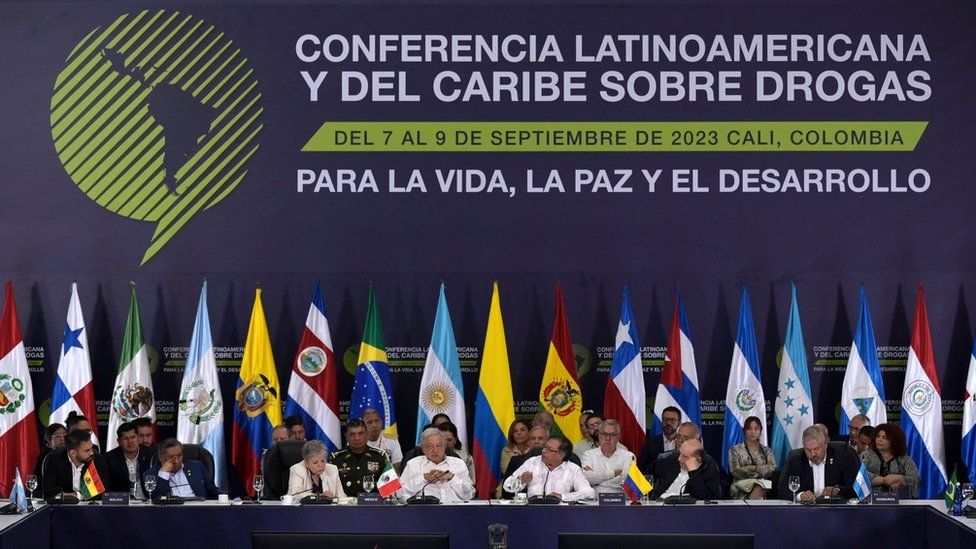
President Gustavo Petro on Saturday appealed to his regional counterparts to turn away from a militarised approach to fighting drug use and instead see it as a public health issue.
"It is time to rebuild hope and not repeat the bloody and ferocious wars, the ill-named 'war on drugs', viewing drugs as a military problem and not as a health problem for society," he said at the Latin American and Caribbean Conference on Drugs in Cali.
His Mexican counterpart, Andrés Manuel López Obrador said it was key to "fight first and foremost against poverty and inequality, and to offer work and good salaries".
He said growers needed to be convinced "to switch from sowing marijuana, poppies and coca to planting beans, corn, cocoa and fruit trees".
Mexico is the base for some of the most powerful transnational drug cartels that control trafficking routes from South America to the United States and Europe.
It also produces large amounts of heroin, cannabis, methamphetamine and synthetic opioids such as fentanyl.
Latest Stories
-
Mussa Dankwah is like a ‘lotto doctor’ – Miracles Aboagye
2 minutes -
Investors target Ho Airport for training and maintenance hub — GACL Chair
7 minutes -
NDC’s ‘grand deception’ on anti-LGBTQ+ bill exposed – Ntim Fordjour
8 minutes -
Speak out against Mahama government’s LGBTQI+ u-turn – Ntim Fordjour to clergy
12 minutes -
Ghanaians worse off despite improved macroeconomic indicators — Miracles Aboagye
16 minutes -
Police intercept narcotics, arrests five suspects in Upper West
21 minutes -
Government to establish Kumasi Machinery Innovation Park under 24-Hour Economy programme
24 minutes -
When Hormuz Fails: The day a waterway stops the world
25 minutes -
Ghanaian students in UK to protest over unpaid fees, stipends
25 minutes -
Inflation to go up marginally in April 2026 – Report
27 minutes -
Newborn baby found abandoned at Kronkromase cemetery, residents in shock
28 minutes -
VIP Jeoun Transport increases fares effective April 8
31 minutes -
Minority warns against alleged LGBTQ provisions in constitutional review
36 minutes -
Wave of violence kills at least 26 in Nigeria as army thwarts mass church abduction
54 minutes -
Anti-LGBTQ+: Mahama must be held to account to fulfil his promise – Ntim Fordjour
55 minutes