

Audio By Carbonatix
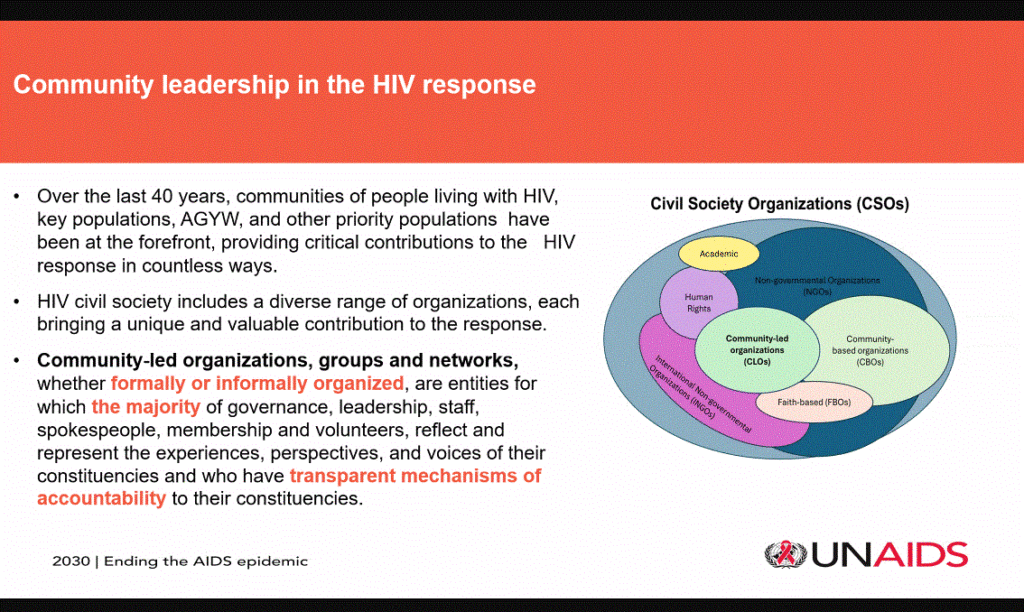
In a continued effort to reshape the global response to HIV, a focus group discussion on ensuring community leadership in Africa’s HIV response has emphasised the critical role of local communities in shaping the future of the epidemic.
The discussion, which centered on the Global HIV Strategy for 2026-2031, aimed to develop a framework and pave the way for an inclusive and sustainable approach that puts local communities at the heart of the fight against HIV.
Among the Civil societies Organisations in this discussion, were members of Réseau des Médias Africains pour la Promotion de la Santé et de l'Environnement (REMAPSEN), from across over 30 countries in West and Central Africa.
Christoforos Mallouris, Senior Adviser for Equality and Rights for All at UNAIDS Regional Support Team for Eastern and Southern Africa, presented a comprehensive vision for the new HIV strategy.
According to him, the strategy needs to serve as a multi-faceted guide: an evidence-driven framework for governments, an advocacy tool for civil society, and a blueprint for donors.
He emphasised the importance of a strategy that speaks to the needs of all stakeholders involved, from policymakers to grassroots organisations.
He highlighted the need for a forward-thinking strategy that learns from the last 40 years of HIV response while remaining flexible enough to meet the challenges of the next decade.
"We must use the lessons from the past, but we cannot be stuck on them," he said, stressing the importance of innovation and adaptability in the face of limited resources.
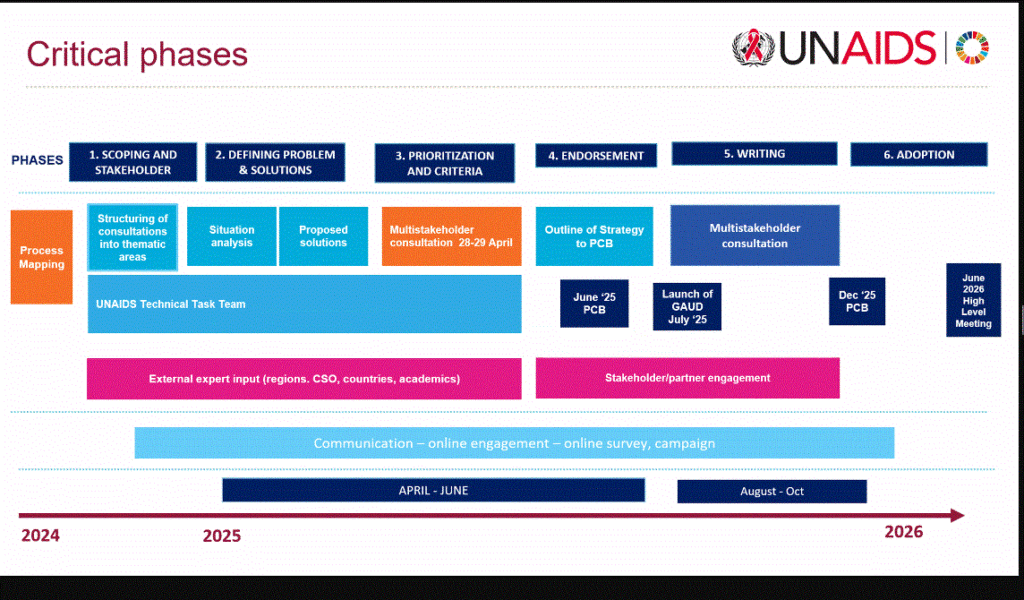
The focus group called for a strategy that is both inclusive and participatory, engaging communities that have been affected by the HIV epidemic for decades.
It is clear that the next phase of HIV response must not only reflect regional differences and diverse epidemics but also empower communities to take ownership of the strategies that affect them directly.
The Four Pillars of Community Leadership
At the core of the discussion was the pivotal role of community-led responses. Christoforos Mallouris, reiterated that community engagement has been a part of the HIV fight since its inception. However, for HIV responses to be truly effective, local communities must be involved at every level of decision-making.
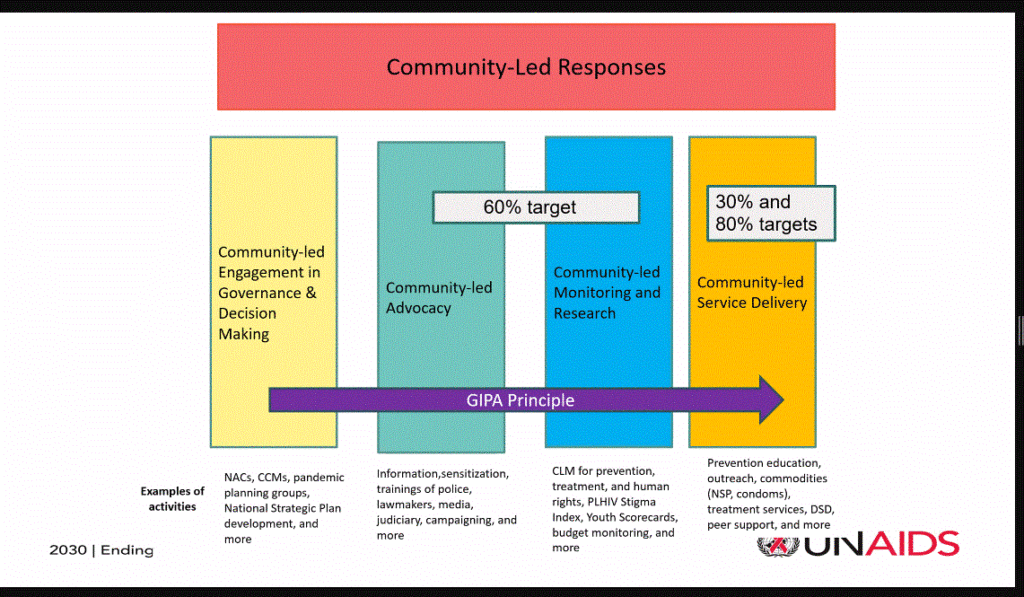
The focus group highlighted four essential components of a community-led response:
Community-led Governance and Decision-Making: Giving local communities a seat at the table ensures that their needs and experiences shape the strategies that affect them.
Community-led Advocacy: Communities must advocate for policy changes, better resource allocation, and stronger healthcare systems to address the HIV crisis.
Community-led Monitoring and Research: Community-driven data collection, research, and monitoring of HIV trends ensure that the response is evidence-based and relevant to the people it seeks to protect.
Community-led Service Delivery: Localizing service delivery ensures that HIV treatment and prevention services are accessible, culturally relevant, and effective at reaching marginalized populations.
A New Roadmap for 2030
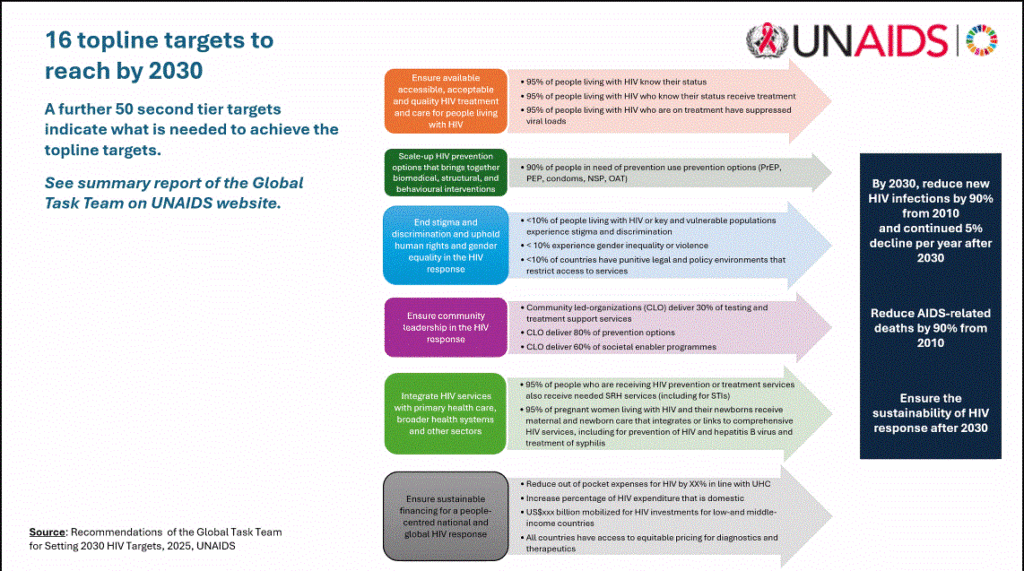
The discussion also touched on the revision of existing HIV targets, with a proposal to narrow them down to 66 key targets, 16 of which are top-line goals for 2030.
These include: 90 per cent reduction in new HIV infections by 2030 compared to 2010 levels, with a continued 5 per cent decline annually after 2030, 90 per cent reduction in AIDS-related deaths from 2010 levels, ensuring the sustainability of HIV response efforts post-2030 and ending AIDS as a public health threat by 2030.
As the global HIV strategy for 2026-2031 takes shape, one thing is clear: community leadership is not just a footnote but the backbone of this effort. With communities at the forefront, the new strategy promises to create a more inclusive, participatory, and sustainable response to the HIV epidemic.
The HIV response is entering a new chapter, one in which local leaders will drive the conversation, shape policy, and deliver the services that will ultimately determine the success of the global fight against HIV.
Mallouris said, "The strategy going forward must speak to everyone. It must be about inclusivity, participation, and interaction, drawing in even those outside the space."
The future of HIV response is being built today, with communities leading the way.
Latest Stories
-
Eleven remanded over land guard case activities
2 hours -
Air Force One set for makeover paint job with new colours
2 hours -
Bodo/Glimt stun Inter Milan to continue fairytale
2 hours -
Ga Mantse stable after early morning accident
2 hours -
Pressure mounts as Arsenal blow 2-goal lead to draw at Wolves
2 hours -
Club Brugge fight back to leave Atletico tie delicately poised
2 hours -
Benfica claim ‘defamation campaign’ against Prestianni
2 hours -
Sinner and Alcaraz reach Qatar quarter-finals
3 hours -
Kenpong Travel and Tours to launch 2026 World Cup travel package on Friday
3 hours -
‘It hurts a lot’ – Coutinho announces Vasco exit
3 hours -
Provider – A new gospel anthem of faith, hope, and divine supply
3 hours -
MOBA heads to Accra Ridge for 11th National Conference on Feb 21
3 hours -
Ghana’s Doris Quainoo clocks new PB 8.23s to claim second place at Jarvis City Invite
3 hours -
Spain luxury hotel scammer booked rooms for one cent, police say
3 hours -
Zuckerberg defends Meta in landmark social media addiction trial
3 hours