


Audio By Carbonatix
People should call a domestic "truce" and be kinder to each while coronavirus forces many to spend more time at home together, a relationships charity has said.
Stringent government measures may result in enforced shared time for families who are not used to it.
A medical historian said social dynamics may be "tested and strained" in the coming weeks.
But Relate Cymru said focusing on relationships "will get you through".
The UK government has urged the public to avoid "non-essential" travel and contact, to work from home where possible, and to stay away from pubs, clubs and restaurants.
With some parts of the world in lockdown, the UK prime minister has refused to rule out more widespread curbs on travel.
Dr Rachel Davies, a Relate Cymru councillor, said it had left a lot of people feeling a "loss of control" over domestic and family life but added there were things they could do.
"Relationships will get you through," she said. "and being kind to each other will help us cope better."
'Stir crazy'
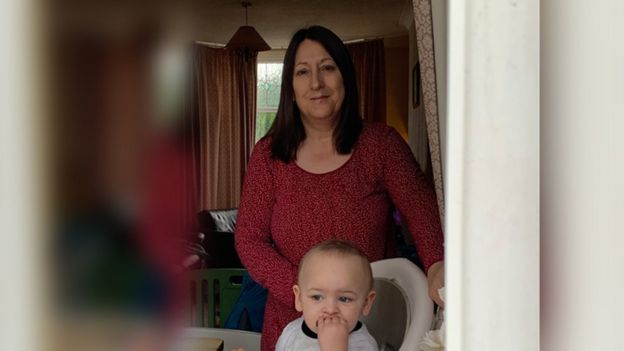
There are three generations under one roof for the Norris family in Cardiff.
Fred, 58, and Suzette, 56, live with one of their two children, Ffion, 22, and her 19-month-old son Theo in their terraced home in Heath.
"It can be difficult. You're not going out anywhere, nobody's having their free time," said Suzette.
Fred said he does feel like he'll be getting under Suzette's feet.
'It's driving me mad!'
"I think my life expectancy is more challenged by Suzette than coronavirus. She's going to kill me by the end of the week," he said, jokingly.
"It's going to test all our patience, I'm sure, but at the end of the day you have to find a way through it."
Fred said the internet certainly helped, allowing people to use devices independently in different rooms.
But for Ffion, life with baby Theo has been a challenge.
"It's driving me mad, to be honest," she said.
"Obviously, I'm trying to entertain Theo. Usually, I just like to get out, take him swimming or soft-play or something like that, but now you can't."
In terms of relations in the household, she said: "We're alright at the moment, we're not too bad, but it's early days."
Dr Davies said Relate had heard from some clients who had pre-existing problems in their relationships.
"We're trying to encourage people as much as possible to call some sort of truce during this period," she added.
"There's an element of having to kind of choose your battles really and a need to pull together when the outside environment has become hostile."
How can you avoid tensions at home?
Relate Cymru offered advice on steps to help ease any tensions at home, including:
- Be kinder to each other, cut each other some slack
- Be aware other people cope with anxiety in different ways - some with distraction, while some need to immerse themselves in information
- Go to different rooms in the house if you want some space, don't force yourself to be together 24/7
- Use social media, text, phones to stay in touch if you need to self-isolate in different rooms
- Put off big conversations until moments of high stress have passed
- See the opportunities for your family to be together and to be at home - use it as a chance to reconnect
Dr Michael Bresalier, a Swansea University lecturer in medical history, said people are facing restrictions unprecedented in modern times.
An expert in the outbreak of Spanish flu - a worldwide pandemic which killed 50m worldwide and 11,400 in Wales in 1918 - he said families of a century ago were in some ways better equipped to deal with it.
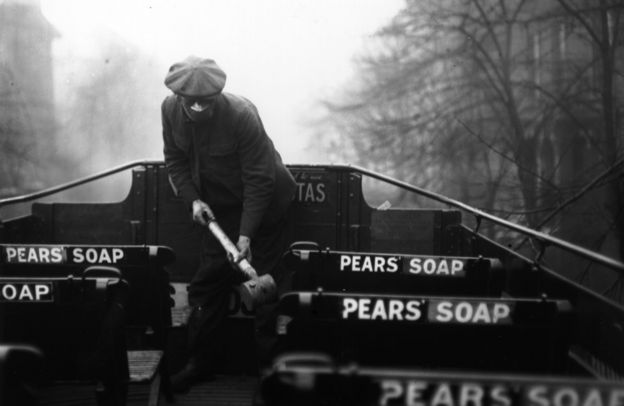
"People were really used to war conditions at home, whether it be various types of deprivation or restrictions," Dr Bresalier.
"But [they were] also bringing through a strong sense of community and doing something for the national good.
"By the same token, we're better placed [now] for being socially isolated and having restrictions on our movements than ever before. We have social media, most of us have access to Netflix and various types of online resources."
Dr Bresalier said that, while there were cinema and school closures and limited access in certain areas in 1918, "there's really no precedent" in Britain for the restrictions coronavirus has and could trigger.
"I think people will find it strange but it depends on how long it lasts. If it's for quite a relatively short amount of time, I think people are used to doing a lot at home.
"But when we stretch beyond weeks and then go into a month, social dynamics will be tested and strained."
Latest Stories
-
Nigeria launches manhunt after abductions by bandits in northwest Zamfara
47 minutes -
Kenya fuel executives resign as state probes supply chain irregularities
58 minutes -
Senegal bans ministers from foreign travel as oil price rise bites
1 hour -
Nigerian army rescues 31 hostages after church attack
1 hour -
Spain’s huge pork industry seeks salvation from swine fever threat
1 hour -
Trump declares victory after rescue but threats to US operation in Iran still loom
2 hours -
US Secret Service investigates reports of gunfire near White House
2 hours -
Current account stability to mitigate pressure on cedi; currency to end year at GH¢11.40 to a dollar
2 hours -
Oil back above $110 after expletive-laden Trump threat to Iran
2 hours -
T-bills auction: Government records 32% undersubscription; interest rates rise again
2 hours -
Economy to remain relatively insulated from fallout of US–Iran conflict – Fitch Solutions
2 hours -
Leeds draw Chelsea, Man City face Southampton in FA Cup semis
4 hours -
Messi and Suarez score as Inter Miami draw at new stadium
4 hours -
Liverpool ‘gave up’ in FA Cup exit – Van Dijk
4 hours -
Pep’s asistant Lijnders hints at Man City departure for Silva
4 hours