

Audio By Carbonatix
Is there a link between poverty, crowded accommodation, and Africa's bafflingly low infection and death rates from the pandemic?
As the number of infections dips sharply in South Africa, and stays relatively low across much of the continent, experts are reaching towards a startling hypothesis.
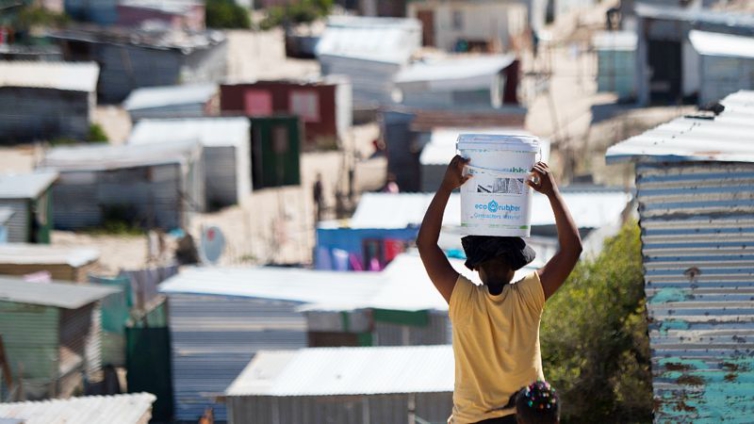
Crowded townships. Poor hygiene. The impossibility of social distancing in communities, where large families often share a single room.
For months health experts have been warning that living conditions in poor, urban communities across Africa are likely to contribute to a rapid spread of coronavirus.
"Population density is such a key factor. If you don't have the ability to social distance, the virus spreads," said Professor Salim Abdool Karim, the head of South Africa's ministerial advisory team on Covid-19.
But what if the opposite is also true?
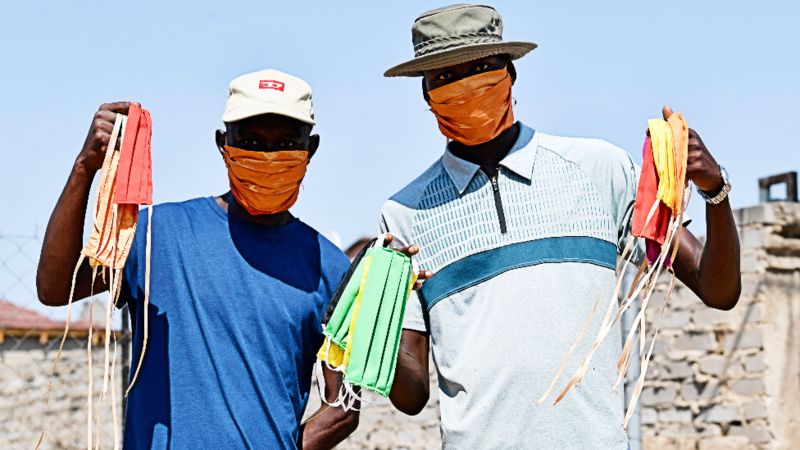
What if those same crowded conditions also offer a possible solution to the mystery that has been perplexing experts on the continent for months?What if - and this is putting it rather crudely - poverty proves to be the best defence against Covid-19?
'It's an enigma'
Let's start with that mystery.In the early stages of the pandemic, all the experts and all the modelling agreed that Africa was in trouble.
"I thought we were heading towards a disaster, a complete meltdown," said Professor Shabir Madhi, South Africa's top virologist.
Even the most optimistic predictions showed that the nation's hospitals - and the continent's most developed health system would be quickly overwhelmed.
And yet, today South Africa is emerging from its first wave of infections with a Covid-19 death rate roughly seven times lower than the UK's.
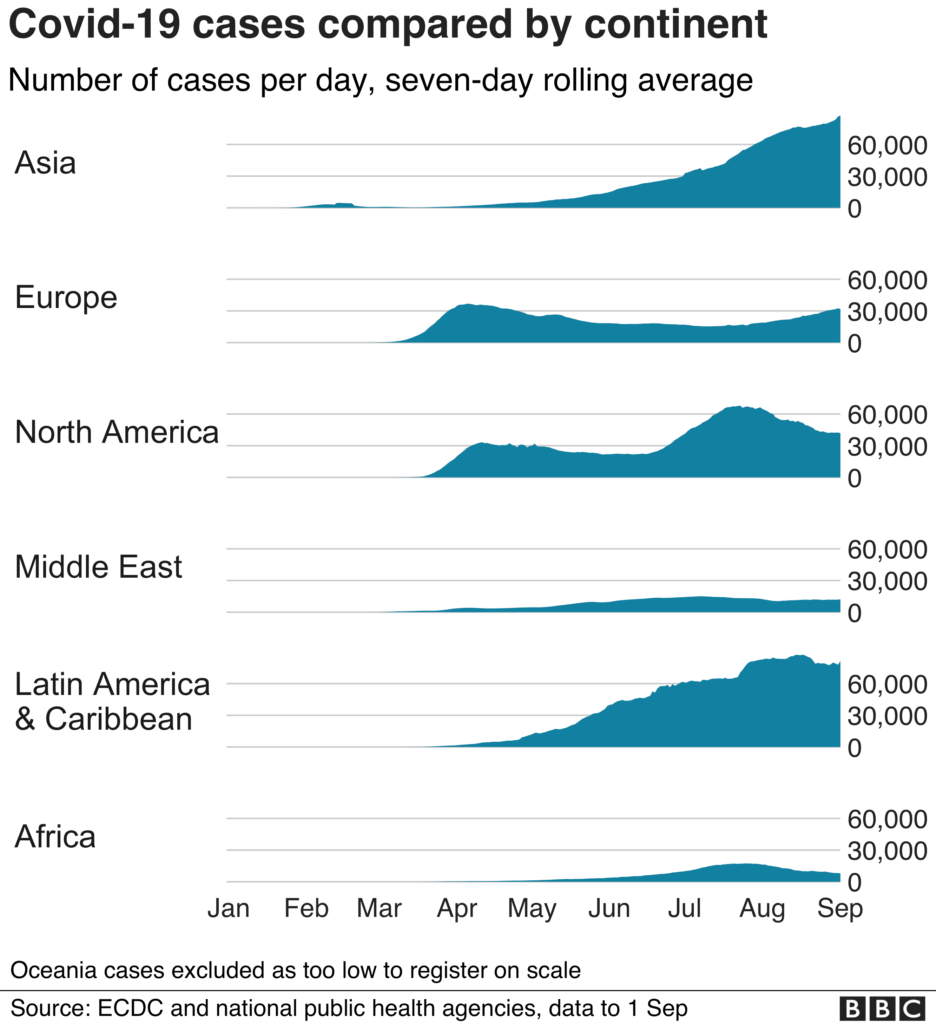
Even if deaths have been under-reported here perhaps by a factor of two South Africa has still performed impressively well, as have many other parts of the continent, where hospital beds remain stubbornly empty, and where infection graphs have almost entirely avoided the pronounced peaks and sharp angles seen in so many other parts of the world.
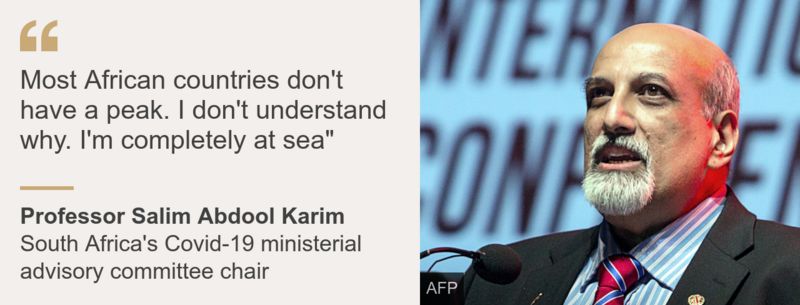
"Most African countries don't have a peak. I don't understand why. I'm completely at sea," admitted Prof Karim, a leading voice on South Africa's pandemic response.
Professor Madhi agrees: "This is an enigma. It's completely unbelievable."
For a while now, experts have cited a youthful population as the best explanation for Africa's relatively low infection rates. After all, the average age on the continent is roughly half that in Europe.
Far fewer Africans live into their 80s, and so are less likely to succumb to the virus as a result."Age is the highest risk factor.
Africa's young population protects it," said Tim Bromfield, a regional director of the Tony Blair Institute for Global Change.
But as the pandemic drags on, and the statistical evidence builds up, analysts appear increasingly reluctant to give demographics all the credit for this continent's successes.
"Age is not such a big factor," said Prof Karim.Early, and aggressive lockdowns here in South Africa and elsewhere on the continent have clearly played a crucial role.
Clear messaging about masks and the provision of oxygen supplies have also been important.
Latest Stories
-
Ghana Card payment activation under review – NIA breaks silence on financial integration
9 minutes -
Ofori-Atta’s ICE release positive; he is elderly and poses no risk – Amanda Clinton
11 minutes -
Ken Ofori-Atta’s passport seized after bail, set to reappear in US Court on April 27
14 minutes -
Stuck contraceptives risk HIV surge – Ghana HIV/AIDS Network President warns
15 minutes -
Omanhene Kwabena Asante slams GIADEC CEO over alleged discrimination in mining concessions
1 hour -
Majority of Ghanaian importers lack awareness of cargo insurance – Gyampo
1 hour -
GJA Ashanti applauds Asantehene for securing land for new press centre
1 hour -
CIMAF Ghana donates cement to Afua Kobi SHS
1 hour -
Ghana to benefit from France’s National health platform following Paris talks
2 hours -
Due process must prevail in Ofori-Atta’s immigration and extradition cases – Lawyer
2 hours -
Oil palm fund will create coherent ecosystem, boost supply—DBG CEO
2 hours -
Police arrest man for illegal drug peddling at Pankrono
2 hours -
Industry collaboration key to solving skills mismatch – NYA CEO Osman Ayariga
2 hours -
Ghana, Egypt deepen security ties following high-level meeting
2 hours -
Every neurodivergent child deserves to thrive – AWARE 2026 walk set for North Legon
2 hours