

Audio By Carbonatix
The north has been hit harder than the rest of England during the coronavirus pandemic, "exacerbating" regional inequalities, according to a study.
The Northern Health Science Alliance also found the mortality rate, even after factoring in deprivation, ages and ethnicity, was worst in the north.
It said in the "Northern Powerhouse" area an extra 57.7 people per 100,000 population died between March and July.
A renewal of efforts to tackle child poverty was among its recommendations.
The report by the northern health partnership said 12.4 more people per 100,000 population died with Covid-19 in the area of the Northern Powerhouse from March to July than elsewhere in the country, with 57.7 more people per 100,000 dying of all causes.
The Northern Powerhouse dates back to the 2010-15 coalition government which began an initiative to boost economic growth in the north of England, particularly in the "core cities" of Hull, Leeds, Liverpool, Manchester, Newcastle and Sheffield.
The study, led by scientists from the universities of Newcastle, Manchester, York and Liverpool, put a conservative estimate on the economic cost of the increased mortality in northern England at £6.86bn and estimated the impact on the region's mental health would cost about £5bn a year.
The report said since the start of the pandemic adverse trends in poverty, education, employment and mental health for children and young people had worsened.
It listed 12 recommendations to the government to "level-up" the country including:
- More regional resources in the Northern Powerhouse region to boost the NHS Test and Trace system
- Targeting vulnerable and deprived communities in the first phase of the Covid-19 vaccine rollout
- Reducing child poverty by increasing child benefit, extending free childcare and free school meals and more investment in children's services
Miranda Barker, chief executive of East Lancashire Chamber of Commerce, said she was "extremely concerned".
"It's clear that throughout the pandemic at different moments, different areas have been the worst hit."
Ms Barker said Brexit could bring "a second wave of uncertainty" for manufacturers and exporters who are currently supporting the economy.
"It really is the perfect storm," she added.
'You just can never relax'
Rachel Saxton, from Lymm, Cheshire, is recovering from a brain haemorrhage and has been shielding.
"Although I can't see my precious family, I just get on with life and am very careful whatever I do," the 48-year-old said.
"I'm very concerned for how the north will recover, thousands have lost their jobs."
"You just can never relax."
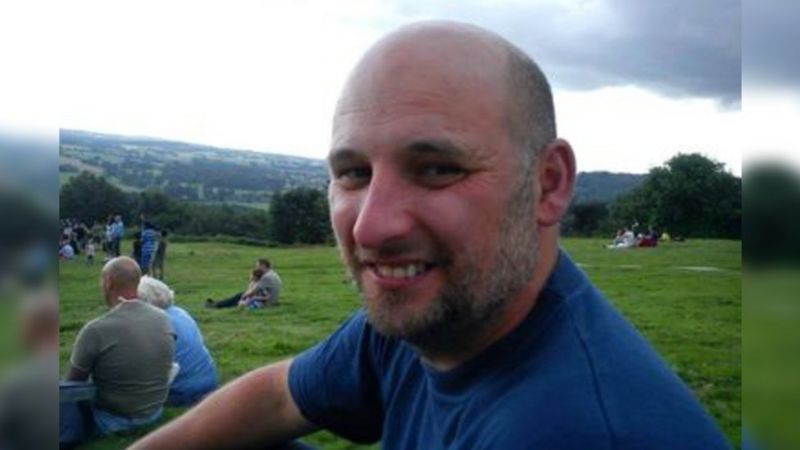
Plumber Philip Addison said a hard lockdown was needed to "get the virus beaten".
"It would have seem to have hit the north far worse," he said.
"I believe half-measures led to catastrophe in March and will finish us off now."
The 50-year-old said his work in Warrington had not been affected, but he still worries about going into houses.
"It feels inevitable that I am going to catch it, but people need heating, hot water and toilets that work," he said.
Greater Manchester's Mayor Andy Burnham said he hoped "very much" the report would be "read, understood and acted upon".
Clare Bambra, professor of Public Health at Newcastle University, said their report "highlights that we are not all in the pandemic together with the northern regions being hardest hit".
"Health and wealth in the Northern Powerhouse lagged behind the rest of the country even before the pandemic, and over the last year our significant regional inequalities have been exacerbated," she said.
Hannah Davies, from the Northern Health Science Alliance, said: "Health inequalities between the north and the rest of England have been growing for over a decade.
"This report demonstrates the impact that has had on the productivity of the region and how it has led Covid-19 to take a devastating grip on the north."
A Department of Health and Social Care spokesperson said it remained "determined to level up on health outcomes as well as opportunity" with its £30bn plan for jobs scheme for the UK as well as its £170m funding "to help families stay warm and well fed this winter" and increases in Universal Credit.
"Throughout the pandemic we have worked hand-in-hand with local authorities and over £300m has already been allocated to local authorities in England to help them stop the spread of the virus in their communities," they said.
Latest Stories
-
One injured as fire destroys 14-bedroom house at Kwame Danso
3 minutes -
GACL struggling despite recording profit, levy needed for expansion – Agalga
6 minutes -
Kwahu Business Forum: Ghana Sports Fund calls for stronger corporate backing for sports dev’t
15 minutes -
Penplusbytes’ statement on police action against deepfake and misinformation activities in Ghana
46 minutes -
QNET, EOCO partnership showcased at UN global fraud summit as model for fighting organised crime
47 minutes -
Mussa Dankwah is like a ‘lotto doctor’ – Miracles Aboagye
53 minutes -
Investors target Ho Airport for training and maintenance hub — GACL Chair
58 minutes -
NDC’s ‘grand deception’ on anti-LGBTQ+ bill exposed – Ntim Fordjour
58 minutes -
Speak out against Mahama government’s LGBTQI+ u-turn – Ntim Fordjour to clergy
1 hour -
Ghanaians worse off despite improved macroeconomic indicators — Miracles Aboagye
1 hour -
Police intercept narcotics, arrests five suspects in Upper West
1 hour -
Government to establish Kumasi Machinery Innovation Park under 24-Hour Economy programme
1 hour -
When Hormuz Fails: The day a waterway stops the world
1 hour -
Ghanaian students in UK to protest over unpaid fees, stipends
1 hour -
Inflation to go up marginally in April 2026 – Report
1 hour