

Audio By Carbonatix
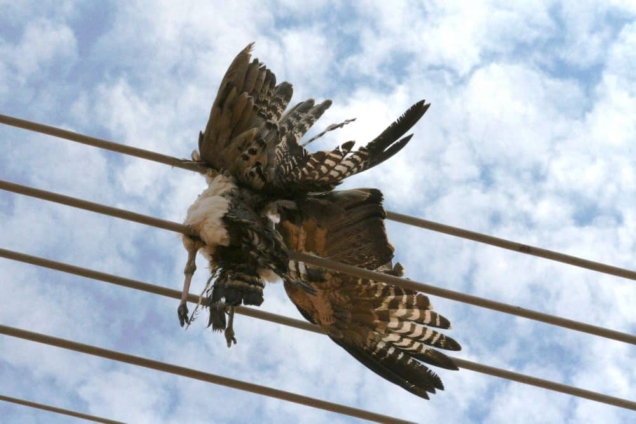
The Electricity Company of Ghana (ECG) says crows are increasingly disrupting power supply in the Ashanti Region by damaging critical transmission infrastructure.
According to the Ashanti Sub-Transmission Region of ECG, the birds have been attacking installations, triggering frequent outages and operational challenges that are affecting consumers across several districts.
"As a division responsible for restoring the system to its original state, we will continue to improve our efforts to ensure uninterrupted service," said Collins Manu, Head of Public Relations for the Ashanti Sub-Transmission.
A report on recent control operations and outage statistics shows the most affected feeders include Barekese in Atwima Nwabiagya North, Akyawkrom in Ejisu, Effiduase and Kumawu in Sekyere East and Sekyere Kumawu, as well as Bekwai, New Edubiase, and Manso Nkwanta in Amansie East, Adansi South, and Amansie West, respectively.
The report revealed that at least 92 nests were found on the Akyawkrom-Kuntenase-Bekwai ECG transmission lines alone. These nests, often built with metallic materials, pose a major hazard by causing electrical faults and equipment damage.
Droppings forming conductive paths—especially under humid conditions—have also been cited as a major cause of insulation breakdown, increasing maintenance costs and operational risk.
In response, senior ECG officials including Ing. Frederick Kwabena Bediako, General Manager of Special Projects at Head Office, and Ing. Daniel Mensah Asare, General Manager of Ashanti South, have been inspecting the worst-hit areas to assess and resolve power supply challenges.
To mitigate the problem, ECG is rolling out a series of preventive measures:
Physical barriers like bird spikes, insulated covers, and perch deterrents
Nesting deterrents, including routine nest removal and applying non-conductive materials
Improved system design, such as increased conductor spacing and enhanced insulation
Behavioural deterrents, including distress calls, reflective surfaces, and predator decoys
These interventions aim to stabilise supply and protect vital infrastructure from further damage caused by the birds.
Latest Stories
-
GAF airlifts Baba Yara Stadium stampede victim to 37 Military Hospital
6 minutes -
Photos: Funeral rites for engineer Charles Amissah who died after alleged denial of emergency care
13 minutes -
Taking collagen keeps skin more elastic but won’t stop wrinkles, say scientists
13 minutes -
Principal of Nalerugu Nurses and Midwifery College suspended over unauthorised admissions
17 minutes -
Driver dies in trailer crash at Kordzeto in Hohoe
20 minutes -
India and Israel pledge to boost ties in defence and technology
23 minutes -
Livestream: Mahama delivers 2026 State of the Nation Address
25 minutes -
Nigerian artistes’ global success about individuals, not the country – Philkeyz
26 minutes -
Business end of European season
28 minutes -
55 Ghanaians killed in Russia–Ukraine war – Ablakwa
36 minutes -
Deloitte West Africa appoints Yomi Olugbenro as CEO-Elect
40 minutes -
Bawumia visits Ga Mantse, wishes him speedy recovery following accident
42 minutes -
Stanbic Bank Ghana leads US$205m financing for Engineers & Planners:
52 minutes -
Minister Jinapor highlights importance of accurate energy meters during GSA visit
57 minutes -
Nexans unveils anti-counterfeit cable to tackle fakes and improve fire safety
59 minutes