

Audio By Carbonatix
Scientists from the Council for Scientific and Industrial Research at the Forestry Research Institute of Ghana (CSIR-FORIG) are stepping up efforts to educate young people about climate change and environmental protection as part of Ghana’s growing response to the global climate crisis.
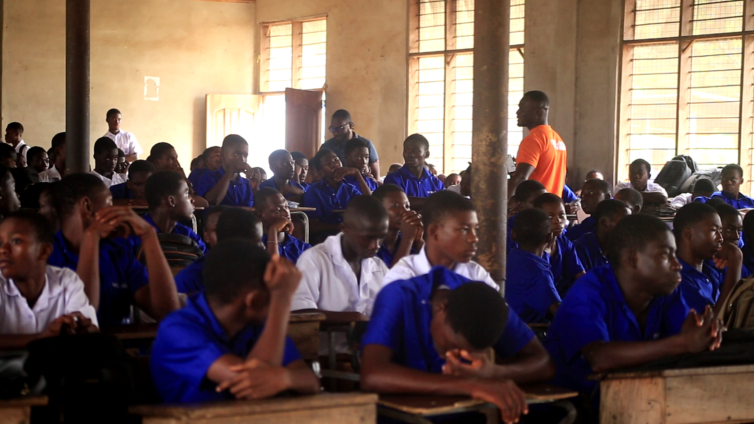
The outreach programme, led by the institute’s Forest and Climate Change Division, recently engaged students at Ramseyer Technical Institute, where experts spoke about climate change, environmental degradation and the role young people can play in protecting nature.
Head of the Forest and Climate Change Division at the institute, Reginald Tang Guuroh, said the environmental outreach programme is designed to bring knowledge about climate change and environmental protection directly to communities, especially schools.
“This event, which is the CSIR-FORIG environmental outreach programme, is something we organise in schools and other establishments to bring people knowledge and information about the need to protect the environment and the resources around us,” he said.
He noted that environmental challenges in Ghana are becoming more serious, with illegal mining and illegal logging threatening forests, water bodies and biodiversity.
“If we look around Ghana today, we can see that there are many environmental problems. For example, galamsey has become a major issue, and we also have illegal logging,” Dr Guuroh said.
“So, what we are doing as an institute is to go out and create public awareness about environmental protection and climate change in particular, because it has become a critical issue all over the world.”
Dr Guuroh explained that the institute believes educating young people is one of the most effective ways to protect the environment.
“People need to understand the importance of protecting the environment and also doing things that can reduce climate change and its effects. We believe schools are one of the best places to start because you have to catch people young and put these ideas in their minds,” he said.
According to him, the outreach programme has already reached many schools.
“Since this initiative started several years ago, we have been visiting primary and junior high schools, and we have reached about 10 of them already. Today we are here at the senior high level to talk to them about the same issues. The plan now is to include senior high schools as well as the basic schools in our outreach programme.”
The institute hopes the students will become champions for environmental protection in their communities.
“We expect that the students would take the message seriously, that the students will also practice whatever we are telling them. We expect these students… to be ambassadors of the environment, to be ambassadors of climate change,” he said.
“We expect the students to take the message seriously and practice what we are teaching them. We want them to become ambassadors of the environment and ambassadors for climate action, not just to listen and forget about it, but to reflect on the message and put it into practice.”
Teaching climate change in schools
A scientist with the institute, Dr Stella Britwum Acquah, said the outreach programme focuses on building students’ understanding of climate change and environmental sustainability.
“We have an environmental outreach team that we create awareness on climate change and environmental sustainability in schools,” she said.
She said the team first tried to understand what the students already knew about climate change.
“We wanted to find out whether they have really heard about climate change and what some of the impacts of climate change are. The students had little knowledge about climate change although they could say a few things, talking about increases in temperature and erratic rainfall.”
The scientists then explained what climate change means and what actions students can take to protect the environment.
“We first wanted to find out whether they had heard about climate change and what they knew about its impacts. The students had little knowledge, although they were able to mention a few things such as increasing temperatures and erratic rainfall.”
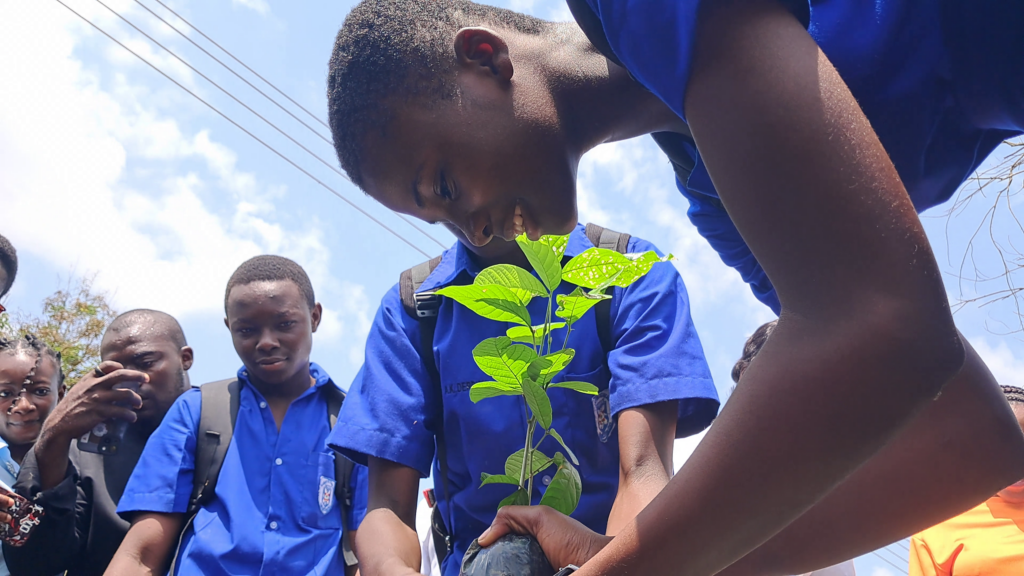
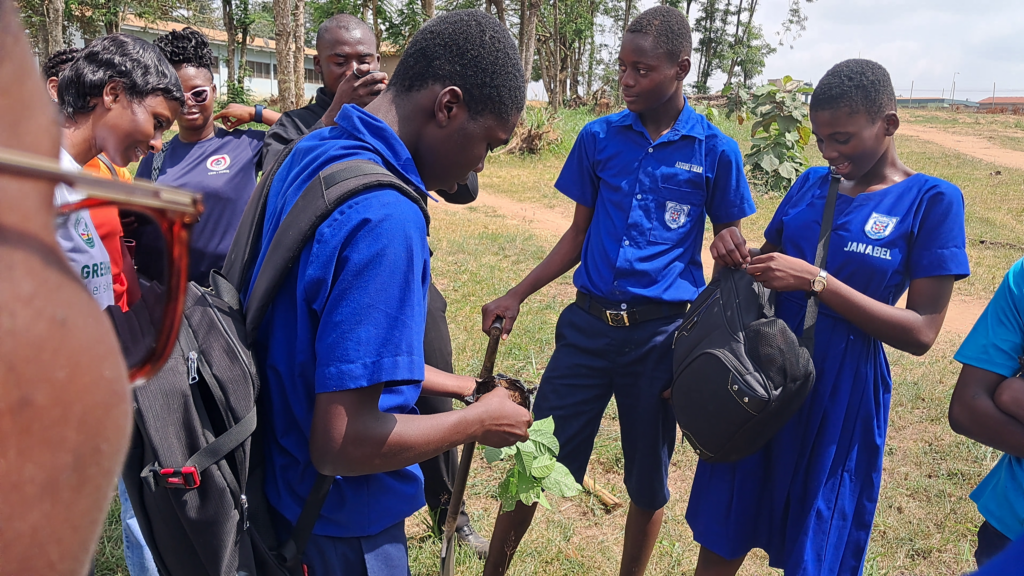
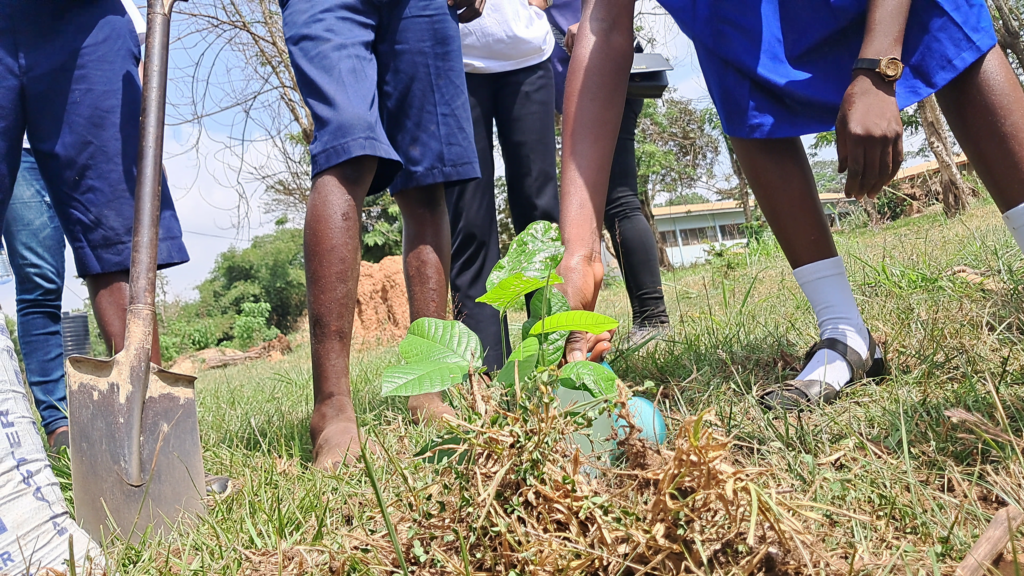
Beyond classroom discussions, the programme also included practical activities. Research officer Akwasi Duah Gyamfi said students were guided through tree planting and nursery establishment exercises.
“As part of the school outreach program, we combined both the theory, that's the presentation as well as the field activity,” he said.
“The field activity involved tree planting and guiding them on how to establish a nursery. After the theory we took them out to plant some trees.”
He added that the institute hopes to support the school in developing woodlots that can benefit the institution in the future.
“We realized that the school has already planted some woodlots, and our aim is to support them in expanding these woodlots on available land so that, in the future, they can benefit from them.”
Students who participated in the programme said the training helped them better understand the importance of protecting nature. Selina Bigome said the programme taught her that protecting forests and the environment is important for human survival.
“What I learned is that we need to protect the environment and everything related to it. We must keep the forest safe so that we can also be safe and live good lives,” she said.
“And the forest, we need to keep it safe so that we too can be safe.”
She also called for stronger action against illegal mining, widely known in Ghana as galamsey.
“We also need to stop galamsey or illegal mining because it destroys the environment, the water bodies, the air we breathe and the trees that provide medicine and fresh air,” she said.
Selina added that people must replace trees that are cut down to maintain balance in nature.
“If we cut down trees, we must replace them so that the environment will not become empty. Trees provide fresh air, medicine and homes for animals. So we must stop activities that harm the environment and start practising good things that protect it.”
The outreach programme forms part of broader efforts to support Ghana’s environmental protection goals and global climate commitments under the Paris Agreement and the United Nations Framework Convention on Climate Change.
Through education, tree planting and community awareness, scientists hope the next generation will play a key role in protecting forests, restoring degraded lands and reducing the impacts of climate change.
Latest Stories
-
Health Ministry engages Ga Mantse ahead of Free Primary Healthcare launch
3 minutes -
We can tackle multiple priorities – Sam George defends Anti-LGBTQ Bill push
38 minutes -
Statement: Ghana Chamber of Mines’ Response to Claims in Joe Jackson’s “Ananse Stories about the Economy of Ghana”
40 minutes -
GES opens 2026 teacher recruitment for licensed B.Ed graduates
42 minutes -
Ghana must value skilled trades, build resilient learners — Ibn Chambas
50 minutes -
Ghana must rethink education around relevance, resilience and responsibility — Ibn Chambas
53 minutes -
Prince Harry faces defamation lawsuit from charity he co-founded
55 minutes -
South Korea deploys thermal cameras to track escaped zoo wolf
56 minutes -
Calls for royal meeting with Epstein survivors grow ahead of US visit
60 minutes -
Ibn Chambas advocates blend of technology and human values in education
1 hour -
UMA improves healthcare access in Asutifi North with GH₵700k ‘Kim Taylor Legacy’ Walkway
1 hour -
Scholarships Authority and Fanaka University offer sponsorship for procurement and supply chain studies
1 hour -
Bisa Kdei drops new single ‘Go N Look’ featuring Medikal
1 hour -
Benin facing rising terrorism in north as French military presence faces growing criticism
1 hour -
UEW Public Lecture Series 2026: Education debate ‘about the soul of Ghana’s future’ — Dr Ibn Chambas
1 hour