

Audio By Carbonatix
The Cuban foreign ministry says it has uncovered a human trafficking ring aimed at recruiting Cubans to fight for Russia in its war in Ukraine.
It said that Cubans living in Russia and "even some in Cuba" had been "incorporated into the military forces taking part in the war in Ukraine".
Cuba is a close ally of Russia, but it stressed in its statement "it does not form part of the conflict in Ukraine".
There has not yet been a response from Russia.
The Cuban foreign ministry did not specify who was behind the operation.
Last August, President Vladimir Putin ordered the Russian military to increase its number of soldiers after its combat forces suffered heavy losses in Ukraine.
A Russian newspaper, Ryazan Gazette, has since reported that Cubans living in Russia had joined Russian combat forces fighting in Ukraine in exchange for a promise to receive Russian citizenship.
While it is not clear if the Cuban foreign ministry statement is linked to the reports in Ryazan Gazette, it states that "Cuba has a firm and clear historical position against the use of mercenaries".
"We will act decisively against those who... engage in human trafficking with the aim of recruiting Cuban citizens to bear arms in any country," the statement reads.
Cuban Foreign Minister Bruno Rodríguez published the statement on X, formerly known as Twitter, adding that Cuba was using "the force of the law" to counter attempts to recruit its citizens.
The statement strikes a rare dissonant note in recent Cuban-Russian relations, which has seen the two countries forging tighter trade ties.
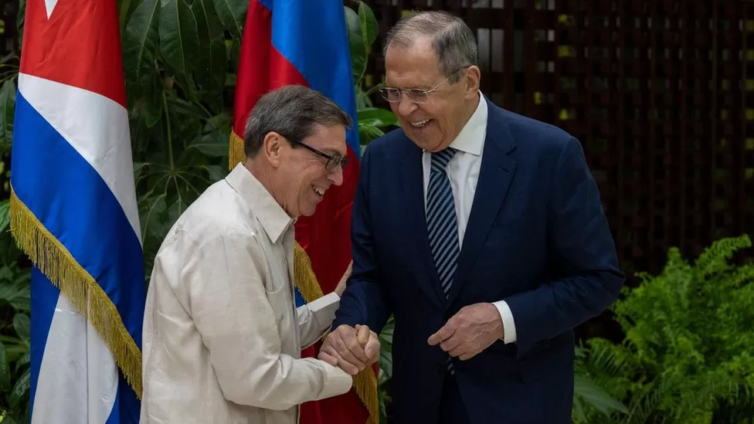
Just over two months ago, the defence ministers of Cuba and Russia held talks in Moscow, and the Russian foreign minister travelled to the Communist-run island in April as part of a tour of Russia's Latin American allies.
Cuba has been a close ally of Russia since the Cuban revolution, which saw Fidel Castro seize power in 1959.
Castro - whom the United States tried and failed to overthrow on numerous occasions - sided with Russia in the Cold War. Moscow in turn provided the government in Havana with economic, political and military assistance.
A secret deal in 1962 allowing the Soviet Union to station nuclear missiles in Cuba to deter fresh US attempts to invade the island triggered one of the Cold War's most dangerous confrontations between the US and the Soviet Union.
While the Cuban missile crisis came to an end peacefully after Soviet leader Nikita Khrushchev and US President John F. Kennedy reached an agreement, Cuba's relations with the US have remain tense, not least due to the decades-long sanctions the US has imposed on Cuba.
Latest Stories
-
Middle East crisis shows Ghana needs to diversify energy sources – Energy expert
17 minutes -
Government of Ghana Internal Revenue Generation cannot fund Big Push in Four Years
25 minutes -
EPCG Moderator urges leaders to serve with courage and humility in Easter message
57 minutes -
The Cobra at the gate: When good intentions overrun the system
1 hour -
Easter service disrupted in Nyanyano as suspected land guards storm church event
1 hour -
Price surge exposing NDC gov’ts dishonesty -Titus Glover
1 hour -
Afigya Kwabre North MP urges Finance and Energy Ministers to submit energy sector report
1 hour -
Deliver quality or face sanctions — GETFund administrator cautions contractors
2 hours -
Kwahu Easter festivities trigger condom shortages; Health teams boost awareness
2 hours -
Victims of a legend: The women Daddy Lumba left behind
2 hours -
Mahama vows to prioritise roads, social amenities in Savannah region
2 hours -
Mahama sets up 18-member panel to advance Africa-led global health reforms
3 hours -
Ghana Medical Trust Fund Administrator urges hope and compassion in Easter message
3 hours -
Traders, Freight forwarders push back against planned cargo tracking policy
3 hours -
BoG Governor highlights tough trade-offs in monetary policy decisions
3 hours