

Audio By Carbonatix
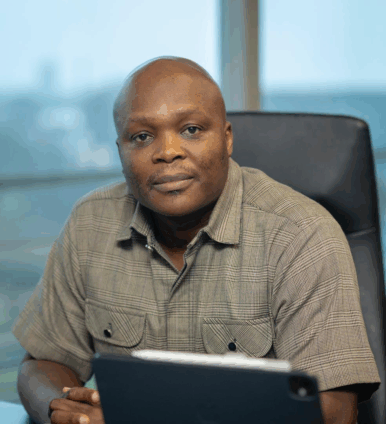
The Chief Executive Officer of Development Bank Ghana (DBG), Dr Randolph Nsor-Ambala, has unveiled a bold, evidence-based approach to transforming Ghana’s textiles industry, emphasising the Bank’s role as a key anchor between industry players and policymakers.
Speaking at the policy dialogue on textiles and garment industry held at Alisa Hotel, North Ridge, in Accra, Dr Nsor-Ambala outlined a three-pronged strategy aimed at unlocking the full potential of the textile value chain.
He reiterated DBG’s commitment to long-term national development by not only facilitating financial access, but also providing the technical expertise and policy advocacy needed to strengthen the sector.
“What we do as an organisation that is anchored by the long-term development agenda of the country is that we act as an advocate in transitioning the concerns from industry to the policymakers and vice versa,” he said.
“We are a top leader that backs our advocacy with evidence – and empirical evidence, for that matter,” he continued.
At the heart of DBG’s intervention is a comprehensive field study set to analyse the textile industry’s value chain.
This research, according to the CEO, will be crucial in identifying systemic inefficiencies, rigidities in supply chains, and barriers to competitiveness. Insights gathered will then be shared with financial institutions and other stakeholders to drive informed investment and policy responses.
“We are acting as an anchor to crowd in financing, which is a key challenge within the textiles industry,” Dr Nsor-Ambala noted.
Dr. Randolph Nsor-Ambala, has underscored the importance of technical assistance in unlocking Ghana’s development potential, emphasising that access to funding alone is not enough to drive sustainable growth.
“We are also trying to crowd in technical assistance because it goes beyond funding – some of the conversation is about the technical know-how, the ability to leverage the opportunities that are available.”
The initiative aims to not only map out the entire value chain but also “derisk” it to attract much-needed private and public investment. This, the CEO suggested, would pave the way for a more agile and competitive sector.
“Most of the things we have in the sector make the supply chain very rigid – and that rigidity is cost. It makes us uncompetitive in the end,” he said, adding that strong partnerships would be key to unlocking lasting change.
He stressed that while a similar dedicated fund for textiles could emerge, the immediate focus must be on data and evidence.
“We are not putting the cart before the horse. The outcome of this [textile] research will inform the creation of a dedicated fund. But the research needs to be done first – to allow us to understand the scale of the gap and the required interventions,” he said.
Once the findings are available, DBG will announce specific support measures tailored to the industry’s needs – potentially including the establishment of a dedicated financing facility to unleash the sector’s full potential.
Latest Stories
-
Four dead, 14 injured in Dawadawa Highway crash
2 hours -
Ga Mantse, Spanish Ambassador discuss Hola Accra Music Festival
2 hours -
President Mahama reflects on the birth of Kwahu Business Forum at 2026 event
2 hours -
How Dr. Joseph Bonney’s ‘No Bed Syndrome’ moved from Ghana hospitals to global use
2 hours -
President Mahama emphasises need for stable and predictable cedis
2 hours -
Deliver quality or be penalised, GETFund Administrator cautions contractors
2 hours -
President Mahama urges Ghanaian businesses to prioritise tax compliance and succession planning
2 hours -
Invest in start-ups and explore mergers – President Mahama urges Ghanaian businesses
3 hours -
Mahama confirms progress on 24-Hour Economy initiative at Kwahu Business Forum
3 hours -
Parliament passes Ghana Investment Promotion Authority (GIPA) Bill
3 hours -
New airport infrastructure tax – a costly own goal that ground Ghana’s aviation ambitions
3 hours -
Sachet water price increase: Why Ghana urgently needs a competition law to address price fixing and cartel conduct
3 hours -
Ex-President Akufo-Addo visits President Mahama in Kwahu during Easter festivities
3 hours -
There is no imminent fuel shortage – President Mahama assures Ghanaians amid Iran conflict
3 hours -
Gov’t to expand Accra International Airport with new car park, retail spaces, and airport hotel
3 hours