

Audio By Carbonatix
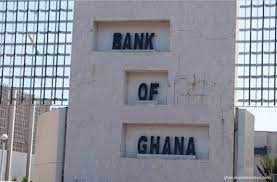
The Bank of Ghana (BoG) is urging all banks and financial institutions operating in the country to participate in the debt exchange programme by government.
The programme, which was announced by Finance Minister, Ken Ofori-Atta will result in a slash in interest payments for domestic bondholders to zero percent in 2023 and five percent in 2024.
Again, existing domestic bonds as of December 1, 2022, will be exchanged for a set of four new bonds maturing in 2027, 2029, 2032 and 2037 – all in a bid to restore the nation’s capacity to service its debt.
Also, eligible domestic bondholders who fail to participate in the exercise may have their bonds transformed into liquid assets at a low cost.
In view of this, the Central Bank has outlined some relief packages for banks that will participate in the programme.
This according to BoG will ensure some financial stability.
In a statement to the banks, BoG said the reliefs are to take effect from December 23, 2022.
Among other things, interested banks will witness a "reduction in Cash Reserve Requirement Ratio (CRR) to 12% on GHC deposits; and maintain a CRR of 12% on foreign currency-denominated deposits to be held in foreign currency."
There will also be an increase in Tier II component of regulatory capital from 2% to 3% of Total Risk-Weighted Assets and another increase in allowable portion of property revaluation gains for Tier II capital computation from 50% to 60%.
“New Bonds will be fully deductible in determining the financial exposure of banks to counterparties under section 62(8) of the Banks and Specialised Deposit-Taking Institutions Act 2016 (Act 930), while Old Bonds will not be deductible for that purpose,” the statement added.
On their part, the banks are expected to submit daily data to the Bank of Ghana on liquidity ratios and dynamics and pre-position assets for eligible collateral under Bank of Ghana’s Emergency Liquidity Assistance (ELA) framework.
Find more details on the relief below:
1. Reduction of Cash Reserve Requirement Ratio (CRR) to 12% on GHC deposits;
2. Maintain CRR of 12% on foreign currency-denominated deposits to be held in foreign currency;
3. Reduction of Capital Conservation Buffer from 3% to zero percent, effectively reducing the Capital Adequacy Ratio (CAR) from 13% to 10%;
4. New Bonds will be fully deductible in determining the financial exposure of banks to counterparties under section 62(8) of the Banks and Specialised Deposit-Taking Institutions Act 2016 (Act 930), while Old Bonds will not be deductible for that purpose;
5. Risk weights attached to New Bonds to be set at zero percent for CAR computation, and at 100% for Old Bonds;
6. Increase in Tier II component of regulatory capital from 2% to 3% of Total Risk-Weighted Assets.
7. Increase in allowable portion of property revaluation gains for Tier II capital computation, from 50% to 60 %;
8. Issuance of Guidance on standardised accounting treatment of the Debt Exchange impact, following engagement with external auditors.
The banks are also expected to:
1. Submit daily data to the Bank of Ghana on liquidity ratios and dynamics including access to interbank market and cost of financing, to enable Bank of Ghana to continuously monitor liquidity trends;
2. Pre-position assets for eligible collateral under Bank of Ghana’s Emergency Liquidity Assistance (ELA) framework;
3. Activate liquidity management plans promptly as needed (e.g. Interbank borrowings, use funding lines available, intra-group funding if, it exists, use up balances with correspondent banks);
4. Access Bank of Ghana’s repurchase (reverse repo) window excluSively with New Bonds, if no interbank or other market-related funding is accessible;
5. Access Bank of Ghana’s ELA as needed, using New Bonds and other eligible collaterals (excluding Old Bonds);
6. Suspend the declaration and payment of dividends and other distributions to shareholders forthwith;
7. Access the Ghana Financial Stability Fund;.as a last resort liquidity backstop.
Government establishes ¢15bn Ghana Financial Stability Fund
Meanwhile, government has established the Ghana Financial Stability Fund (GFSF) with a target size of GH₵ 15 billion to be provided by the government and its development partners.
The Fund will provide liquidity to financial institutions that participate fully in the Domestic Debt Exchange.
A statement issued in Accra by the Financial Stability Council said all financial institutions (banks, SDIs, pension schemes, collective investment schemes, fund managers, broker/dealers, insurance firms) that fully participated in the Debt Exchange could access the Fund for augmented liquidity support, with effect from the date of completion of the Exchange.
Latest Stories
-
Pastor William Gyimah remanded over threats against Vice President Prof Opoku-Agyemang
18 minutes -
Sunyani Technical University dismisses 3 students over examination malpractice
21 minutes -
NPRA prosecutes 11 employers, recovers GH¢27m in 2025
23 minutes -
NAIMOS cracks down on illegal mining activities along River Tano
25 minutes -
2026 World Cup: Officials selected are the world’s very best – FIFA defends referees list
33 minutes -
NAIMOS taskforce embarks on major anti-galamsey operations at GREL plantation and along Ankobra River
35 minutes -
Akufo-Addo arrives in Cotonou to lead ECOWAS mission to observe Benin presidential election
41 minutes -
AMA, Mexican Embassy renew commitment to strengthen bilateral cooperation, deepen sister-city ties
45 minutes -
Bolt pushes for expanded support for women-owned enterprises
1 hour -
Today’s Front pages : Friday, April 10, 2026
2 hours -
‘We don’t have time’ – Fianoo calls for Schäfer to lead Black Stars temporarily
2 hours -
CAF will not favour any country – President Motsepe
2 hours -
Otto Addo was appointed through the backdoor – Kudjoe Fianoo slams GFA
3 hours -
UG Corporate Football League back from the Easter break
3 hours -
Qualcomm unveils startup selection for Qualcomm Make in Africa 2026
3 hours