

Audio By Carbonatix
In a collaborative endeavor, the International Labour Organization (ILO) and the government of Ghana are diligently finalizing the Decent Work Country Programme III (DWCP III).
DWCPs are the primary vehicle through which the ILO supports member states.
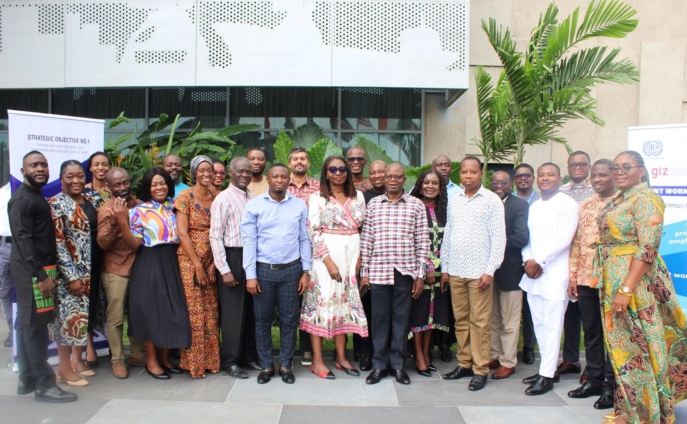
The meeting was held from July 24 to 26, 2023, to review, fine-tune and validate the proposed priorities and initiatives in the new DWCP III, which is aligned with Ghana’s development priorities and frameworks and the United Nations Sustainable Development Cooperation Framework.
The workshop brought together representatives of the ILO, the Ministry of Employment and Labour Relations, the Department of Social Welfare, the Ghana Employers' Association, the Ghana Federation of Labour, the Trade Union Congress Ghana, the Department of Factories and Inspectors, and the National Development Planning Commission and other partners who contributed to putting the document together.
In her opening remarks, Ms. Gloria Noi, Director for policy, planning, monitoring, and evaluation at the Ministry of Employment and Labour Relations, said it is time to create a robust Decent Work Country Programme document that will serve as a springboard for providing vital ILO assistance to member states.
“The Decent Work Country Programme III represents a significant commitment towards advancing the principles of decent work, fostering inclusivity, and promoting social justice in our beloved nation,” Ms. Noi said.
“Ensuring fair and productive employment opportunities is not only a fundamental human right but also a driving force for sustainable development.”
The DWCP III document has three priority areas: increasing decent and sustainable jobs, expanding social protection coverage, and promoting rights at work in line with international labour standards. These priority areas are designed to help Ghana achieve its national development goals, such as creating opportunities for all Ghanaians and building a thriving nation.
Richard Acheampong, a representative from the Trade Union Congress Ghana (TUC), affirmed the union’s commitment to supporting a robust programme that will benefit its members.
“We believe that as workers or as a people participating in the economic development programme depends on having decent jobs. That is how we are able to take care of our families. If you look at the programme's priorities, as in increasing decent work and sustainable jobs, expanding social protection coverage, and promoting workers' rights is exactly in line with the strategies the TUC employs in promoting the interest of our members.”
The Ghana Employers Association’s representative, Kingsley Laar, also said as employers, they are keen on advocating a safe and secure environment where entrepreneurship innovation and job creation can thrive.
He said “In our quest to create jobs, we’ve also made a promise, intentionally to incorporate principles of decent work. Over the past year, we have established a very strong relationship with our partners, especially with ILO to ensure that the issue of decent work agenda is at both the national and enterprise levels.”
Ms. Chinyere Emeka Anuna, Senior programme officer at the ILO country office delivered a message on behalf of Vanessa Lerato Phala, Director of the ILO Country Office for Nigeria, Ghana, Liberia, and Sierra Leone.
She said in supporting member states in efforts to achieve decent work for all, gender equality is the cross-cutting objective. She said the DWCP III will allow the ILO to provide technical assistance to Ghana in line with government priorities and the UN Sustainable Development Commission.
“When you look at the indicators of SDG goal 8 you will notice that the DWCP is a forward-looking document as it speaks to the target of SDG 8 and in addition to other targets from other SDG indicators,” Anuna said.
About Decent Work Country Programmes (DWCPs)
Decent Work Country Programmes (DWCPs) have been established as the main vehicle for the delivery of ILO support to countries. DWCPs have two basic objectives. They promote decent work as a key component of national development strategies.
At the same time, they organise ILO knowledge, instruments, advocacy, and cooperation at the service of tripartite constituents in a results-based framework to advance the Decent Work Agenda within the fields of comparative advantage of the Organization.
Tripartism and social dialogue are central to the planning and implementation of a coherent and integrated ILO programme of assistance to constituents in member states.
Latest Stories
-
$600m tomato imports undermining Ghana’s economy — Chamber of Agribusiness
58 minutes -
Rainstorm wreaks havoc: Faulty transformers, feeder failures leave parts of 3 regions without power
1 hour -
CUTS International calls for urgent competition law amid sachet water price hikes
2 hours -
‘I never did this advert’, AI clones hijack Ghanaian identities for profit
2 hours -
25-year-old woman battles trauma after surviving deadly Nkwanta attack
2 hours -
Vice President honoured at Tortsogbeza as South Tongu leaders highlight development needs
2 hours -
Kwahu Business Forum 2026: Corporate citizenship, sustaining African businesses take centre stage with KGL as the case study
4 hours -
Trump seeks $152m to reopen notorious Alcatraz prison
6 hours -
Ex-Chelsea player Oscar retires with heart issue
6 hours -
CA Foundation drives constitutional literacy in Kpone Katamanso municipality
6 hours -
GPRTU to hold talks with Transport Ministry over rising fuel costs
6 hours -
CUTS International urges gov’t to halt sachet water price hike pending cost review
6 hours -
Chief Justice: Efficient Judiciary essential to reducing business costs
6 hours -
Bayern grabs 99th-minute winner to cap superb fightback
6 hours -
Ahmed Ibrahim urges Ghanaians to reflect Easter values in nation-building
6 hours