

Audio By Carbonatix
Ghana has long prided itself on its reputation as a beacon of democracy and press freedom in Africa. The repeal of the Criminal Libel Law in 2001 was a defining moment that affirmed the country’s commitment to free expression and the protection of journalists. Yet recent actions by the Ghana Police Service suggest a worrying drift back toward a regime the nation fought hard to abolish.
The arrest of blogger Samuel Amadotor of Dklassgh.net on Thursday, November 20, is the latest example of this creeping trend. He was picked up after former NCA board chair, Okatakye Boakye Danquah Ababio II, filed a complaint accusing him of publishing fabricated allegations. According to a statement from the CID, Amadotor “admitted” to circulating the information and claimed he was contracted by another individual to do so. He was in police custody for days before being granted bail after an arraignment.
But it is not the case itself that alarms media freedom advocates – it is the broader pattern. Sulemana Braimah, Executive Director of the Media Foundation for West Africa (MFWA), has expressed strong concern about the police’s increasing involvement in speech-related matters that are traditionally handled through civil litigation. In a Facebook comment, he questioned why officers continue to arrest and detain individuals for allegedly publishing “false news” about private citizens or public officials. His concern is rooted in a simple but profound question: “The police will now be arresting, detaining and taking people to court for defamation on behalf of individuals?”
Braimah argues that the police are overstepping their mandate. Issues of defamation, misinformation, or reputational harm are civil matters with clear legal remedies. Yet the police behave as though civil law has ceased to exist, intervening in disputes that should be resolved in court between private parties. He warns that this posture is legally questionable and reminiscent of an era Ghana has deliberately moved away from. Even under the now-repealed Criminal Libel Law, such heavy-handed actions would have been considered excessive.
The danger in what is happening is not only the arrests themselves, but the normalisation of a mindset that suggests the state must police speech and punish those who offend powerful individuals. If every false or offensive statement leads to an arrest, Ghana risks sliding into an environment where journalists self-censor, bloggers retreat from public conversations, citizens become afraid to express opinions, and law enforcement becomes a tool for silencing criticism. That is how democracies erode—not through dramatic announcements, but through subtle institutional shifts that slowly expand state power over speech.
Ghana’s 1992 Constitution guarantees freedom of expression and recognises the essential role of the press in holding the powerful accountable. Free speech includes the right to share information, express opinions, and even make mistakes without the threat of criminal detention. When the police treat civil grievances as criminal offences, they undermine these constitutional protections and distort the purpose of law enforcement.
The arrest of Amadotor forms part of a growing pattern that raises fundamental questions about the future of media freedom in Ghana. Who decides what constitutes “false news”? Should the police be empowered to determine the truthfulness of publications? Are we witnessing the quiet reintroduction of criminal libel through the back door? And what becomes of public discourse if journalists and citizens cannot speak freely without fear?
These questions cannot be ignored. Around the world, media repression often begins with small, seemingly isolated cases – an arrest here, an interrogation there – until silence becomes the path of least resistance. Ghana must not wait until it is too late to recognise the warning signs.
Defending media freedom is not merely about protecting journalists or bloggers. It is about safeguarding the democratic space that allows citizens to participate, question, hold power to account, and demand better governance. When speech becomes a crime, democracy becomes fragile.
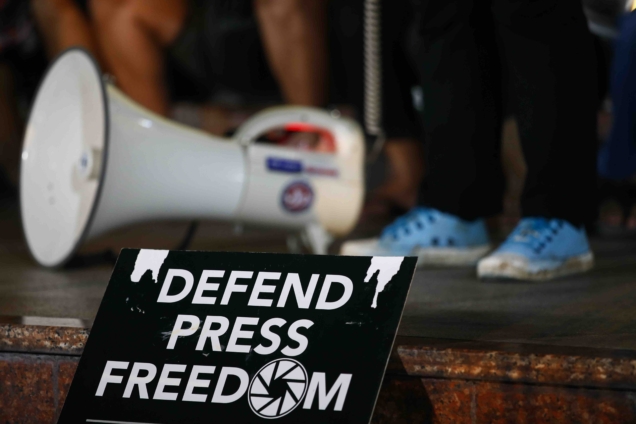
As the Amadotor case moves through the courts, the government and the Ghana Police Service must be reminded that any attempt – direct or indirect – to reintroduce criminal sanctions for speech will be fiercely resisted. Ghana has travelled too far down the path of democratic progress to turn back now. The message must be clear and unwavering: Defend media freedom. Reject the return of criminal libel. Protect the right to speak without fear.
Author: Kofi Afedzi, Media Watcher and Consultant
Latest Stories
-
Aggrieved cocoa farmers urge Parliament intervention
3 minutes -
Ghana launches first maternal mental health policy
6 minutes -
Mahama issues three calls to action at One Health Summit
12 minutes -
KNUST secures $2.3m funding for research activities
16 minutes -
Ayigboe residents fear disaster as ECG delays repairs on live faulty cables
21 minutes -
PIAC urges investment as oil production falls
24 minutes -
Heath Goldfields seals $2.8bn Trafigura deal to revive Bogoso-Prestea
48 minutes -
Trump says US military to stay around Iran; threatens action if Tehran fails to comply with deal
1 hour -
Only 6% insured locally – Prof. Gyampo exposes cracks in import regime
1 hour -
Thousands of containers lost at sea – GSA’s Prof Gyampo warns importers are exposed to risk
2 hours -
Keep the money in Ghana – Gov’t enforces local cargo insurance
2 hours -
US Army veteran charged with leaking classified information to journalist
2 hours -
Dr Dre joins Forbes billionaires list as second-richest hip-hop artist with $1 billion fortune
2 hours -
Trump administration cannot nix legal status of 5,000 Ethiopians, US judge rules
2 hours -
Libya announces new oil and gas discoveries with three major energy companies
3 hours