

Audio By Carbonatix
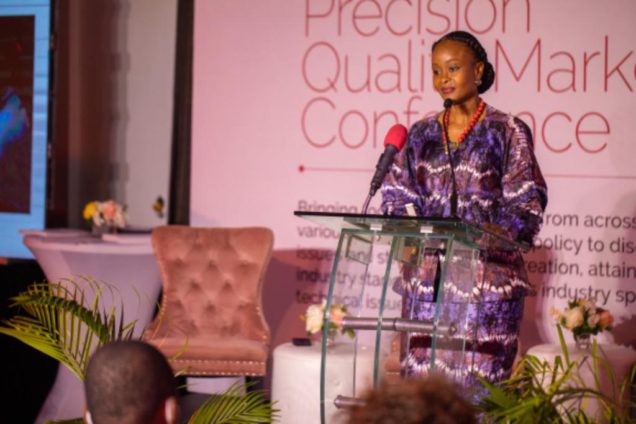
The Chief Executive Officer of the Design and Technology Institute (DTI) has called on Artisans to develop core values that will help them propel their businesses.
Madam Constance Swaniker said they needed to be disciplined, have integrity and standards coupled with Precision Quality (PQ) to compete favorably with the implementation of African Continental Free Trade Area (AfCFTA).
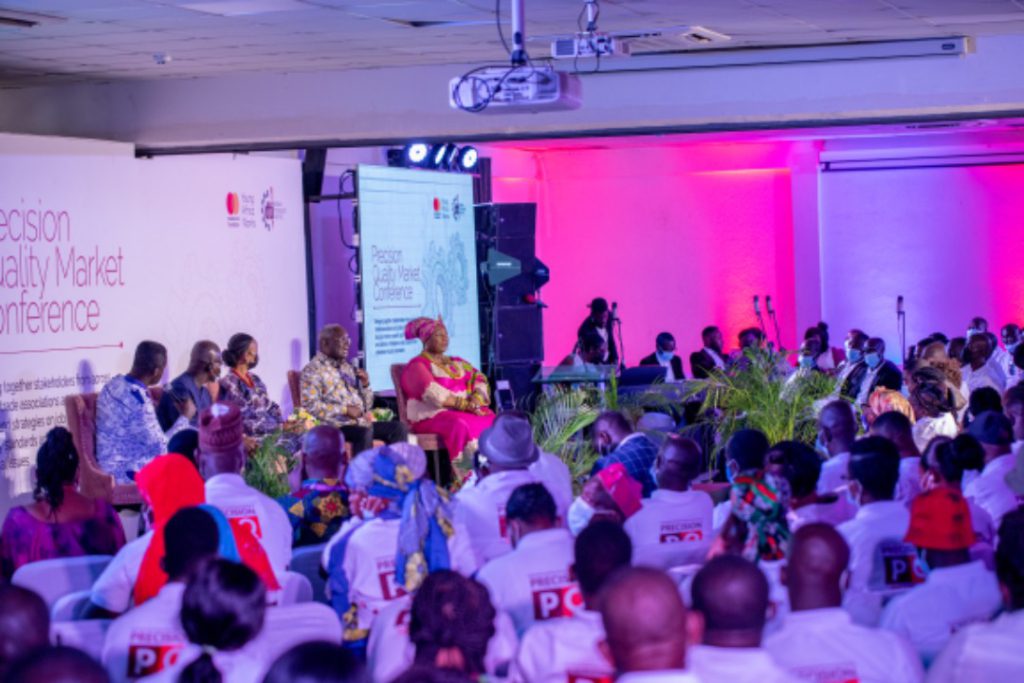
Madam Swaniker made this call at the PQ Market Conference organized by DTI in partnership with the Greater Accra Market Association.
The Conference brought together stakeholders from different Trade Associations and Policy Institutions to discuss industry specific technical issues and address strategies on job creation and attainable industry standards through Precision Quality.
It formed part of DTI's strategy to improve the work skills and practices of 5,000 master craft persons and 1,000 Small Medium Enterprises through the PQ curriculum training programme.
She said quality and altitude has been missing in most of the business operations of the informal sector, hence the need to build their capacities.
Madam Swaniker said there were so many opportunities in the country but unless "we have a precision mindset, those opportunities could not be harnessed.”
She said the Institute’s PQ curriculum training programme would contribute to transforming TVET livelihoods for sustainable jobs to provide 40,000 direct and indirect work opportunities for young people in the country.
"The PQ curriculum was developed by industry players and certified by the Commission for Technical and Vocational Education and Training," she added.
The CEO said the conference was in line with DTI's strategy to collaborate with stakeholders on the "Transforming Youth TVET livelihood for sustainable jobs" project.
The project is part of the partnership arrangement with the Mastercard Foundation's "Young Africa Works" strategy to enable 3 million young people in Ghana, particularly young women, to access dignified and fulfilling work opportunities by 2030.
Professor Alexander Dodoo, the Director-General of the Ghana Standards Authority said if buyers could trust what they were purchasing, business normally goes fast, adding that consistent quality stops frustration.
He said the Authority intended to regulate the Artisan industry to make sure those operating in that area were doing the right things.
The Director-General commended the organisers of the programme for their consistency to promote PQ among businesses.
About Design and Technology Institute
The Design and Technology Institute (DTI) is a state-of-the-art Technical and Vocational Education Training (TVET) for young people. It was officially launched in September 2019 to provide the platform for students from various Universities, Polytechnics, Technical and Vocational Institutions to gain industry experience by working closely with artisans on a factory floor, supported by experienced instructors. The mission of the Institute is to transform skills training for young people in Ghana and across West Africa.
The Institute offers scholarships to needy but brilliant students in partnership with the Mastercard Foundation under their Young Africa Works strategy in Ghana. The campus is located at Mempeasem, East Legon behind Ghana Meteorological Agency (Digital Address: GA-484-6124).
About the Mastercard Foundation
The Mastercard Foundation works with visionary organizations to enable young people in Africa and in Indigenous communities in Canada to access dignified and fulfilling work. It is one of the largest, private foundations in the world with a mission to advance learning and promote financial inclusion to create an inclusive and equitable world. The Foundation was created by Mastercard in 2006 as an independent organization with its own Board of Directors and management.
For more information on the Foundation, please visit: www.mastercardfdn.org
About the Young Africa Works Program
Young Africa Works is the Mastercard Foundation’s strategy to enable 30 million young people, particularly young women, to access dignified and fulfilling work by 2030. It is estimated that by 2030, Africa will be home to the world’s largest workforce, with 375 million young people entering the labour market. With the right skills, these young people will improve their lives and the lives of their communities, contributing to Africa’s overall competitiveness.
The Young Africa Works program is currently being implemented in seven African countries in collaboration with governments, the private sector, business leaders, educators, and young people. Countries involved in the first phase of the strategy include Rwanda, Kenya, Senegal, Ethiopia, Ghana, Nigeria, and Uganda.
Latest Stories
-
Health Ministry partners private sector to boost public education on safe healthcare practices
4 minutes -
GhIE demands independent audit of GH¢110bn Big Push road programme
5 minutes -
Heavy rainstorm causes power outages in Ashanti Region – ECG
5 minutes -
Abuakwa MP supports constituents on Easter day
7 minutes -
CAF U-17 AFCON: Ghana handed tricky opponents in Group D
10 minutes -
Manhyia South MP decries unchecked commercialisation of residential areas, warns of extinction
10 minutes -
U-17 AFCON 2026: Ghana drawn in tough group as Black Starlets eye World Cup return
12 minutes -
NRSA recommends strict enforcement of laws banning right-hand drive imports
19 minutes -
‘Don’t belittle our intelligence’ – Methodist Bishop criticises Kwakye Ofosu over LGBTQ comment
19 minutes -
Ghana’s crude oil output declines for 6th consecutive year – PIAC
22 minutes -
$434m in oil revenue allocated to Big Push Programme — PIAC
23 minutes -
Ghana’s oil production hits 694 million barrels since 2010 – PIAC report
31 minutes -
Ghana records 7.5% economic growth in January 2026, services sector leads expansion
35 minutes -
One-cedi levy essential to keep power sector afloat- Ben Boakye
37 minutes -
Nii Noi marks Easter with donation of medical equipment to Taifa Polyclinic
38 minutes