

Audio By Carbonatix
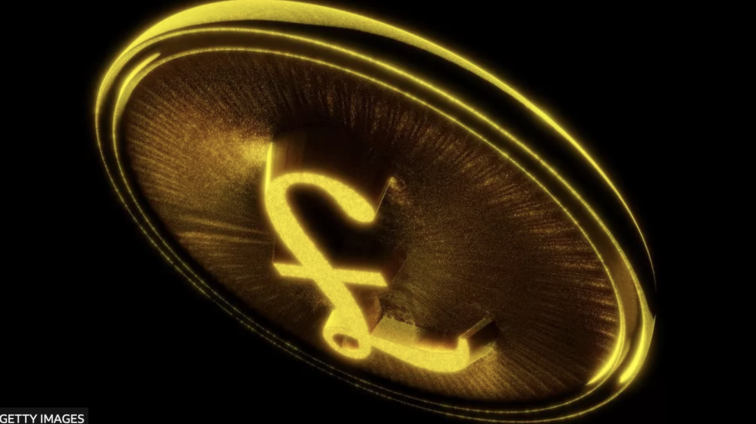
A state-backed digital pound is likely to be launched later this decade, according to the Treasury and the Bank of England.
Both institutions want to ensure the public has access to safe money that is easy to use in the digital age.
Chancellor Jeremy Hunt said the central-bank digital currency (CBDC) could be a new "trusted and accessible" way to pay.
But it will not be built until at least 2025.
"We want to investigate what is possible first, whilst always making sure we protect financial stability," Mr Hunt said.
The Treasury and the Bank of England will formally start a consultation for the digital currency, on Tuesday.
Cryptocurrencies are not backed by a central bank and the value can shoot up and down rapidly.
But while it may use technology similar to cryptocurrencies such as Bitcoin and Ethereum, the digital pound, issued by the Bank of England, would be less volatile. Ten digital pounds will always be worth the same as £10 in cash, the Treasury says.
Though, as holidaymakers will know, the value of the pound does change relative to other currencies.
Prime Minister Rishi Sunak asked the Bank of England to look into backing a currency, in 2021, as chancellor.
And in October 2022, Mr Sunak's Financial Service Minister Andrew Griffith warned a lengthy delay could create problems for the economy.
Monetary science fiction?

Right now, there is probably little need for a digital pound. People use their debit cards or phones, or even watches to fulfil the same function. It is a solution to a problem that does not yet exist.
But this is looking towards a near future that sounds like monetary science fiction. At its heart it is about data on what you spend, and what the entire population spends. It is a world where people might just choose to trust international private sector brands, in finance or in tech, more than the state. Think Amazon, or Facebook, or maybe Chinese-owned Alibaba or Tiktok having a version of sterling.
Companies that control the data on everything someone spends, when and where they spend it, will sit on a priceless asset. Unregulated digital currencies could offer those companies incentives to create walled gardens, fragmenting the pound system. It would make controlling the economy more difficult, because £1 might not be worth £1 everywhere.
This is where today's ideas come in. Neither the Bank of England nor Government would have access to the data on transactions with a digital pound. But consumers could pick providers, not just banks, to hold their cash in digital wallets, with varying degrees of privacy. Some users might be comfortable with their wallet provider knowing all their transactions, if they received a discount for example. Others might want to stay as private as possible. The Treasury wants to encourage innovation.
Other, bigger blocs, such as the USA and the Eurozone also want their digital dollars and digital euros to be international means of exchange. That is less of an overt aim here. The eye here is on maintaining UK monetary sovereignty against upheaval from the likes of Big Tech.
Initial restrictions
If given the go-ahead, there would then be significant investment to launch the currency.
There are likely to be initial restrictions on how much of the currency any individual or business could hold.
Bank of England governor Andrew Bailey said the digital pound would provide a new way to make payments, "help businesses, maintain trust in money and better protect financial stability".
He stressed the importance of the consultation being the "foundation" for what would be a "profound" decision for the way we use money in the future.
What could a digital pound look like?
- It would replicate the role of cash, in a digital world
- Issued by the Bank of England
- Subject to rigorous standards of privacy and data protection
- Accessed through digital wallets via smartphones or smartcards
- Intended for payments online, in store and to friends and family
- Initial restrictions on how much an individual or businesses could hold
Countries around the world, including the US, China and the Eurozone, are considering similar proposals.
Latest Stories
-
US Secret Service investigates reports of gunfire near White House
46 minutes -
Current account stability to mitigate pressure on cedi; currency to end year at GH¢11.40 to a dollar
56 minutes -
Oil back above $110 after expletive-laden Trump threat to Iran
57 minutes -
T-bills auction: Government records 32% undersubscription; interest rates rise again
58 minutes -
Economy to remain relatively insulated from fallout of US–Iran conflict – Fitch Solutions
58 minutes -
[Watch Live] Shatta Wale, Kofi Kinaata, and others ignite the grand finale of Gomoa Easter Carnival
3 hours -
Trump issues expletive-laden threat to Iran over Hormuz Strait blockage
5 hours -
Berekum Chelsea edge Aduana FC in Bono derby to boost survival hopes
6 hours -
‘They can’t control the team’ – Ernest Thompson doubts local coaches for Black Stars role
7 hours -
Ghana-born midfielder Seidu realises ‘dream’ with Atlético Madrid debut
7 hours -
GPL 2025/26: Bubakari strikes late to hand All Blacks vital win over Dreams FC
7 hours -
Fatal crash on Kintampo–Tamale highway claims four lives
7 hours -
2025–26 FA Cup Semifinal Draw: Chelsea, Man City Learn Wembley Opponents
8 hours -
GPL 25/26: Gold Stars back on top after beating Nations FC
8 hours -
GPL 2025/26: Heart of Lions roar back with victory over Vision FC in Kpando
9 hours