

Audio By Carbonatix
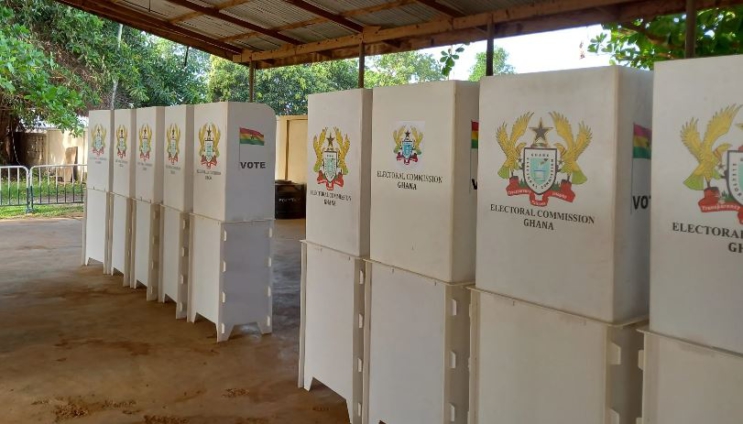
The Electoral Commission (EC) has rescheduled the district-level elections in some electoral areas in the Ashanti and Eastern Regions.
According to available information, the development is due to technical challenges involving the printing of ballots by the EC's contractors.
JoyNews' correspondent in the Ashanti region reports that some districts including Bantama, South Sontreso, Atwima Nwabiagya, Atwima Mponua, Dadeso and Santasi, will not be participating in the exercise today.
These areas have been exempted from the exercise due to the Electoral Commission's delay in delivering their voting materials.
In a statement signed by the Acting Head of Public Relations for the EC, Michael Boadu, the Commission said the affected areas are scheduled to participate in the exercise on Thursday, December 21, 2023.
Meanwhile, the exercise was expected to cover 6,215 electoral areas across 216 metropolitan, municipal, and district assemblies except the Nkoranza North and South in the Bono East Region.
Over 66,000 people are competing for the District Assembly and Unit Committee positions in the District Level Elections.
The EC’s data indicates that there are 18,755 assembly member candidates and 47,502-unit committee member candidates, totaling 66,257 candidates.
Out of the 18,755 assembly candidates, 17, 474 are males representing 94 percent, whilst the females are 1,106 representing six per cent.
Also, out of the 47,502-unit committee candidates, 40,923 are males representing 88 per cent and the females are 5,413 representing 11.6 per cent. This will be an appreciable increase in the number of candidates who contested the elections four years ago.
However, this enthusiasm from the candidates has not trickled down to the voters yet.
The exercise, since its inception in 1988, has always been met with voter apathy and lack of enthusiasm though it has been touted as one of the best platforms for citizens to participate actively in selecting their local representatives.
Data shows that in 1998/89 when the DLE commenced, voter turnout was 59.3 per cent. However, in 1994, the figure reduced drastically to 29.3 per cent.
It jumped up again from 29.3 to 41.6 per cent in 2002.
Unfortunately, whatever measures that were put in place in 2002 could not be sustained and this led to a decline in the numbers in 2006. The voter turnout for that year was 33.1 per cent. In 2010, the turnout increased slightly to 35.5 per cent and decreased again to 30.6 per cent in 2015.
The low participation of women has also been one of the woes associated with this election.
Latest Stories
-
Prudential Life settles GH¢100,000 medical bills under its PRUCares Valentine Experience Initiative
5 hours -
Wa West Picnic: Peter Lanchene Toobu champions peace, health and unity in landmark celebration
6 hours -
Dr Mensah Market flooded after downpour in Kumasi
6 hours -
Armed men reportedly storm Adjen Kotoku Onion Market amid tensions
7 hours -
Tecco Mensah writes: Why football fans must look beyond statistics
7 hours -
Police recover stolen Honda CR-V in Kumasi within 48 hours
8 hours -
Apetorku Gbodzi 2026 Festival opens in Dagbamete with development focus
8 hours -
President Mahama arrives in Lyon to co-chair One Health Summit
8 hours -
Beverly View Plus Hotel draws crowds amid coastal Easter rush in Volta
8 hours -
Maiden Zongo Festival held in Wa amid calls to tackle drug abuse among the youth
9 hours -
FDA warns of fake HIV test kits on Ghanaian market
9 hours -
Africa urged to build resilient health systems as donor support tightens
9 hours -
Easter gesture: Ablakwa settles medical bills for 85 North Tongu constituents
11 hours -
Africa must harness its population strength—Titus-Glover
11 hours -
Visa-free access doesn’t mean unlimited stay – Lom Ahlijah
11 hours