


Audio By Carbonatix
Alejandro Ramos Martínez, a seafood diver from Pisco, Peru, recently made international headlines after a terrible accident left him looking like a human balloon.
He apparently rose from a depth of 30 meters too fast, which caused the nitrogen in his blood to form giant bubbles that adhered to his muscles, leaving him looking deformed.
Martínez’s unusual case was featured on Peruvian TV show “Cuarto Poder”, where doctors were left stunned by the horrifying effect of the nitrogen pods on the man’s physical appearance.
Decompression sickness, also known as ‘the bends’, causes nitrogen to come out of solution and form bubbles in the blood and tissues.
In mild cases, symptoms include unusual fatigue, dizziness, nausea and joint pain, but in rare cases it can also cause paralysis or even death. The deforming effects it has had on this Peruvian diver are believed to be unique.
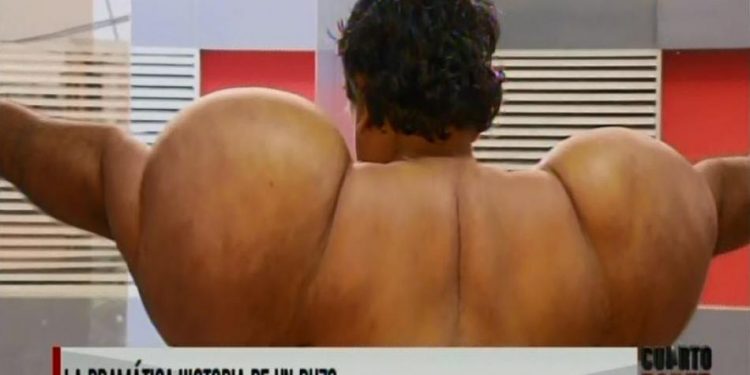
Alejandro Ramos Martínez suffered his diving accident four years ago, but doctors are still looking for ways to get the nitrogen bubbles out of his body.
Because these gas sacks are apparently attached to the man’s flesh, they cannot be removed surgically, so the best solution they’ve come up with so far has been administering oxygen in a pressurized chamber. They have so far been able to eliminate about 30% of the enormous nitrogen bubbles, and estimate Martínez will require at least another 100 sessions in the hyperbaric chamber.
The bizarre reaction to the rapid ascent not only left the seafood diver looking like a walking balloon, but apparently also added an extra 30 kg to his frame. The nitrogen bubbles apparently cause Martínez excruciating pain which he can only live with thanks to painkillers, as well hypertension.
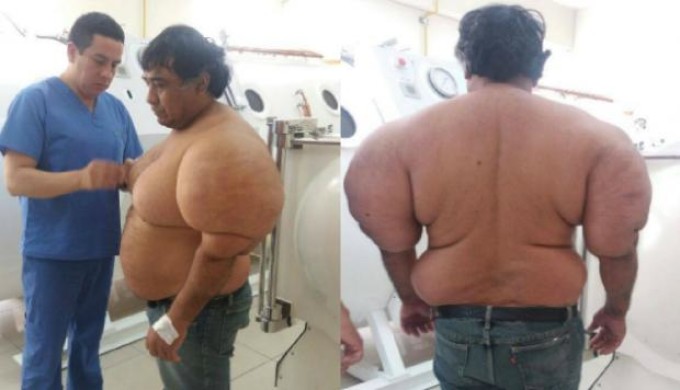
His deformed frame has recently resulted in a serious hip injury which doctors say will require a prosthesis. Peruvian news site Alvaroz reports that if the number of nitrogen bubbles in Alejandro Ramos Martínez can be reduced with the help of oxygen therapy, he will be eligible for a complicated surgical procedure to have them removed completely.
However, the estimated cost of such a surgery is $100,000, which the poor diver does not have. It is unclear how he can even make a living now that he cannot dive anymore.
Latest Stories
-
Prudential Life settles GH¢100,000 medical bills under its PRUCares Valentine Experience Initiative
6 hours -
Wa West Picnic: Peter Lanchene Toobu champions peace, health and unity in landmark celebration
6 hours -
Dr Mensah Market flooded after downpour in Kumasi
7 hours -
Armed men reportedly storm Adjen Kotoku Onion Market amid tensions
8 hours -
Tecco Mensah writes: Why football fans must look beyond statistics
8 hours -
Police recover stolen Honda CR-V in Kumasi within 48 hours
9 hours -
Apetorku Gbodzi 2026 Festival opens in Dagbamete with development focus
9 hours -
President Mahama arrives in Lyon to co-chair One Health Summit
9 hours -
Beverly View Plus Hotel draws crowds amid coastal Easter rush in Volta
9 hours -
Maiden Zongo Festival held in Wa amid calls to tackle drug abuse among the youth
10 hours -
FDA warns of fake HIV test kits on Ghanaian market
10 hours -
Africa urged to build resilient health systems as donor support tightens
10 hours -
Easter gesture: Ablakwa settles medical bills for 85 North Tongu constituents
12 hours -
Africa must harness its population strength—Titus-Glover
12 hours -
Visa-free access doesn’t mean unlimited stay – Lom Ahlijah
12 hours