

Audio By Carbonatix
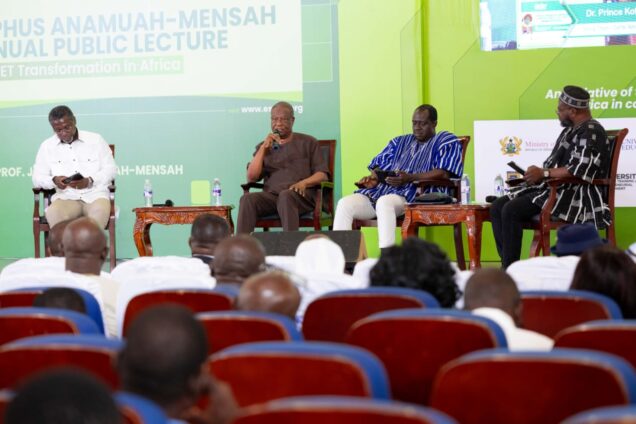
The Executive Chairman of CellTel Networks Limited, Dr. Prince Kofi Kludjeson, made a compelling case for aligning education with industry as a pathway to economic transformation at the inaugural Professor Jophus Anamuah-Mensah Annual Public Lecture on TVET Transformation in Africa.
The lecture was held at the Jophus Anamuah-Mensah Conference Centre at the University of Education, Winneba.
The former AGI president, Dr. Kludjeson, delivered his remarks as part of a three-member panel responding to a keynote address by Prof. Tagoe.
He argues there is a critical need to rethink the role of education in national development, positing that Ghana must move beyond traditional academic models to embrace industry-centered training.
“Education is industry,” Dr. Kludjeson emphasized, urging stakeholders to reconsider how institutions prepare students for the real world.
According to him, the disconnect between education and industry remains one of the key barriers to job creation and economic growth.
Dr. Kludjeson highlighted the Ashanti Region as an example of untapped opportunity. With a population comparable to major global innovation hubs, he suggested that the region could be transformed into a technology powerhouse similar to Silicon Valley.
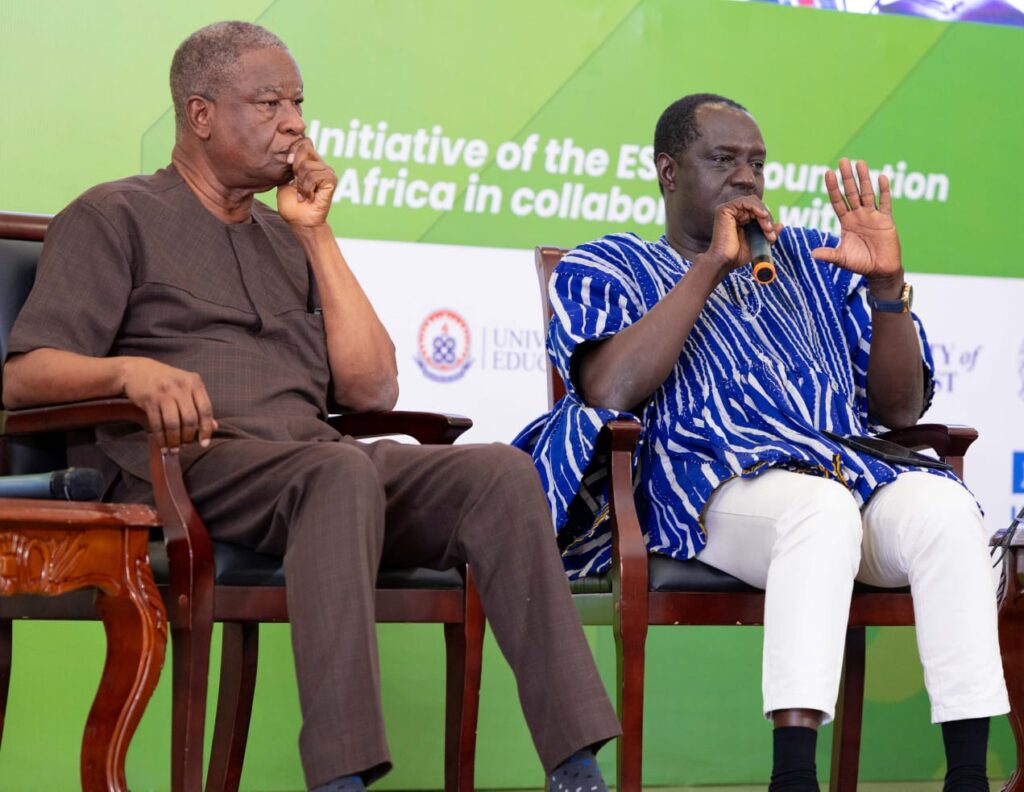
“If you take the Ashanti Region, with about six million people, it is like California,” he said. “So why can’t we transform it into our own Silicon Valley?”
He contrasted Ghana’s reliance on natural resources with the wealth generated through technology and innovation, citing global tech entrepreneurs as examples of the value of intellectual capital.
“The value of gold is not more than $20 billion in revenue for Ghana,” he noted. “But individuals like Elon Musk have created wealth in the trillions through technology. That is where we must focus.”
Central to his argument was the need to integrate education with industry to attract investment and foster innovation. He called for stronger partnerships between academic institutions and private sector players, particularly in technology.
“We must bring in real companies with foundational capital into the educational space, not just rely on donors,” he said.
Dr. Kludjeson also raised concerns about the accessibility and affordability of higher education, pointing to disparities between tuition and accommodation costs in universities.
He cited instances where students paid significantly more for housing than for academic fees, describing the situation as unsustainable.
“We need to harmonize these issues,” he urged. “Let us put committees together and fix them so that the system works for students.”
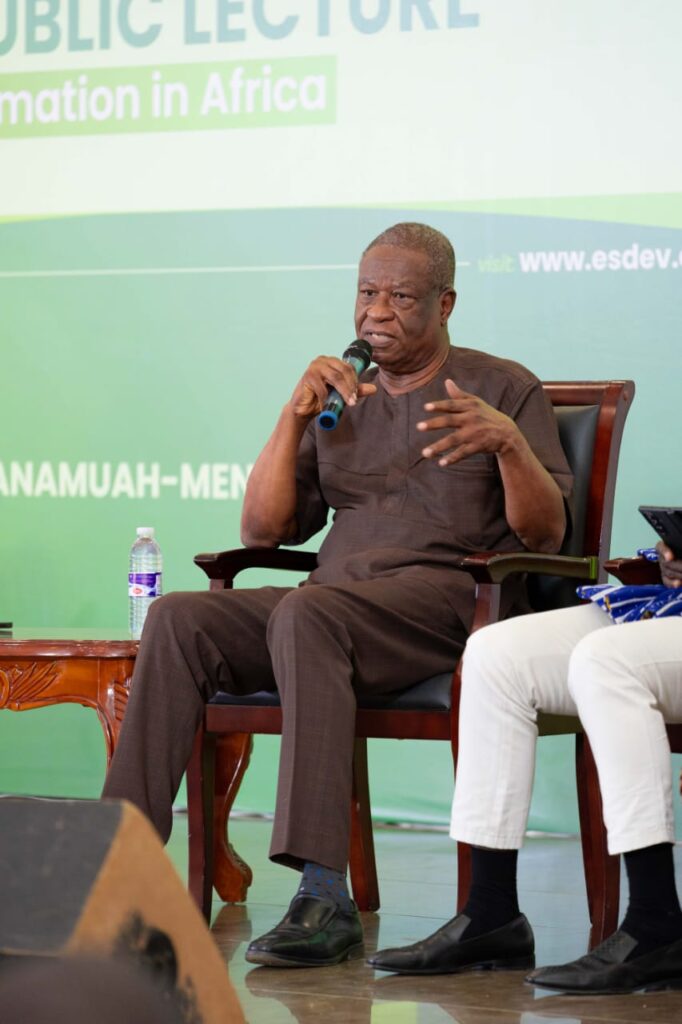
In addition, he challenged academic institutions to increase their global engagement and visibility, and questioned whether Ghanaian professors were actively participating in international conferences, obtaining industry certifications, and contributing to global knowledge networks.
“Are our professors visible on the global stage?” he asked. “Are they certified and connected to industry trends?”
Referencing institutions such as Kwame Nkrumah University of Science and Technology (KNUST), he acknowledged the efforts of academics but stressed that policy constraints often limit innovation. He called for flexibility in policy implementation to allow institutions to experiment with new approaches.
Dr. Kludjeson concluded by urging stakeholders to act with urgency, particularly within the remaining period of the current administration. He proposed a 24-month window to initiate meaningful reforms that would reposition Ghana’s education system for industrial growth.
“Let us begin the transformation process now,” he said. “We must create opportunities, especially for young people in underserved communities, and equip them with the skills and certifications needed to succeed.”
He emphasized that such reforms would not only improve employability but also enable Ghana to reclaim its position as a leader in innovation and development in Africa.
Latest Stories
-
Ghana’s BRICS move requires clear strategy to manage risks – Godfred Bokpin
55 minutes -
Pay teachers realistic income – Duncan Amoah to gov’t
1 hour -
Bechem to become chicken capital of Ghana – Mahama projects
1 hour -
Gov’t targets recruitment of 16,500 health professionals in 2026
2 hours -
Two-week strike will not derail academic calendar – GNAT President
2 hours -
Headmaster detained after BBC investigation into alleged sexual abuse of students
2 hours -
GNAT pushes for clear implementation procedures of teachers’ conditions of service
2 hours -
Recurrent strikes threaten quality of education and academic calendars – Prof Bokpin
2 hours -
‘Cockroach’ group leaders among hundreds detained in Delhi protest
2 hours -
Don’t let speed of information become your judgement – CJ tells new lawyers
3 hours -
World Cup visa scandal: People have leveraged public office to facilitate fraud – Senyo Hosi
3 hours -
Glut! Farmers count losses as prices crash, customers happy
4 hours -
GSA postpones auction of unserviceable vehicles
4 hours -
Man charged with attempted murder after stabbing
4 hours -
World Cup visa scandal: Senyo Hosi says issue goes beyond calls for Sports Minister’s resignation
4 hours