

Audio By Carbonatix
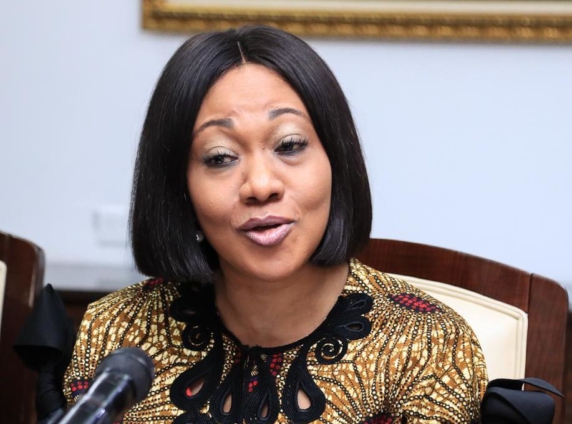
Chairperson of the Electoral Commission, Jean Mensa and her two Deputies; Dr. Bossman Eric Asare and Samuel Tettey, have filed a suit at the Supreme Court against FixTheCountry convener, Oliver Barker-Vormawor.
The Chief Justice and Attorney-General are also named as defendants in the case that seeks to halt ongoing impeachment proceedings against the trio.
Mr. Barker-Vormawor in a January 10, Facebook update, shared a press statement indicating that he together with 45 others had petitioned the Presidency demanding the removal of the said officials for their failure to organise parliamentary elections for residents of Santrokofi, Akpafu, Lolobi and Likpe (SALL).
The said press statement explained the grounds of the petition stating, “The petition has been brought in connection with the intentional denial of the right to vote of the people of Santrokofi, Akpafu, Lolobi and Likpe in the 2020 general parliamentary elections.
The petitioners assert that the actions of the impugned officials, if considered in context and in the light of the preceding and subsequent conduct, meet the threshold of stated misbehaviour and or incompetence as required under Article 146 of the 1992 Constitution for the removal of these officers”.
The said statement noted that the Supreme Court had in a number of cases noted the importance of such impeachment proceedings being held in-camera.
“The Supreme Court has in a string of decisions held that the contents of a petition brought under Article 146 of the Constitution cannot be made public in order to protect the privacy interest of the Article 146 officeholders.
"While the Petitioners find it bizarre that the Supreme Court will aid public office holders to assert non-existent personal privacy interests in grave matters of public interest and in connection with the performance of their duties, they have reticently agreed to embargo the release of the full content of the petition.”.
The EC officials, in their writ filed at the Supreme Court, alleged that Barker-Vormawor has published contents of the petition seeking their removal in the media contrary to Article 146(8) of Ghana’s constitution.
This provision states, “All proceedings under this Article shall be held in camera, and the Justice or Chairman against whom the petition is made is entitled to be heard in his defence by himself or by a lawyer or other expert of his choice.”
The Supreme Court dealt with this issue in the case of J1/29/2015 Dery v Tiger Eye Pi & 2 Ors, Ghana Bar Association v. Attorney-General and Another [1995-96] 1GLR and Agyei- Twum v. Attorney-General and Akwetey [2005-2006] SCGLR 732.
In the Justice Dery case, the Supreme Court said that unconstitutional disclosure permits the affected person to seek redress but that ought not necessarily to truncate the investigations.
“Although the Constitution does not provide any penalty for unconstitutional disclosure and does not also afford any remedies that are available to a party affected by the disclosure, the true intent is not in dispute, it is to protect the integrity of the judiciary, the personal reputation of the judge under investigation, and it also aims at protecting potential witnesses from some form of recrimination. The reasons for confidentiality could be endless, but the integrity of the administration of justice is at the centre.
This doctrine requires that where two constitutional rights come into conflict, for example, the right to privacy and the freedom of the press, the conflict should be resolved in the manner which least restricts both rights.
The plaintiff is entitled to private and confidential process which has been breached by the public disclosure of the petition and its contents; at the same time, the State has a constitutional right to investigate the allegations contained in the petition as a matter of express constitutional provisions, and also on account of public policy which requires that such allegations should be investigated.
The plaintiff has other remedies available to him as mentioned earlier when we identified the five possible consequences for such violations, some of which are available under our laws.
But the State and for that matter, the people from whom justice emanates as per Article 125(1) of the Constitution, 1992, will lose it all if the proceedings are truncated without investigations. “
The three EC officials are therefore asking the Supreme Court to rule that the alleged publication precludes the Chief Justice from dealing with the petition.
They want the Chief Justice restrained from determining, dealing or having anything to do with the petition.
Latest Stories
-
Deputy Transport Minister backs Yellow Line traffic initiative
54 seconds -
MTN Ashanti-Fest music concert set to hit Kumasi on Saturday
18 minutes -
Authorities probe discovery of dead fish at Tema shipyard
20 minutes -
Minority welcomes fuel tax cuts, demands accountability for GH¢1 levy
30 minutes -
It remains a priority — Sam George on Anti-LGBTQ bill
36 minutes -
Police arrest Nigerian national seen in viral videos wearing police uniforms
38 minutes -
Free golf training empowers underprivileged girls in Accra
54 minutes -
Why SIGA’s reset is not a market sin, but a national necessity
57 minutes -
SIGA Directive: Beyond the theatre of institutional displacement
1 hour -
Boso Odweegyi Festival 2026 launched with call for unity, cultural preservation
1 hour -
YEA clears majority of beneficiary arrears, assures completion of outstanding payments
2 hours -
AfCFTA key to building globally competitive African businesses – Zambia envoy urges Ghanaian CEOs
2 hours -
Albert Kobina Mensah, soil pollution and remediation: Risk assessment, phytoremediation, revegetation
2 hours -
GIFEC supports national rollout of One Million Coders Programme with laptop presentation
2 hours -
Old Tafo MP rolls out street lights project to boost security and night-time economy
2 hours