

Audio By Carbonatix
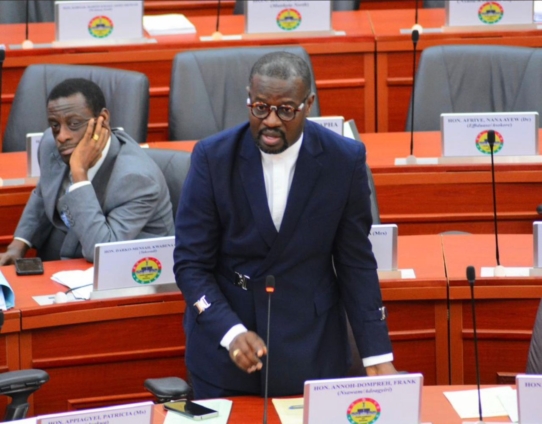
The Minority Chief Whip and Nsawam-Adoagyiri MP, Frank Annoh-Dompreh, is calling for global recognition of ecocide as an international crime alongside genocide.
Addressing Parliament on Monday, he urged Ghana to take legislative steps to criminalise large-scale environmental destruction and support international efforts to classify ecocide as one of the world’s gravest crimes.
“Honourable Speaker, I rise today with a profound sense of urgency and responsibility — to speak on a matter that transcends partisan politics, economic growth, and short-term development agenda.”
“I speak to the need for legislative action against ecocide — the mass destruction of ecosystems — and for Ghana to align itself with a growing global movement to make environmental devastation a punishable crime both domestically and internationally.”
He explained that ecocide refers to acts that cause severe and long-lasting damage to the environment.
“Ecocide, as defined by an independent expert panel convened by Stop Ecocide International, refers to ‘unlawful or wanton acts committed with knowledge that there is a substantial likelihood of severe and either widespread or long-term damage to the environment’.”
“This is not abstract rhetoric; it is a legal concept with measurable criteria — damage that is severe, widespread, or long-term.”
According to him, the current international legal framework does not yet recognise ecocide as a standalone crime during peacetime.
“The current legal framework in international law — notably the Rome Statute of the International Criminal Court — lists genocide, crimes against humanity, war crimes, and aggression.”
“Ecocide is not yet recognised as a standalone international crime during peacetime, even though environmental destruction today causes consequences on par with the gravest human rights abuses.”
He warned that this gap in international law allows corporations, governments and individuals to cause major ecological damage with limited criminal consequences.
“This absence in international law creates a legal vacuum: corporations, state actors, and individuals can commit ecological destruction — deforestation, industrial pollution, oil spills, and climate-amplifying activities — with limited criminal liability.”
He cited the environmental devastation in Nigeria’s Niger Delta as an example.
“The Nigerian Niger Delta, for example, has suffered over 7,000 oil spills from 1970–2000, devastating water, soil, and human health, with full environmental restoration estimated to take decades.”
Mr Annoh-Dompreh noted that momentum is growing globally to criminalise ecocide.
“At least 11 countries have already incorporated ecocide into domestic law, including Armenia, Belarus, Kazakhstan, Russia, Ukraine, Moldova, Georgia, Ecuador, Chile, France and Belgium.”
“In 2023, Belgium became the first European Union country to criminalise ecocide as part of its penal code revisions.”
He said the move is about justice and moral responsibility. “This is not merely environmental law — it is justice law.”
“Recognising ecocide as a crime embeds a moral framework into our legal system.”
He also pointed to the environmental threats facing Ghana, particularly illegal mining.
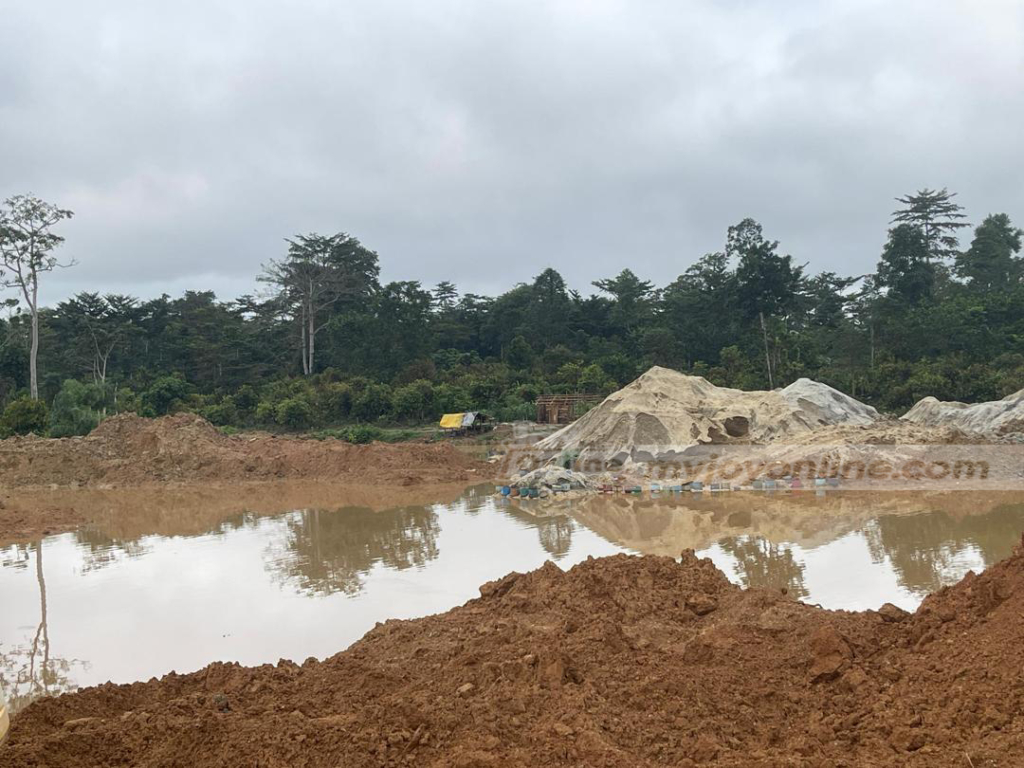
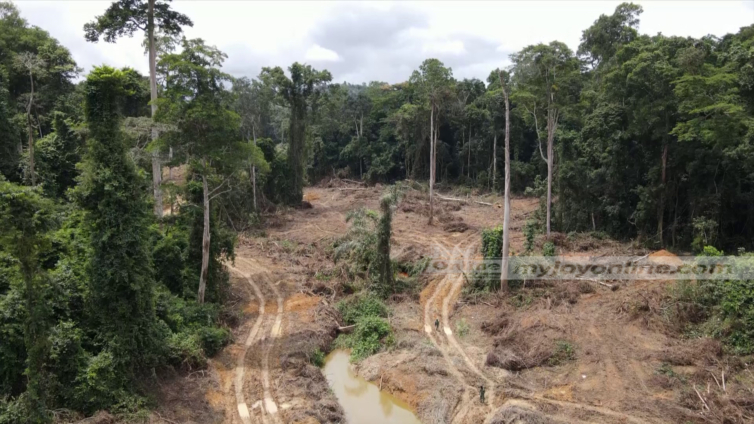
“As a country affected by deforestation, illegal mining (galamsey), and water pollution, Ghana’s ecosystems are under severe stress.”
“Recent reports indicate that up to 60% of our water bodies have suffered pollution due to illegal mining — a form of uncontrolled environmental degradation that threatens health, agriculture, and future prosperity.”
The Nsawam-Adoagyiri MP argued that environmental protection must be seen as a long-term national responsibility.
“Environmental stability is foundational to food security, human health, and sustained economic development.”
“The consequences of ecological damage are intergenerational — they affect our children, their livelihoods, and their right to a healthy environment.”
He urged Ghana to introduce a domestic law criminalising ecocide and push for global recognition of the offence.
“Pass a Domestic Ecocide Law: Introduce a standalone legal provision defining and criminalising ecocide with clear thresholds for severity, duration, and impact.”
“Align with International Law: Advocate at the Assembly of States Parties of the International Criminal Court to include ecocide as the fifth international crime.”
Mr Annoh-Dompreh also commended proposals to create a national crime of ecocide as part of Ghana’s constitutional review process.
“I commend the government in proposing the creation of a national crime of Ecocide as part of the proposals made by the Constitutional Review Committee.”
He urged swift action to protect the country’s environmental future.
“I urge a swift progression in the creation of national ecocide legislation to protect our economy now and into the future.”
Latest Stories
-
CGI orders motorbike training at tactical school in Kyebi
31 minutes -
Sachet water producers in Berekum defy gov’t directives, increase prices
32 minutes -
Critical commodities stuck at port, CSOs warn of family planning crisis
35 minutes -
Gender Ministry mourns victims of Volta Lake boat tragedy, deploys support for affected families
37 minutes -
MPs undergo training on human trafficking and gender dimensions
37 minutes -
Don’t expect instant relief – COMAC CEO warns fuel price drops will be gradual
40 minutes -
GIS to unveil comprehensive plans to enhance officers’ welfare and infrastructure
57 minutes -
Right move, wrong timing? – COMAC CEO questions govt’s delay on fuel price relief
58 minutes -
IMF urges Central Banks to keep inflation in check
1 hour -
NRSA stands firm on Toyota Voxy ban despite transport operators’ opposition
1 hour -
H. Kwasi Prempeh raises concerns over Supreme Court’s handling of OSP constitutionality case
2 hours -
Global childhood cancer cases soar
2 hours -
Airline pilots fear retribution over refusing to fly in Middle East, aviators’ group says
2 hours -
Police intensify security in Bosomtwe communities after deadly clash
2 hours -
Corporate Income Tax contributes highest to 2025 petroleum revenue
2 hours