

Audio By Carbonatix
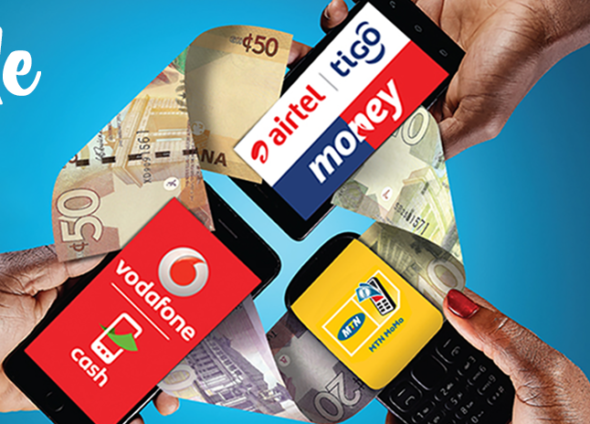
With the wide-spread use of mobile phone devices, the introduction of Mobile Money (MoMo) in Ghana since 2009 has had quite a significant impact on the Ghanaian economy by reducing unemployment to some extent, developing the payment ecosystem, providing a means of savings for people without access to banks, timely completion of financial transactions, among others.
More than a decade down the line and the importance of mobile money to the economy cannot be underrated especially during this pandemic where the risk of fomite transmissions through paper money can be reduced by using cashless payment systems.
In 2020 alone, the volume of mobile money transactions was worth ¢571.8 billion according to the Deputy Bank of Ghana (BoG) Governor, Elsie Awadzi, thus surpassing all other payment platforms.
The telecommunication companies have mobile money services offered at a little fee per transaction, yet mobile money merchants who aim to maximize their profits have made it costly by introducing unapproved charges.
They do not comply with the rules of transaction stated by the telephone companies and thereby, discouraging consumer patronage to some extent. This is somewhat due to the poor education of the customer base and the laxity of telcos in monitoring the actions of merchants and enforcing compliance.
Wow! It’s free. Who would’ve imagined a charge-free mobile money transaction? I transferred a huge sum of money from my Vodafone Cash (VF Cash) wallet and it incurred no charges. Interestingly, this is a cross-network transaction that I have always known to incur higher transaction rates than transactions on the same network.
Kudos to the Government for the Mobile Money Interoperability (MMI) initiative and to Vodafone Ghana for making all VF Cash transfers including those across the MMI platform free.
This probably is a marketing strategy aimed at increasing the patronage of VF- Cash and thus, the customer base of Vodafone Ghana at large but ruminating on this makes me appreciate the reduction in financial burden on customers too.
It’s already a year and counting since Vodafone Ghana waived charges on mobile money transfers to all networks yet with the profit motive of most businesses, other networks still charge fees. Other telcos should learn, emulate and have Vodafone’s innovation continued even post-Covid. Why?
Aside from drastically reducing the financial burden on customers, and frustrating hard cash transactions within the pandemic, waiving charges on mobile money transactions will tend to make the service more appealing to the ordinary Ghanaian and effect a rise in patronage, and impacting the incidence of robberies and loss of one’s money.
As unsafe as our communities and roads can be to move cash, mobile money provides a form of insurance to patrons since they do not have to worry about the risk of attacks by armed men on our highways. In cases of such attacks where mobile devices are lost, one could simply have their SIM cards replaced at almost no cost with their e-cash intact after meeting the requirements.
As the world migrates to a digital economy, telecommunications companies must change their perspective from mobile money being a means of convenience to it being a necessary luxury, and hence, mobile money charges particularly on person to person (P2P) transactions should be phased out, or drastically reduced and applied increasingly on Person to Business (P2B), and Business to Business (B2B) transactions. It is worth noting that MTN has zero charges for transactions below ¢100 However, more can be done.
Telecommunication companies like other businesses are inclined to profit-making as they owe financial obligations to shareholders, employees, and the state. This could render phasing out charges on transactions an impossible feat but largely compensated for by considering how much revenue these telcos could be losing through the illegal practices of rogue merchants and developing robust measures to curb the illegality.
That is not to disprove the loss of some revenue but as difficult as it might seem to sacrifice some percentage of the revenue generated from mobile money transactions, we learn from
Vodafone that it is possible, and is a step in the right direction to reduce cash in circulation to some extent. Mobile money charges on cash withdrawals could have the rates revised to champion the course of a cash-lite economy.
I believe this initiative can be taken up by the Government through the Bank of Ghana in the quest to develop a cash-lite economy, where a more effective and efficient monetary management of the economy can be done.
Also, a proper national identification system aiding the registration of SIM cards would help reduce the incidence of money laundering through mobile money services since clients are known through the National Identification System.
Telecommunication companies should develop robust measures in monitoring their merchants, thus, discouraging the dubious practices that their merchants use in ripping customers off. This would make the mobile money service appealing to many.
Also, government and its regulatory agencies, particularly the BoG, National Communications Authority (NCA), Economic and Organized Crime Office (EOCO), etc. should force the hands of these telecommunication companies to work towards zero charges on mobile money transfers to champion the digital economy dream.
****
You can contact the writer via email: t.edmund@hotmail.com
Latest Stories
-
Israel-bound flight diverted after fight between pilots
4 minutes -
EchoWave earns praise for sound quality at 10th Women in Worship
14 minutes -
Crackdown on South Africa’s unsafe streets ordered by president to keep women safe
26 minutes -
Banks are responding to improved monetary policy conditions – John Awuah
45 minutes -
Judges’ conference forces further adjournment of Salomey Baffoe case to Oct. 5
56 minutes -
Chorkor community joins AC4NCA clean-up to tackle marine and coastal pollution
1 hour -
GRA assures Tullow of collaboration to settle $393m tax liability without disrupting its petroleum operations
1 hour -
South Korea demands apology from Pyongyang for landmine blasts that injured three
1 hour -
Carlos Queiroz not the sort of coach Black Stars need – Nii Lante Vanderpuye
2 hours -
AFCON 2027Q: ‘Our Black Stars team is gone’ – Former Sports Minister
2 hours -
Prof. Prempeh calls for public review of draft constitutional reform bills
3 hours -
AFCON 2027Q: ‘I have never seen a poor performance from Black Stars like against Gambia’ – Nii Lante Vanderpuye
3 hours -
Bawumia backs insurance sector reforms after engagement with IBAG
3 hours -
Nigeria set to launch National Digital Address System 9 years after Ghana showed the way
3 hours -
Policy rate decision takes time to reflect in lower lending rates – BoG
3 hours