

Audio By Carbonatix
The August edition of EdTech Mondays spotlighted one of the most urgent and often overlooked issues in Ghana’s education technology journey: the role of parents in shaping and safeguarding their children’s digital learning experiences.
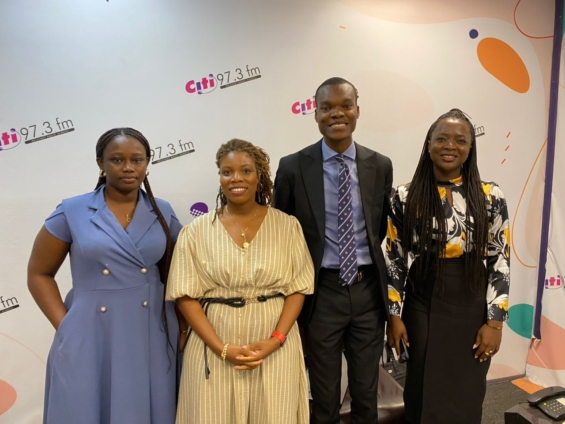
Moderated by Bernard Avle and aired live on Citi 97.3FM and MEST Africa’s digital platforms, the conversation featured an all-women panel of education leaders: Hannah Amoa, Flossy Azu, and Dzigbordi Akosua Agbenyo.
At the heart of the discussion was a clear and sobering truth: while technology is transforming how children learn, parents cannot afford to be passive bystanders. As Hannah Amoa emphasized, “It’s not about parents being tech experts, but about setting boundaries and being present.” Her call reflected the growing reality that children, even from a young age, are spending long hours online, often without the guidance needed to make that time productive.
The panellists drew attention to worrying developmental trends linked to unsupervised screen time, including delayed speech, limited social interaction, and the addictive nature of fast-paced online content. Flossy Azu warned of what she called “brain rot,” explaining that much of what children consume online is designed to capture attention rather than support growth. “We must make sure technology is used to enhance, not replace, the human aspects of learning,” she said.
Looking beyond Ghana, the panel highlighted examples of innovation in parental engagement. Dzigbordi Akosua Agbenyo shared how countries like Rwanda, Kenya, and the UK are experimenting with tech nights and community hubs, where parents and children explore digital tools together. These models, she argued, could inspire Ghana to rethink how parents are equipped to play an active role in their children’s digital journeys.
The conversation also explored the intersection of policy and community practice. Projects like the PLUS Project in Northern Ghana demonstrate the potential of grassroots interventions, but the panel agreed that stronger state investment and national frameworks are needed to scale these efforts. Beyond government, schools and Parent-Teacher Associations (PTAs) were identified as underutilized spaces. “We can no longer reduce PTAs to just fee discussions,” said Hannah Amoah. “They should be platforms for building real parent-teacher partnerships around digital literacy.”
Together, the panellists painted a picture of both risk and opportunity. On one hand, children left unmonitored online face growing developmental and safety challenges. On the other hand, when parents are empowered, schools are engaged, and communities are activated, technology can become a powerful enabler of learning.
One of the strongest takeaways from the August edition was the reminder that digital learning is not just about devices and apps — it is about people. Parents, teachers, and communities remain the first line of defence and the greatest enablers of meaningful digital education.
As always, EdTech Mondays was powered by MEST Africa and the Mastercard Foundation, as part of their shared mission to drive inclusive, quality education and innovation across Africa.
If you missed the live broadcast, you can watch the replay on MEST Africa’s YouTube or Facebook page. Stay tuned for the next edition of EdTech Mondays, airing on the last Monday of September, as we continue exploring the evolving landscape of education technology in Ghana and beyond.nt that strengthens national growth.
Latest Stories
-
Libya: Aliou Cisse leaves national team role after salary row
2 minutes -
NRSA declares commercial use of Toyota Voxy illegal
6 minutes -
Police hunt suspects after gunfire triggers chaos at Kotoku Onion Market
9 minutes -
Health Ministry partners private sector to boost public education on safe healthcare practices
20 minutes -
GhIE demands independent audit of GH¢110bn Big Push road programme
21 minutes -
Heavy rainstorm causes power outages in Ashanti Region – ECG
21 minutes -
Abuakwa MP supports constituents to mark Easter celebration
23 minutes -
CAF U-17 AFCON: Ghana handed tricky opponents in Group D
26 minutes -
Manhyia South MP decries unchecked commercialisation of residential areas, warns of extinction
26 minutes -
U-17 AFCON 2026: Ghana drawn in tough group as Black Starlets eye World Cup return
28 minutes -
NRSA recommends strict enforcement of laws banning right-hand drive imports
35 minutes -
‘Don’t belittle our intelligence’ – Methodist Bishop criticises Kwakye Ofosu over LGBTQ comment
35 minutes -
Ghana’s crude oil output declines for 6th consecutive year – PIAC
38 minutes -
$434m in oil revenue allocated to Big Push Programme — PIAC
39 minutes -
Ghana’s oil production hits 694 million barrels since 2010 – PIAC report
47 minutes