

Audio By Carbonatix
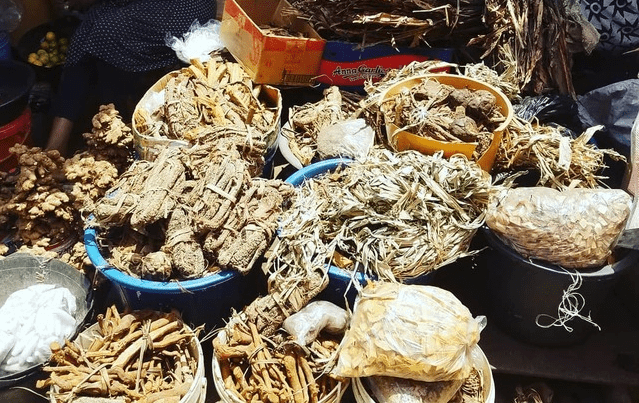
‘Nibima’, ‘Taabea’, ‘Adutwumwaa bitters’ among others are highly touted for their antimalarial prowess.
But concerns have been raised about its safety. It is therefore assumed many educated folks would then be deterred from gulping down herbal medicines.
Surprisingly, that is not the case in a joint study by the University of Saarland, Germany and the Kwame Nkrumah University of Science and Technology.
The researchers found that the more educated a person is, the more likely he/she will take herbal medicine.
Malaria is a serious human infection affecting around 228 million people worldwide each year, primarily in African countries such as Ghana.
Caused by the Plasmodium parasite and transmitted by female Anopheles mosquitoes, this disease kills over 400,000 persons each year and impacts heavily on the health of millions, and also on the healthcare systems and economies of the countries affected.
Malaria can be treated with artemisinin-based combination therapies and, indeed, the World Health Organization (WHO) advocates the manufacture, import, stockpiling, distribution, and subsequent application of medicines such as artemether–lumefantrine and dihydroartemisinin–piperaquine in fixed-dose combinations in countries where malaria is endemic.
At the same time, countries such as Ghana, over the centuries, have developed a tradition in treating malaria with locally produced herbal remedies, including branded names such as Taabea or Time Herbal Mixture.
At the same time, countries such as Ghana, over the centuries, have developed a tradition in treating malaria.
The scientists in the study sought to find out personal preferences and applications of antimalarial medicines in Ghana.
For the study over 1,000 questionnaires were distributed in Ghana from January to May 2019.
The findings published in the Journal Sci found around two-thirds of respondents rely on herbal medications.
They again found the more educated a person is, the more likely he is likely to take herbal medications.
Among the respondents, only 31 % preferred Orthodox medications.
Interestingly, 36.8 % preferred locally-produced herbal remedies and 32.2 on a combination of both.
“Even the educated, those at the tertiary level patronized herbal medications.
“The higher the education, the higher the chances of choosing herbs. They didn’t care about the side effects or the cost,” Prof. Anto Berko of the Department of Pharmacy Practice said.
One of the collaborators, Prof. Jacob Claus from the University of Saarland who was surprised at the findings, was worried about the likelihood of contamination and uncertainty of the active ingredients among others.
He would have wished the citizenry relied on scientifically-tested medications.
“It was a little bit surprising that many people would go for herbal medications,” he noted.
The scientists again found virtually all respondents were influenced by advertisements through channels like TV, radio and even billboards on the streets (99.9%)
This was followed by friend’s recommendations, pharmacy prescription and drug peddlers.
“The level of advertisement is huge. In a day, you can have a lot of adverts. No matter your beliefs, if you’re being bombarded with a product, you’re likely to go for that product,” Prof. Berko said.
Lead Scientist, Prince Yeboah of the University of Saarland believes it is about time, attention is placed on refining herbal products to ensure safety from their suspected disadvantages.
“This may provide a refinement of the most active mixtures,” he said.
Professor Claus also encouraged more technological investments into the production of herbal medications.
“The herbal medicine will play a major role as long as we invest a lot of technology into them by producing them in a cleaner and reliable way,” he said.
Latest Stories
-
Trump seeks $152m to reopen notorious Alcatraz prison
2 hours -
Ex-Chelsea player Oscar retires with heart issue
2 hours -
CA Foundation drives constitutional literacy in Kpone Katamanso municipality
2 hours -
GPRTU to hold talks with Transport Ministry over rising fuel costs
2 hours -
CUTS International urges gov’t to halt sachet water price hike pending cost review
2 hours -
Chief Justice: Efficient Judiciary essential to reducing business costs
2 hours -
Bayern grabs 99th-minute winner to cap superb fightback
2 hours -
Ahmed Ibrahim urges Ghanaians to reflect Easter values in nation-building
2 hours -
ECG inefficiencies undermining power supply -Mahama outlines reforms
2 hours -
Lewandowski scores as Barca fight back to defeat Atletico
2 hours -
Lack of private sector consultation undermining economic growth – Jerry Ahmed Shaib
2 hours -
Real Madrid seven points adrift after Muriqi’s late Mallorca winner
2 hours -
Ghana must lead AfCFTA implementation by example – Trade Minister Ofosu-Adjare
2 hours -
Strong Judiciary key to business confidence – Chief Justice Baffoe-Bonnie
2 hours -
Mahama announces 60-Hectare irrigation project to boost tomato production
2 hours