

Audio By Carbonatix
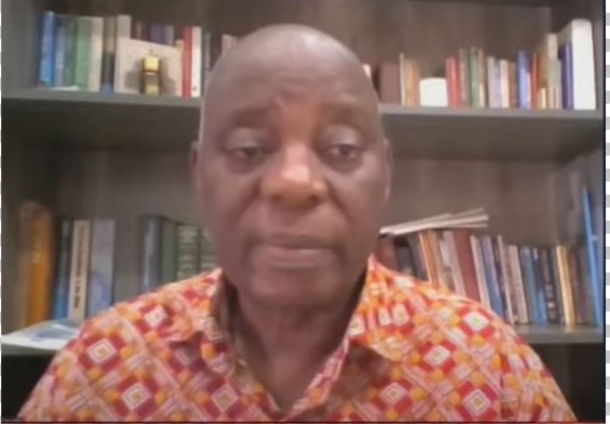
A member of the advisory board of the Coalition of Domestic Election Observers (CODEO), Rev. Dr. Fred Deegbe has called for a more thoughtful and dialogical approach to the ongoing election re-collation process.
Rev. Dr. Deegbe stressed the need for political parties to prioritise dialogue through the Inter-Party Advisory Committee (IPAC) to ensure transparency and peace, adding that they should agree on the rules governing the re-collation process.
In an interview on JoyNews' Newsfile on Saturday, December 21, he also underscored the importance of abiding by legal prescriptions to uphold the integrity of the democratic process.
“Let the parties dialogue among themselves and ensure that what is done is within the confines of the law. If there are doubts, they can be settled through the appropriate legal processes,” he stated.
Rev. Dr. Deegbe’s call for caution and dialogue comes amidst growing concerns about the fairness and transparency of the re-collation process.
He also questioned the rush to complete the re-collation process, given that most votes have already been cast and winners declared in key areas.
“The die is cast. What really is the rush? The majority of the votes have been cast, a decision has been made, someone has been declared a winner, and another has conceded. Why don’t we take time to do the collation properly?” he asked.
Rev. Dr. Deegbe expressed concerns about the current atmosphere, noting heightened tensions and a polarized political landscape. He highlighted reports of heavy police and military presence and speculation on social media about potential unrest, with as many as 5,000 people expected at collation centers.
“Look at what is being prescribed for today—police and soldiers have been invited. Social media is rife with talk of large crowds, but what does this achieve? Can we think through this process carefully?” he urged.
Using an analogy, he likened the situation to a wounded snake. “If you kill a snake or injure it, even as it is dying, it can still thrash around and cause harm. Our society is particularly polarized, and anything unclear in this process will attract objections and deepen divisions,” he warned.
Latest Stories
-
“Black Stars have what it takes to win the World Cup” – Sports Minister Kofi Adams
16 minutes -
Bank of Ghana Governor to perform official tee-off at 3i Africa Invitational Tournament
29 minutes -
Chamber of Bulk Oil Distributors urges caution amidst Special Prosecutor’s petroleum probe
50 minutes -
NDC elections: Nat Tetteh eyes Eastern Regional Deputy Secretary position
58 minutes -
Ablakwa highlights Ghana-France cooperation, praises Macron on reparatory justice
1 hour -
Protect people, not prices – Joe Jackson rejects fuel tax cuts and subsidies
1 hour -
Finance Ministry, BoG clarify false claims about Databank’s bond market specialist status
2 hours -
Lawyer petitions President to halt Terminal 2 refurbishment over value-for-money concerns
2 hours -
Sunyani Market traders urge government action amid surging ginger prices
2 hours -
Maphlix Farms to supply 3,000 tonnes to help bridge tomato deficit
2 hours -
Ho MP urges public access to officials’ asset declarations
2 hours -
Ecowas Bank for Investment and Development targets SMEs in Ghana with fresh funding for 2026
2 hours -
Two killed in Bosomtwe clash as residents demand increased security presence
2 hours -
Mahama returns from France to chair emergency Cabinet meeting on fuel prices
2 hours -
Ghana, Ukraine strengthen ties to boost agricultural productivity
2 hours