

Audio By Carbonatix
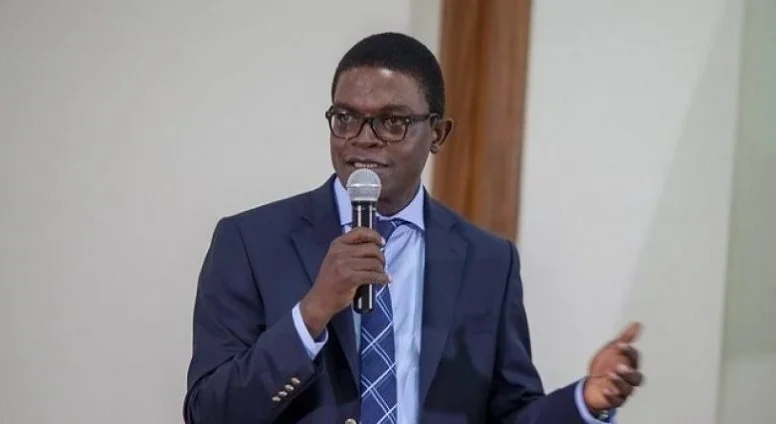
Executive Director of the Institute for Democratic Governance (IDEG), Dr Emmanuel Akwetey, has urged government to adopt more feasible measures to accelerate female participation in governance.
According to him, this move is a sure way of ensuring that a more even representation is achieved in governance.
Out of the 260 nominees listed Metropolitan, Municipal, and District Chief Executives (MMDCEs) positions in Ghana, only 38 are female while 222 are male.
If approved by their respective Assemblies, they will assist President Akufo-Addo at the local government level during his second term.
But this demography has reignited concerns among a section of the populace about the gender demography as far as governance is concerned.
For instance, no female was nominated in the Western and Ahafo regions according to the list. On the other hand, in the Greater Accra Region, eight females were nominated for the MMDCEs role compared to 21 males in the same area.
Experts say this is unfair and will affect the governance system, especially in the absence of an Affirmative action Law.
Speaking on Newsfile on Saturday, IDEG Executive Director suggested that mechanisms such as the Mixed Member Proportional Representation can be adopted to help the process.
In a Mixed-member proportional representation (MMP or MMPR) is a mixed electoral system in which voters get two votes: one to decide the representative for their single-seat constituency and one for a political party.
Making reference to New Zealand's method, Dr Akwetey explained that "It is mandatory that if you present a list as a party big or small, the percentage that ought to go to women and other groups - youth, people with disabilities, minorities in terms of communal identities and all that - will be reflected on that list."
"Once it is stamped and the parties are playing a certain formal role, think they can be held to account, and I think they are going to work harder to help the representation that should be there," he told JoyNews.
He believes the Affirmative Action Bill if passed by now, would have gone a long way to prevent this predicament.
Latest Stories
-
Church of Pentecost supports over 2,000 BECE candidates in Obuasi with career guidance seminar
58 minutes -
Brandon Asante and Coventry all but promoted to Premier League despite Sheffield Wednesday draw
1 hour -
GPL 2025/26: Late Kwartemaa strike downs Hearts in Tema
1 hour -
Ghana Faces Sierra Leone Moment as Prosecutorial Powers come under strain
2 hours -
Don’t consume fish or seafood from Tema Shipyard until further notice – FDA warns
2 hours -
Why volunteering might be Africa’s most underrated career accelerator
2 hours -
ActionAid Ghana raises concern over gender gaps in Feed Ghana Programme
2 hours -
Windstorm wreaks havoc in Gushegu, displacing nearly 2,000 residents and damaging schools
2 hours -
Friends of Bridget Bonnie Marks her 35th birthday with donation to Kasseh Model Health Centre
3 hours -
From Ekumfi Kokodo to the Pulpit Stage: Essi Donkor’s gospel journey takes shape
3 hours -
Landfilling waste management creates no value, it’s an economic waste
3 hours -
Photos: Speaker Bagbin Commissions MPs constituency office under parliamentary decentralisation programme
3 hours -
Black Stars technical advisor Winfried Schäfer sacked as GFA shakes up backroom staff
3 hours -
Wenchi water project almost complete, critical to gov’t agenda – GWL MD
4 hours -
Anti-LGBTQ+ bill not part of government’s legislative agenda – Inusah Fuseini
4 hours