

Audio By Carbonatix
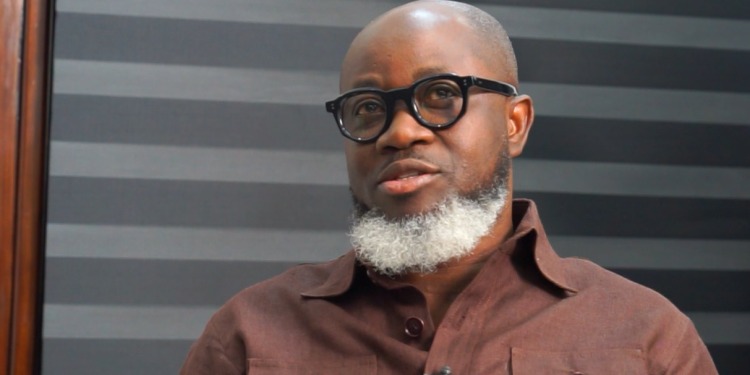
Executive Director of the Economic and Organised Crime Office, EOCO, Raymond Archer, has defended the agency’s decision to set high bail conditions, saying the approach is grounded in practical experience with major financial crimes.
Addressing the 3rd annual national fraud conference, he said EOCO is unfazed by complaints from lawyers who think the office is unsettling the traditional bail regime, insisting the agency will not soften an approach forged through years of dealing with sophisticated criminal networks.
Raymond Archer likened the bail to the collateral demanded in a risky loan, arguing that leniency gives powerful suspects every incentive to walk away without consequence.
He extended the logic to economic crimes, describing situations where investigations involve losses of $90 million or more. When bail is set far lower, he believes suspects have little incentive to stay within the justice process.
"I consider bail insurities, or I liken it to the collateral you give for a loan. When you give a collateral that is less than the loan you take, there's no motivation to pay back. You can let the loan run its length, and then there's no collateral to fall back, and you go into default. In the same way, bail is connected to a case. So imagine if I have a case of $100 million, the exposure or the risk. We do a lot of investigation for the banks, for example, where somebody has stolen $90 million," he said.
The EOCO boss emphasised that suspects involved in high-profile cases often possess significant financial strength, which makes setting lower bail conditions ineffective.
He questioned how “good judgment” should be interpreted when setting bail in cases involving tens of millions of dollars.
"The word surety means that if something happens, you can fall under surety. But what is the common sense in having a $90 million crime and a $10 million bail? If I was the criminal, I would pay him off with some profit and leave. The other question is, when you want to record and the subject raises objections, what do you do?" he asked.
Latest Stories
-
Ghana’s economy shows recovery signs, but risks persist – S&P maintains stable outlook
2 minutes -
SWAG commemorates its 8th anniversary with a public lecture
4 minutes -
Ibrahim Mahama claims Police Commander failed to stop alleged assault
7 minutes -
Damang lease award to E&P followed due process — Minerals Commission
18 minutes -
Today’s Front pages: Wednesday, April 8, 2026
20 minutes -
Julian Opuni reaffirms Fidelity Bank support for industry-led skills training at DTI Berekuso campus
26 minutes -
CAF President arrives in Dakar to meet Senegalese President, football authorities over AFCON title saga
27 minutes -
Pastor arrested over viral threats against Vice-President
30 minutes -
2026 Success Africa Summit: MTN’s Adwoa Wiafe challenges youth to act with purpose, not just pursue titles
33 minutes -
Nurse laureate launches Cancer Care Africa Foundation to tackle late diagnosis, workforce gaps
2 hours -
Ghana to lose GH¢18.15bn in revenue by 2027 from abolishing Covid levy, E-levy – CPS study
2 hours -
Reintroduce scrapped taxes to close revenue gap – Tax expert
2 hours -
GRA applauds CPS study, urges continuous policy scrutiny
2 hours -
Wear blue or green hat to survive – IBAG president says insurance industry ‘captured by politics’
3 hours -
AGI commends government’s move to resolve the power crisis in Volta and Oti Regions
3 hours