

Audio By Carbonatix
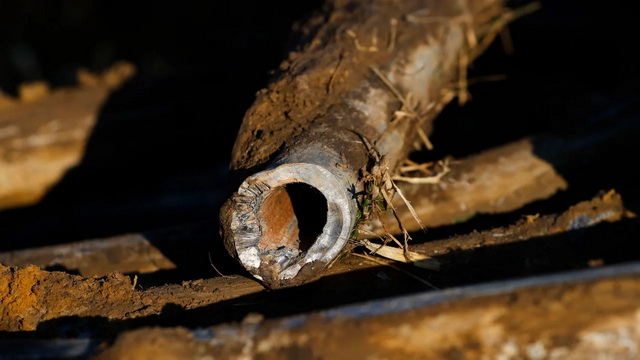
The US Environmental Protection Agency is proposing a rule that would require water systems across the country to replace millions of lead service lines within 10 years.
The rule would accelerate progress toward the Biden administration goal of removing 100% of lead pipes; lead exposure is linked to significant health and developmental problems, especially for children. The EPA proposal said lines must be replaced within 10 years, regardless of the lead levels in tap or other drinking water samples. Additional time could be allowed “in limited circumstances” for some systems that need complete system-wide line replacements, the proposal said.
The Safe Drinking Water Act authorizes EPA to establish regulations for public water systems, and the Lead and Copper Rule was established in 1991 to reduce exposure to lead in drinking water. It was revised in 2021, generally with more detailed and stringent requirements.
The new proposed rule would further strengthen the ways the rule targets lead in drinking water by improving how water systems are tested for lead levels and lowering lead action level, or the threshold that requires additional compliance activities. Water systems would also have to show consistent progress toward replacing lead pipes, with a minimum of 10% of lead pipes replaced each year and minimal exceptions. The EPA can enforce regulations under the Safe Drinking Water Act with civil penalties or fines.
“We cannot survive without water. Yet for millions of homes, for millions of children, their water has been delivered by a poisonous straw,” Dr. Mona Hanna-Attisha, a pediatrician and clean water advocate, said during a briefing hosted by the EPA.
Experts agree that no amount of lead exposure is safe. Excessive exposure can put adults at higher risk for cancer, stroke, kidney disease and other poor health outcomes. It’s particularly harmful for children; even low levels of lead can negatively affect a child’s growth and development, and childhood exposure can lead to long-term harm, according to the US Centers for Disease Control and Prevention.
“We can’t see lead in water; we can’t taste it; we can’t smell it. But it has silently and innocuously diminished the promise of generations of our children,” said Hanna-Attisha, who worked in Flint, Michigan, during the city’s water crisis. “This proposed rule, these improvements, ensure that in a not-too-distant future, there will never be another city and another child poisoned by their pipes.”
New lead pipes have been banned in the US since the 1980s, but there are still 9.2 million lead service lines in the US, according to estimates from the EPA. The two states with the highest proportions of service lines requiring replacement are Illinois and Rhode Island, where a quarter or more of service lines need to be replaced. In New Jersey, an estimated 14% of lines need to be replaced and in Michigan, 11%. The national average is about 8%, according to the EPA.
A 2021 analysis by an environmental nonprofit found that more than half of the population drank from water systems that had detected lead levels exceeding those recommended by the American Academy of Pediatrics.
“This a public health concern that has, unfortunately, spanned generations and an issue that has disproportionately impacted low-income and minority communities,” EPA Administrator Michael Regan said at the briefing. “Everyone in this country should be able to turn on their tap for a glass of water and know that it’s safe to drink.”
Compliance with the proposed rule is estimated to cost billions of dollars, but a cost-benefit analysis presented with the proposal suggests that the benefits would be four to 10 times greater. And the benefits are largely centered around public health prevention, Regan said: protecting against IQ loss among children, preventable death and disease and more.
“Those benefits are truly priceless,” he said.
The Biden administration has dedicated $15 billion to removing lead service lines through the Bipartisan Infrastructure Law, and there is an additional $11.7 billion in general funding available through the Drinking Water State Revolving Fund that can be utilized for these types of projects.
“The bottom line is, lead poisoning is preventable,” Brenda Mallory, chair of the White House Council on Environmental Quality, said at the briefing. “This is a problem we can and will solve to save more children and families from facing it.”
The EPA will collect public comments on the proposed rule for 60 days and hold a public hearing in mid-January.
Latest Stories
-
VIP Jeoun Transport increases fares effective April 8
1 minute -
Minority warns against alleged LGBTQ provisions in constitutional review
6 minutes -
Wave of violence kills at least 26 in Nigeria as army thwarts mass church abduction
24 minutes -
Latvian businessman Aldis Ozols enstooled as development Chief of Supresu-Man
36 minutes -
‘We should go in for the best’ – Ernest Thompson on next Black Stars coach
41 minutes -
US, Iran receive 45-day ceasefire proposal as Trump deadline to reopen Strait of Hormuz looms
54 minutes -
Iran defiant as Trump vows ‘entire country’ could be taken out if no deal reached by tonight
59 minutes -
Afigya Kwabre North crowned champions of maiden MTN Ashantifest Regional U17 football competition
60 minutes -
The case for an explicit and limited Legal threshold for internal military deployment in Ghana
1 hour -
UK Wireless Festival sponsorship withdrawals highlight high cost of Kanye West controversy for global brands
1 hour -
CAF President to pay working visit to Senegal over AFCON title saga
1 hour -
GPL 2025/26: Samartex end winless run with victory over Kotoko
1 hour -
Afreximbank to avail US$10bn under its Gulf Crisis Response Programme to shield African, CARICOM economies from Middle East conflict
1 hour -
NPP behind every monumental agenda in Ghana – Miracles Aboagye
1 hour -
Ho Airport not a misplaced priority — GACL Board Chair
2 hours