

Audio By Carbonatix
Ports and shipping are vital for a well-functioning global economy. According to the World Bank, in 2019, trade represented more than 60 percent of the global gross domestic product (GDP).
Data from The International Chamber of Shipping reveals that shipping plays by far the largest part in this, facilitating roughly 90 percent of the world’s trading. The ports of the world literally keep its goods flowing.
The comprehensive report, Connected Ports: A guide to making ports smarter with private cellular technology, outlines how challenges of equipment downtime, congested port yards for loading and unloading, worker safety, and environmental impact could be resolved with private cellular networks.
5G-ready private cellular networks provide fast, reliable, and secure connectivity required by a smart port’s network infrastructure to handle the large amounts of data generated by cranes, vehicles, equipment, and workers.
In the maritime report findings, Ericsson collaborated with leading sensor technology provider, ifm electronic, as well as researchers from management consultancy Arthur D. Little, to examine and quantify five use cases with the most beneficial applications for smart port technologies:
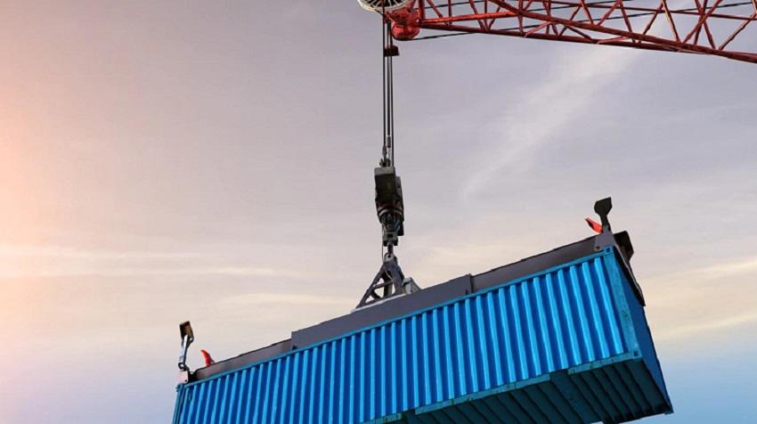
- Remote-controlled ship-to-shore cranes load and unload container ships, moving containers between the ship and the dock with precision and maneuverability.
- Automated rubber tired gantry cranes stack containers at terminals, crucial for when high-capacity stacking and good maneuverability are needed.
- Automated guided vehicles(AGVs) navigate through the port using smart 3D sensors, handling all port materials, reducing energy costs and risk of accidents.
- Condition monitoring detects faults before they occur, reducing unplanned downtime and maximizing asset productivity.
- Drones deliver documents from ship to shore, reducing costs and environmental impact of crewed boats while also conducting security surveillance of ports.
The report projects that if all of the five use cases are deployed together, complete payback can be achieved in less than two years. By year five, the report projects that the ROI would be 178 percent for our standard baseline port.
One port that is already deploying these types of smart technologies is Italy’s Port of Livorno – for example, by leveraging 5G technologies to enhance the exchange of real-time information among actors in the port’s terminal process.
These applications have the potential to reduce CO2 emissions by 8.2 percent for one terminal operation.
Latest Stories
-
Guinea-Bissau transporters strike over higher fuel prices
27 minutes -
Iran ceasefire deal a partial win for Trump – but at a high cost
38 minutes -
Oil slides below $100 after Trump announces two-week ceasefire
47 minutes -
Madagascar declares state of emergency over energy situation due to Iran war
58 minutes -
Ex-Meta worker investigated for downloading 30,000 private Facebook photos
1 hour -
World Bank says Nigerian economy to grow in 2026 but Iran war lifts inflation
1 hour -
USA striker Patrick Agyemang ruled out of World Cup due to injury
5 hours -
Los Angeles Stadium workers urge FIFA to bar ICE from World Cup
5 hours -
Vinicius hails Lamine Yamal for condemning anti-Muslim fan chants
5 hours -
Barcelona’s Flick to defend ’emotional’ teen Lamine Yamal against criticism
5 hours -
FIFA opens disciplinary probe against Spanish FA after Islamaphobic chants
5 hours -
‘We’ve become quite experienced in negativity’ – Liverpool’s Slot
6 hours -
Legendary manager Lucescu dies days after resigning
6 hours -
One dead as train travelling 99mph collides with lorry in France
6 hours -
Airlines cut flights and hike fares as fuel prices surge
6 hours