

Audio By Carbonatix
Ethiopia has said Egypt “must abandon its aggressive approach” towards a controversial hydroelectric dam on the River Nile as tensions between the two countries continue to escalate.
Addis Ababa was responding to a letter Egypt sent to the UN Security Council last week accusing Ethiopia of violating international law by continuing to fill the dam without agreement from downstream countries.
In its letter to the Security Council, Ethiopia rejected what it called “a litany of unfounded allegations” from Cairo.
This latest round in a long-running dispute comes as Egypt forges closer military ties with Ethiopia’s neighbour Somalia, which has its own disagreement with Ethiopia.
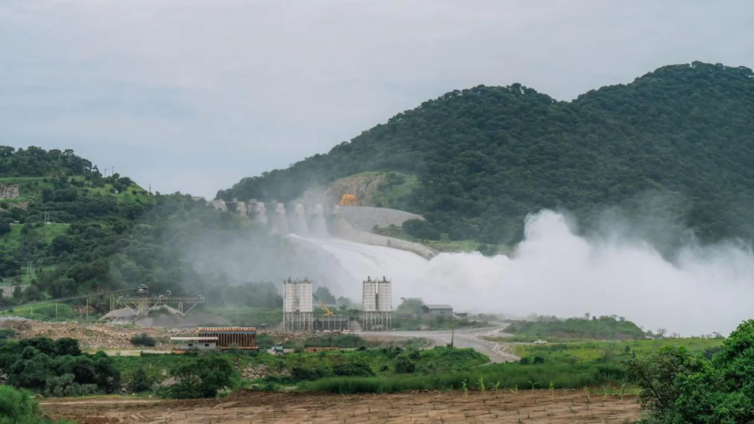
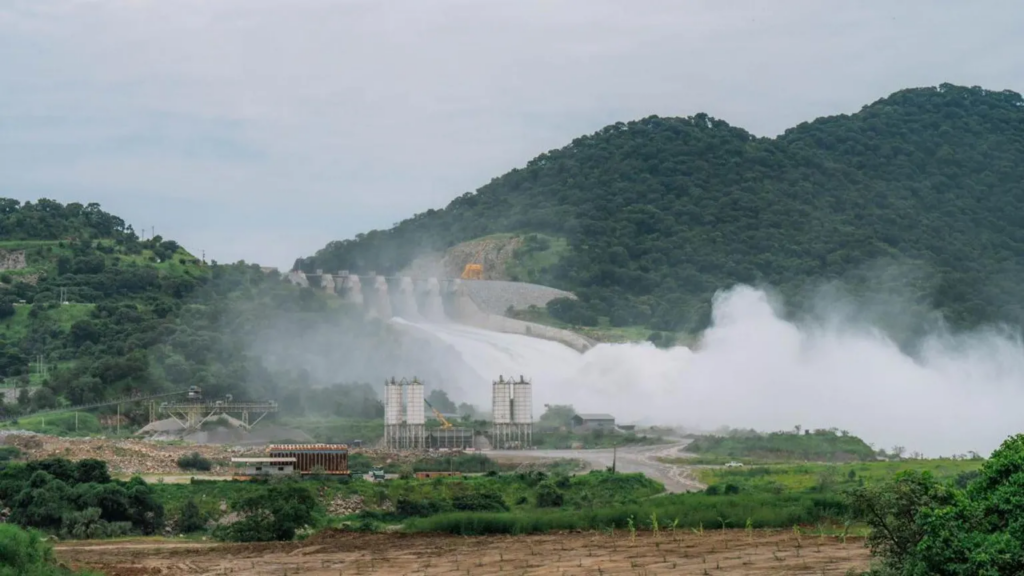
The row dates back to 2011 when Ethiopia began building the Grand Ethiopian Renaissance Dam (Gerd) on the Blue Nile, a tributary from where 85% of the Nile's waters flow.
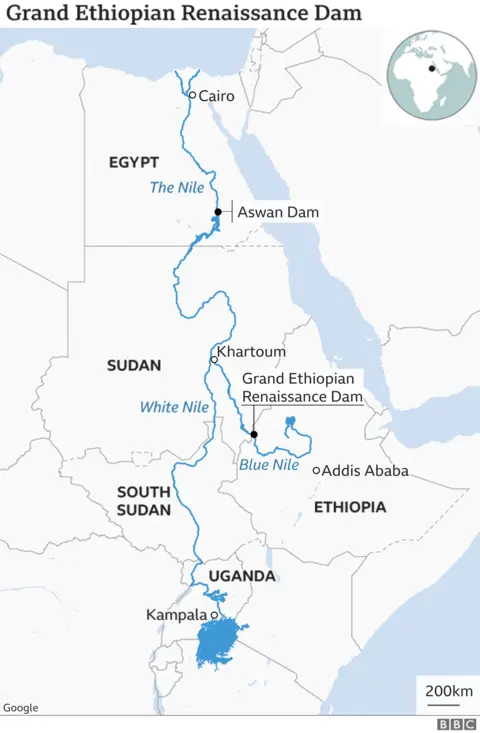
Egypt sees this as an existential issue as it relies almost entirely on the river for its water and fears that the dam could mean that the flow of the river is disrupted. It also says that two colonial-era treaties guarantee that it has a right to veto upstream projects.
But for Ethiopia, the huge project, set to be the largest hydroelectric plant in Africa, is an integral part of its efforts to develop the country and get electricity to millions of households.
The dam is nearing its completion, with the reservoir filling with water since 2020, and has already started generating power.
Egypt, along with Sudan – through which the Nile also flows, have been raising concerns that their essential water supplies would be under threat, especially if there are successive years of drought.
Multiple diplomatic efforts to reach a binding deal have not succeeded.
The most recent efforts ended in December last year with both countries accusing the other of intransigence.
In its letter to the Security Council, Ethiopia said Egypt was "only interested in perpetuating its self-claimed monopoly" over the river.
In recent weeks, tensions across the Horn of Africa have grown, especially after a military pact was agreed between Egypt and Ethiopia’s eastern neighbour Somalia.
Relations between Mogadishu and Addis Ababa deteriorated after landlocked Ethiopia signed a deal in January with the self-declared Republic of Somaliland over access to the sea and possible use of the coastline for a naval base.
Somalia sees Somaliland as part of its territory and said the agreement was an act of aggression.
This weekend, Ethiopia’s Prime Minister Abiy Ahmed warned against attacks on his country, saying anyone from “afar and nearby” daring to invade the country would be repelled.
He did not specify which country he was talking about.
Latest Stories
-
Kwahu Business Forum 2026: Corporate citizenship, sustaining African businesses take centre stage with KGL as the case study
37 minutes -
Trump seeks $152m to reopen notorious Alcatraz prison
3 hours -
Ex-Chelsea player Oscar retires with heart issue
3 hours -
CA Foundation drives constitutional literacy in Kpone Katamanso municipality
3 hours -
GPRTU to hold talks with Transport Ministry over rising fuel costs
3 hours -
CUTS International urges gov’t to halt sachet water price hike pending cost review
3 hours -
Chief Justice: Efficient Judiciary essential to reducing business costs
3 hours -
Bayern grabs 99th-minute winner to cap superb fightback
3 hours -
Ahmed Ibrahim urges Ghanaians to reflect Easter values in nation-building
3 hours -
ECG inefficiencies undermining power supply -Mahama outlines reforms
3 hours -
Lewandowski scores as Barca fight back to defeat Atletico
3 hours -
Lack of private sector consultation undermining economic growth – Jerry Ahmed Shaib
3 hours -
Real Madrid seven points adrift after Muriqi’s late Mallorca winner
3 hours -
Ghana must lead AfCFTA implementation by example – Trade Minister Ofosu-Adjare
3 hours -
Strong Judiciary key to business confidence – Chief Justice Baffoe-Bonnie
4 hours