

Audio By Carbonatix
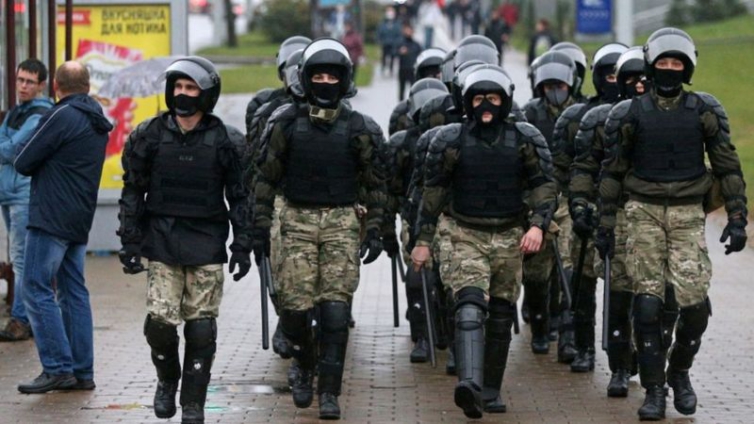
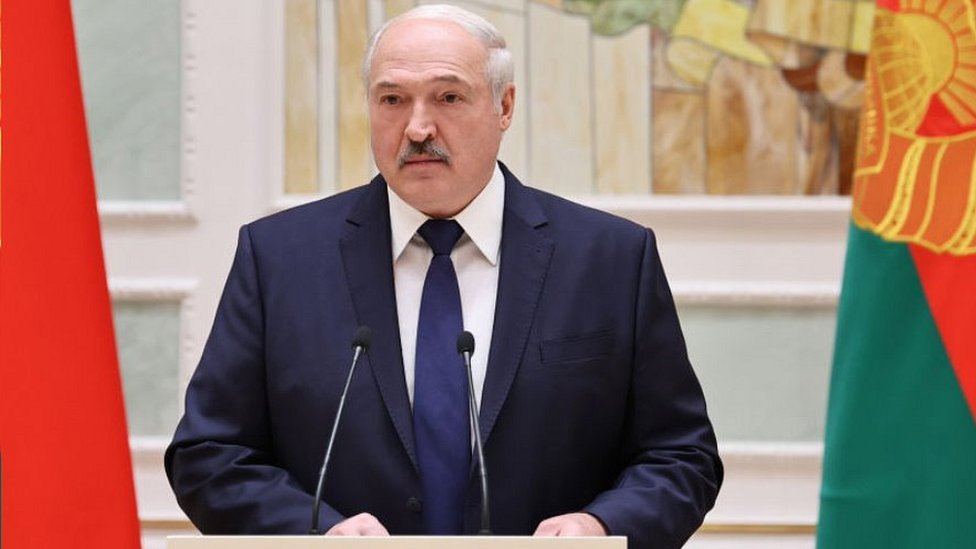
The EU has added Belarusian leader Alexander Lukashenko and his son Viktor to its sanctions blacklist of Belarus officials, bringing the total to 59. The 15 added on Friday also include KGB secret police chief Ivan Tertel and President Lukashenko's chief of staff Igor Sergeenko.
The EU rejects Mr Lukashenko's claim to have won re-election on 9 August and deplores his crackdown on opponents. His son Viktor, 44, is a national security adviser.
Protests have swept the country since its long-time leader said he had won the vote, which was widely viewed as rigged. The main opposition leader, Svetlana Tikhanovskaya, said she had attracted between 60 to 70% of the vote and was forced into exile in neighbouring Lithuania immediately after the election.
The election-monitoring organisation, OSCE, said on Thursday that human rights abuses since the vote "were found to be massive and systematic and proven beyond doubt", and called for the official result handing Mr Lukashenko victory to be annulled "due to irregularities at all stages of the process".
UK Foreign Secretary Dominic Raab said the OSCE report had "exposed the fraud at the heart of the presidential elections" and he called for "new elections which are free and fair".
What the EU sanctions mean
The EU's latest sanctions block travel visas for the named officials and freeze any assets they may have in EU member states. In addition, EU citizens and companies are forbidden from lending to them.
The KGB police chief is accused of leading the state crackdown, involving "arbitrary arrests and ill‐treatment, including torture, of peaceful demonstrators as well as intimidation and violence against journalists".
The decision in principle to add Alexander Lukashenko and his son was made by EU foreign ministers on 12 October.
In September, the UK imposed sanctions on Alexander Lukashenko, his son and other senior Belarusian officials, under the UK's new human rights sanctions regime. The UK foreign secretary called Mr Lukashenko's actions "despicable".
Russian President Vladimir Putin however is backing Mr Lukashenko, reinforcing an alliance that goes back decades.
The Belarus opposition has organised huge demonstrations every Sunday since the election, usually with more than 100,000 people thronging the capital Minsk.
The EU and US government agree with the opposition that the August election was rigged, with brutality meted out to Mr Lukashenko's opponents.
The EU has told the Belarus authorities that they must stop the police violence and release those detained during weeks of mass protests, including all political prisoners.
Mr Lukashenko has ignored repeated opposition calls for negotiations to re-run the election under free and fair conditions, to end police brutality and release political prisoners.
Latest Stories
-
Berekum Chelsea edge Aduana FC in Bono derby to boost survival hopes
4 hours -
‘They can’t control the team’ – Ernest Thompson doubts local coaches for Black Stars role
5 hours -
Ghana-born midfielder Seidu realises ‘dream’ with Atlético Madrid debut
5 hours -
GPL 2025/26: Bubakari strikes late to hand All Blacks vital win over Dreams FC
5 hours -
Fatal crash on Kintampo–Tamale highway claims four lives
5 hours -
2025–26 FA Cup Semifinal Draw: Chelsea, Man City Learn Wembley Opponents
5 hours -
GPL 25/26: Gold Stars back on top after beating Nations FC
6 hours -
GPL 2025/26: Heart of Lions roar back with victory over Vision FC in Kpando
7 hours -
Solomon Agbasi: Hearts keeper in stable condition after concussion
7 hours -
GPL 2025/26: Late Salim Adams penalty earns Medeama draw at Bechem
7 hours -
Hearts pip Young Apostles 1-0 to end 5-game winless run
7 hours -
Boakye Agyarko marks Easter Sunday with a call for Godly leadership ahead of nationwide campaign tour
8 hours -
Pepsi withdraws as UK festival sponsor after Kanye West backlash
8 hours -
Pope Leo calls for global leaders to choose peace in his first Easter Mass
8 hours -
Kpando MP highlights progress on road projects
8 hours