

Audio By Carbonatix
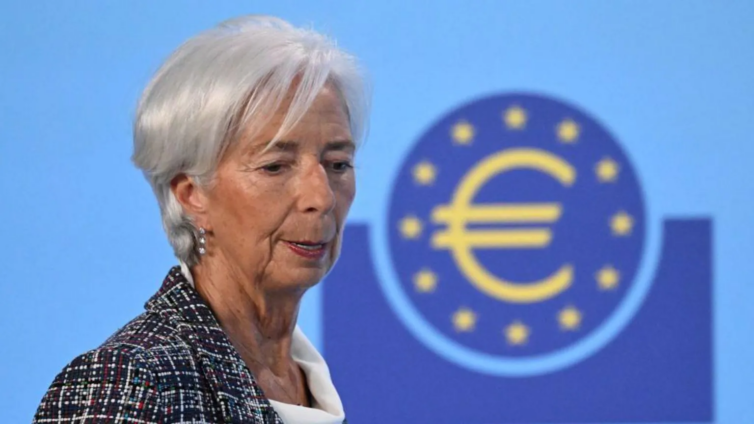
The European Central Bank (ECB) has cut interest rates for the sixth time in nine months as it seeks to bolster eurozone economic growth.
The bank stuck to its plan to lower rates in the face of economic challenges, including threats of US tariffs and plans to boost European military spending.
The ECB cut its main interest rate to 2.5% from 2.75%, and once again reduced its forecasts for economic growth in the eurozone.
The latest cut came as a sell-off of German government bonds spread to other bond markets, including the UK.
The sell-off came after Germany's move this week to increase military and infrastructure spending.
Political parties in talks to form a new government plan to pay for this by loosening Germany's fiscal rules, raising the prospect of a big increase in debt.
In response, longer term German bonds saw their biggest sell-off in years on Wednesday.
This pushed borrowing costs - as measured by the yields on the Germany's 10-year bonds - up by biggest daily amount since May 1997.
On Thursday, German borrowing costs - as measured by the yields on the country's bonds - continued to rise.
Yields continued to rise on Thursday, hitting 2.929% at one point - the highest level since October 2023.
The increase has had a knock-on effect on other countries, with UK borrowing costs also increasing.
UK government borrowing costs have already risen due to concerns about persistent inflation and interest rates not coming down as quickly as previously thought.
However, Lindsay James, an investment strategist at Quilters, said the market was still expecting the Bank of England to make two further rate cuts in 2025, "with recent inflation data reasonably encouraging".
Challenges ahead
With inflation getting closer to its 2% target, the ECB said its interest rate cuts were "making new borrowing less expensive for firms and households".
But it trimmed its prediction for eurozone growth, putting expansion in 2025 at just 0.9%, only slightly above the 0.7% pace recorded last year.
The ECB faces a number of upcoming challenges as it tries to get inflation to its 2% target.
The eurozone economy may suffer if the Trump administration goes ahead with plans to impose "reciprocal tariffs" on every country that taxes US imports.
Latest Stories
-
Akwasi Konadu questions speed of Damang mine tender process
2 minutes -
Accra hosts 24th EBID AGM as Finance Minister calls for bold action
5 minutes -
The Insurance Paradox: Of state capture, greedy monopolies, and the SIC reset
7 minutes -
AU welcomes US-Iran ceasefire, urges sustained dialogue for lasting peace
8 minutes -
Ato Forson praises EBID’s resilience and strategic impact at 24th AGM in Accra
9 minutes -
Ghana welcomes ECOWAS leaders to Accra for EBID high-level meeting
12 minutes -
Ato Forson urges ECOWAS states to honour EBID capital commitments
14 minutes -
Why Ghana’s Mobile Money security is a house of cards
17 minutes -
EBID records strong financial growth amid global economic uncertainty – Ato Forson
18 minutes -
PSG vs Liverpool: Date, time and everything you need to know about the Champions League quarterfinal
35 minutes -
Education Minister orders probe into illegal SHS online class fees
37 minutes -
Barcelona vs Atlético Madrid: Date, time and everything you need to know about the Champions League quarterfinal
41 minutes -
Monthly Indicator of Economic Growth slows to 7.5% in January 2026
43 minutes -
The Reputation Bomb: Why fraud in the digital age destroys more than freedom
44 minutes -
Mahama nominates 5 to Ghana’s Fiscal Council to strengthen economic oversight
59 minutes