


Audio By Carbonatix
Facebook is to change how its news feed works, making posts from businesses, brands and media less prominent.
Instead, content that sparks conversations among family and friends who use the site will be emphasised, explained chief executive Mark Zuckerberg on his page.
Organisations on Facebook may see the popularity of their posts decrease as a result, the firm acknowledged.
The changes will take effect over the coming weeks.
"We've gotten feedback from our community that public content - posts from businesses, brands and media - is crowding out the personal moments that lead us to connect more with each other," wrote Mr Zuckerberg.
He said that he and his team felt a responsibility to make sure Facebook was good for people's wellbeing.
If public content is to be promoted, it will now have to be seen to encourage community interaction - as happens within the tight-knit groups that discuss TV programmes and sports, he said.
Another example given by Facebook in a separate post was live video feeds, which tend to generate much discussion.
"By making these changes, I expect the time people spend on Facebook and some measures of engagement will go down," added Mr Zuckerberg.
"But I also expect the time you do spend on Facebook will be more valuable."
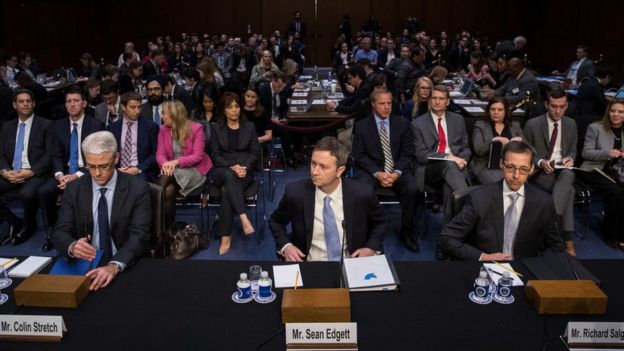
In a previous post, Mr Zuckerberg had vowed to "fix" Facebook in 2018, saying he wanted to ensure that users were protected from abuse and that time spent on the site would be time well spent.
He also pledged to defend Facebook from nation states.
Analysis has recently suggested that some actors, including Russia, have tried to manipulate content on the social network.
"It's definitely a significant change," said Laura Hazard Owen at Harvard University's Nieman Journalism Lab.
"It's going to affect publishers a lot, we're going to be seeing a lot less news organically pop up in our news feeds."
Ms Owen added, however, that Facebook had not been very clear about what sort of discussions the site's revamped algorithms would prioritise.
It might end up being "the most controversial stuff" that generates heated conversations, she suggested, or simply content pulled in from group pages where users engage with others on specific topics.
Powerful 'admission'
Given recent public scrutiny, the social network was currently "in the hot seat", said Gabriel Kahn from the University of Southern California Annenberg School for Communication and Journalism.
"Facebook is in the midst of all of these fires it's trying to put out, it's trying to reassert its warm and fuzzy brand value that it has always tried to put forth," he told the BBC.
Mr Kahn added the update from Mr Zuckerberg was a "clear admission" that Facebook wielded significant power over the health of society.
However, he argued that the new priorities could further distort views and the nature of conversations.
"There should be public debate about the values they're applying to that algorithm," he said.
Analysis
 Image copyrightAFP
By Dave Lee, North America technology correspondent
In many ways this is Facebook getting back to its roots, making your news feed more about what your friends are creating and thinking, rather than articles they have shared.
For the first time, Mark Zuckerberg is making a major decision that goes against one of his long-held beliefs: any change to the network must have the goal of improving engagement. This move, he concedes, will likely lead to people spending less time on the site.
But after a tough 2017, Mr Zuckerberg is perhaps learning now that in the wake of the fake news scandal, and a platform brimming with tedious clickbait, not all engagement is good engagement.
Faced with the enormous task of having to do more to moderate what's happening on his network, Mr Zuckerberg may have come to the conclusion that having a news free-for-all is becoming more trouble than it's worth.
For news organisations and publications, this might spell bad news: a lot of traffic comes from Facebook. With less prominence, expect some viral sites to very quickly go out of business.
The new change of course will cost Facebook money. Mr Zuckerberg warned investors at the end of last year that combating fake news would hurt the firm's bottom line. The question now is: by how much?
Latest Stories
-
Rural health worker laments overwhelming burden at CHPS compounds
16 minutes -
Katon Meet to stream Accra stadium Katon Praise Concert worldwide
17 minutes -
Gov’t considers exploring local raw materials to stabilise production costs of sachet water prices
46 minutes -
Mahama in Paris: Turning Diplomacy into Delivery
48 minutes -
Middle East crisis shows Ghana needs to diversify energy sources – Energy expert
1 hour -
Government of Ghana Internal Revenue Generation cannot fund Big Push in Four Years
1 hour -
EPCG Moderator urges leaders to serve with courage and humility in Easter message
2 hours -
The Cobra at the gate: When good intentions overrun the system
2 hours -
Easter service disrupted in Nyanyano as suspected land guards storm church event
2 hours -
Price surge exposing NDC gov’ts dishonesty -Titus Glover
2 hours -
Afigya Kwabre North MP urges Finance and Energy Ministers to submit energy sector report
2 hours -
Deliver quality or face sanctions — GETFund administrator cautions contractors
3 hours -
Kwahu Easter festivities trigger condom shortages; Health teams boost awareness
3 hours -
Victims of a legend: The women Daddy Lumba left behind
3 hours -
Mahama vows to prioritise roads, social amenities in Savannah region
3 hours