

Audio By Carbonatix
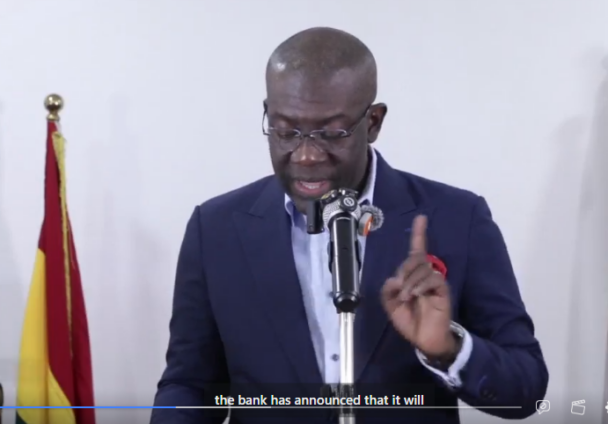
Ranking Member of Parliament’s Economy and Development Committee, Kojo Oppong Nkrumah, has cautioned government against presenting declining inflation figures as a sign that Ghanaians are experiencing lower prices in the market.
His remarks come ahead of the presentation of the 2026 Mid-Year Budget Review, during which the Minister for Finance, Dr Cassiel Ato Forson, is expected to deliver the Mid-Year Review of the Budget Statement and Economic Policy of the Government of Ghana for the 2026 financial year.
Speaking at an NPP press conference on July 22, the Ofoase Ayirebi MP explained that a fall in inflation only indicates that the pace of price increases has slowed and does not mean the prices of goods and services have fallen.
“Falling headline inflation never means falling prices. Prices have been rising, only more slowly,” he said.
According to him, recent trends show renewed pressure on consumers, with inflation beginning to pick up after previous declines.
He argued that the government must look beyond headline inflation figures and focus on the real impact of economic conditions on households.
Cost of living remains a concern
The former Ofoase Ayirebi MP said many Ghanaians continue to struggle with the high cost of essential goods despite improvements in some macroeconomic indicators.
He stressed that the Mid-Year Budget Review must provide practical measures aimed at easing the burden on citizens rather than relying only on statistical improvements.
Mr Oppong Nkrumah also linked inflation pressures to broader economic issues, including exchange rate movements and fiscal management.
He said government must explain how it intends to maintain economic stability while protecting household incomes.
Call for transparency
The former minister urged the Finance Minister to provide a clear assessment of inflation trends and their impact on ordinary citizens when he presents the Mid-Year Budget Review.
He said the true measure of economic recovery should be reflected in the daily experiences of Ghanaians, including the prices they pay at markets and shops.
“The numbers must translate into better living conditions for the people,” Mr Oppong Nkrumah added.
Latest Stories
-
Assemblies of God requires pastors to resign before entering partisan politics – Rev. Wengam
3 minutes -
Ghana targets 20% annual reduction in maternal deaths – Health Minister
8 minutes -
Cyber attacks in Africa grow faster than global rate, report finds
10 minutes -
Ghana signs UAE deal to create 5,000 overseas jobs
17 minutes -
One Million Coders Programme targets 100,000 digital jobs in two years – Sam George
20 minutes -
John Jinapor, Italian Ambassador explore opportunities for energy sector investment
22 minutes -
NHIA seeks legal reforms to support Free Primary Healthcare
26 minutes -
Beatrice Annan defends Afi Agbenyo’s EC appointment, cites record of gender advocacy
29 minutes -
Ghana seeks investment deals in Bangkok amid global economic crises
33 minutes -
IMF raises Ghana’s 2026 growth forecast to 5.7%, sees inflation falling to 4.8%
34 minutes -
Ablakwa urges Africans not to view immigrants as threat to national progress
39 minutes -
Mahama Cares must fund treatment, not looting – Asogli chiefs
40 minutes -
Ghana’s economic salvation lies not in shifting geo-political allegiances – Dr Atuahene
43 minutes -
BoG proposes tougher rules on loan repayment assessment
48 minutes -
Government plans mandatory drug tests for public service jobs — Muntaka
53 minutes