

Audio By Carbonatix
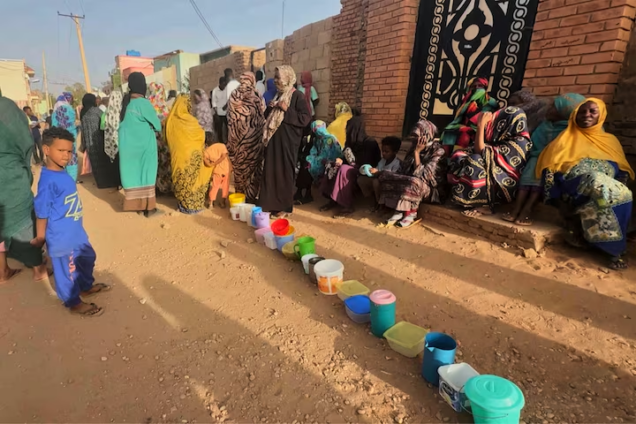
An estimated 756,000 people in Sudan could face catastrophic food shortages by September, according to a preliminary projection used by United Nations agencies and aid groups to determine whether to officially declare a famine.
The preliminary results, as of June 1 and seen by Reuters, reflect a rapidly deteriorating situation in the war-torn country. The most recent previous projection, released in December, showed that 17.7 million people, or 37% of the population, faced high levels of food insecurity, but none were considered in a catastrophic situation.
Now, an estimated 25.6 million people, or 54% of the population, face critical shortages, including more than nine million people in an emergency situation or worse.
The latest projection is preliminary and could change. It will require approval by the military-controlled Sudanese government and U.N. and international agencies. The government has previously denied the country is experiencing famine.
The new analysis was done by the Rome-based Integrated Food Security Phase Classification (IPC), an initiative of U.N. agencies, regional bodies and aid groups. The data is expected to be incomplete. In March, the IPC said security threats, roadblocks and telecommunications outages in Sudan were hindering its ability to do assessments.
The IPC, which analyzes food insecurity and malnutrition data, hopes to publish a report on Sudan in the next several weeks, according to people familiar with the matter.
Fatima Eltahir, a Sudanese government official who is also the IPC’s chairwoman in Sudan, told Reuters: “We are not done yet. There are no final results.”
Lavonne Cloke, an IPC spokesperson, said the analysis is “ongoing,” adding that it’s not yet clear when it will be finalized.
The latest projection for Sudan comes at a time when another conflict zone – Gaza – is also experiencing severe food shortages. In March, the IPC said famine was imminent as 1.1 million people, about half of Gaza’s population, were expected to experience catastrophic food insecurity.
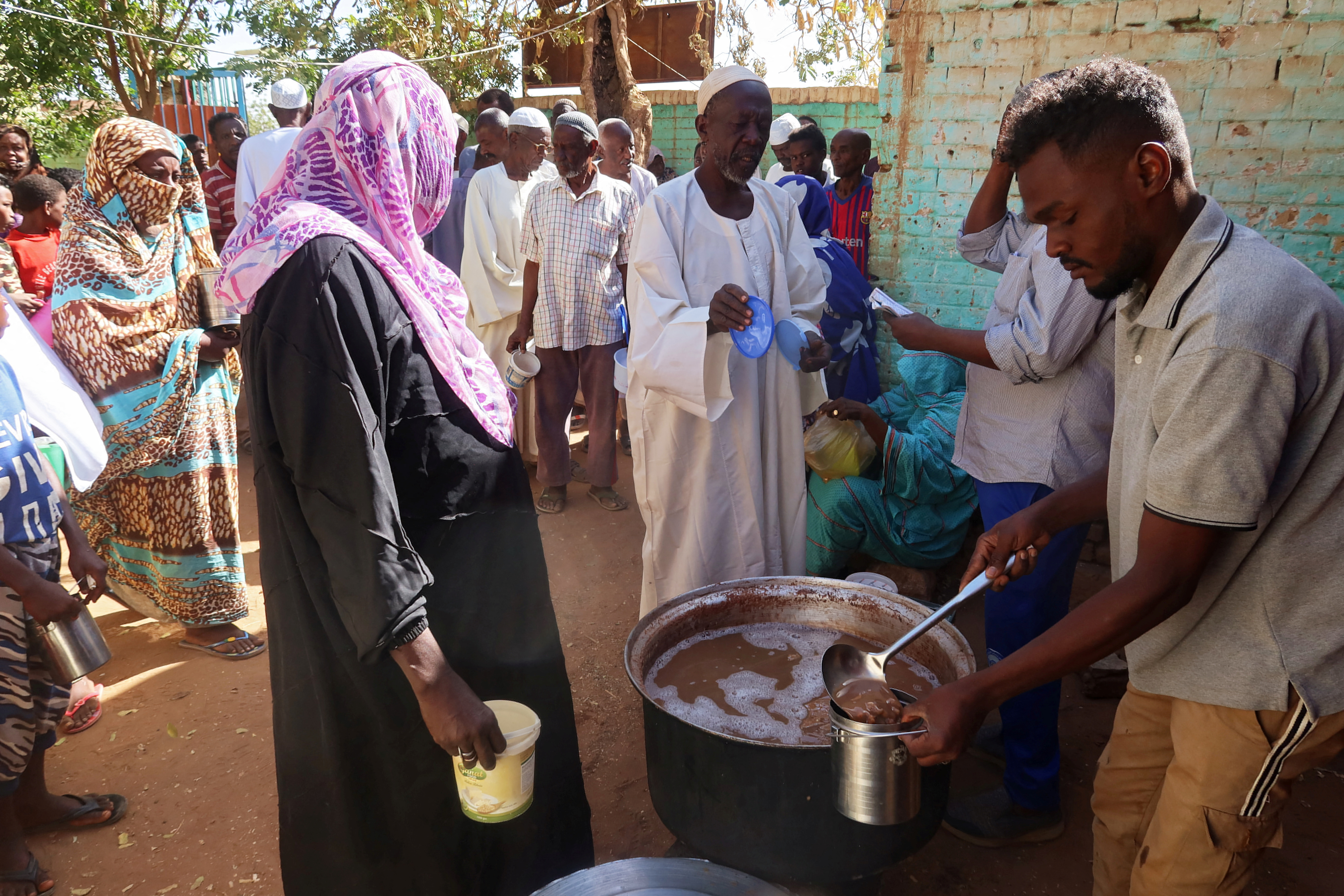
In Sudan, fighting broke out in the capital Khartoum in April 2023 and quickly spread across the country, reigniting ethnic bloodshed in the western Darfur region and forcing millions to flee.
The number of people internally displaced in Sudan due to current and past conflict has surpassed 10 million, the United Nations migration agency said this week. The country is already experiencing the world’s largest displacement crisis.
Last month, U.N. agencies also said Sudan was at "imminent risk of famine.” About 3.6 million children are acutely malnourished, according to a joint statement by U.N. chiefs, including the high commissioner for human rights.
Whether a famine will be declared in Sudan remains unclear. Governments sometimes challenge famine data and projections. To date, U.N. agencies and other organizations only have declared famines twice since the IPC warning system was created 20 years ago: in Somalia in 2011, and in South Sudan in 2017.
The determination of whether to declare a famine is based on a scale used by the IPC that has five classifications, ranging from Phase 1, which reflects no serious food issues, to Phase 5, which represents either a catastrophe or, even worse, a famine. Phases 3, 4 and 5 are all considered crisis situations or worse.
The ratings are determined using a complex set of technical criteria, which include measurements of starvation, malnutrition and mortality. In areas formally designated as Phase 5 famine, more than two people per 10,000 are dying daily, among other criteria.
The latest preliminary IPC projection for Sudan states that between June and September, an estimated 756,000 people in Sudan will face Phase 5 catastrophe. This means that the country hasn’t technically reached widespread famine conditions, but it is still considered a major crisis.
The projection identified 32 localities and clusters where the population was suffering catastrophic food shortages. They included two areas where 15% of the population faced IPC 5 catastrophic conditions – the city of al-Fashir, the capital of North Darfur; and a nearby camp for internally displaced people called Zamzam. Three other areas were cited where 10% of the population had reached the threshold.
Many of the areas in the projection were seized by the paramilitary Rapid Support Forces (RSF), which has been fighting the Sudanese army.
On Tuesday, a top U.S. diplomat told Reuters that parts of Sudan are already in famine, adding that the extent of extreme hunger remained unclear.
"I think we know we are in famine," said Tom Perriello, the U.S. special envoy to Sudan. "I think the question is how much famine, how much of the country, and for how long."
Latest Stories
-
GFA urged to move for Welbeck, Nketiah amid injury concerns
1 minute -
KGL to honour 2025 Corporate Income Tax obligations with GHC150m April payment
20 minutes -
KiDi, Kuami Eugene, Adina, others billed for Okyeame Kwame’s 50th birthday celebration
24 minutes -
Akwapim-Akropong Chieftaincy Clash: One dead after Police shoot-out
25 minutes -
Israel and Hezbollah continue strikes as US-Iran ceasefire faces collapse over Lebanon
27 minutes -
Asanko Gold supports road rehabilitation to ease transport challenges in Amansie West
28 minutes -
Drone strike hits wedding celebration in Sudan, killing at least 30 people
37 minutes -
UEW Public Lecture Series 2026: We’re preparing children for a past that no longer exists — Dr Ibn Chambas warns
43 minutes -
AMA to begin night enforcement against unscreened food vendors
45 minutes -
Nkawie Circuit Court remands 30-year-old mason over Mpasatia shop break-in
47 minutes -
Fintechs’ collaboration no longer optional – MMFL CFO
48 minutes -
KMA to prohibit other assemblies from accessing Oti landfill site over looming sanitation crisis
50 minutes -
GTA supported A Plus’ Gomoa Easter Carnival – Abeiku Aggrey
51 minutes -
GRA to tighten controls on importation of right-hand drive vehicles
1 hour -
You can’t leave a bigger legacy than Petroleum Hub project – Western Regional Chiefs tell President Mahama
1 hour