

Audio By Carbonatix
An Assistant Professor from the University of Toronto says farmers in Ghana should have a voice in the policy-making process for sustainable food systems.
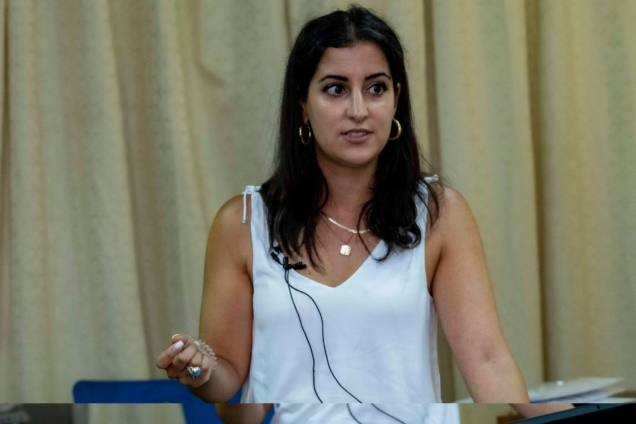
Farmers have an important role in society by supplying food and resources that are necessary for survival. Given their importance, Dr. Siera Vercillo believes that farmers must be adequately represented in the policy-making process because they hold invaluable knowledge and experience concerning agricultural and rural challenges.
Their knowledge and perspectives, she believes, are critical for developing effective agricultural policies that address real-world difficulties faced by individuals working in the field.

Farmers, according to experts, are at the forefront of sustainable agriculture practices, and incorporating them in policy debates guarantees that environmental concerns, conservation efforts, and sustainable farming methods are taken into account when creating agricultural regulations.
Dr. Vercillo delivered a speech at a workshop on the complexities of nutrition in Tamale at the Northern Regional Agriculture Department conference room.
The workshop titled, “Connecting and building the capacity of rural to urban food sovereignty organizations in Ghana,” is a collaboration between the University of Toronto and Waterloo in partnership with the University for Development Studies (UDS).
Four major food sovereignty organizations with various engagements in Ghana's food system, such as activism, archiving, outreach, and academic, will participate in movement-building activities facilitated by other academics and practitioners during the week-long workshop event to coordinate efforts and develop collaboration post-workshop.
The workshop's outputs will be utilized to establish graduate coursework in food studies, as well as the Sustainable Farming and Food Future Research Cluster at the University of Toronto.
Farmers face numerous challenges, including the consequences of climate change, market shifts, and technological advancements. They can use representation to express their desires and concerns to lawmakers, resulting in more specialized and responsive policy.

Dr. Vercillo also discussed the gradual disappearance of indigenous foods in the region, which were designed to be nutritious to the people and their traditions. She was concerned after years of gathering data and talking with people in the area that many people felt eating traditional foods like TZ, dawadawa, and so on made them impoverished men.
The promotion of underutilized and disappearing culinary ingredients became an important topic in the MoFA's conference hall, as the Toronto-based Associate Professor highlighted certain well-known dishes that are becoming increasingly difficult to find on the table.
She also emphasized storage, transportation, irrigation, water, and sanitation facilities, among other things.
The workshop's 31 participants, who included farmers, agric officers, researchers, and activist groups, among others, dug into issues of relevance to food production.

For example, Felix Oteng Dwaah, regional agriculture officer for monitoring and evaluation, stated that there is the need to communicate and enlighten the public about the advantages of consuming locally produced and cooked food.
“These foods are highly nutritious and healthy. Consumption of these foods will contribute immensely to food sovereignty in the Northern region in particular and the country as a whole,” he said.
Latest Stories
-
Gov’t to establish Prison Industrial Hub to equip inmates with income-generating skills – Prison Service boss
14 minutes -
Alhassan Tampuli donates cement, roofing sheets to support storm victims in Gushegu
15 minutes -
Alhassan Tampuli appeals for urgent support for storm victims in Gushegu
18 minutes -
The hypocrisy must stop; pass Anti-LGBTQ+ Bill now – Alhassan Tampuli to Mahama
22 minutes -
Imprisonment should be rehabilitative, not punitive – Ghana Prisons boss at UNGA
43 minutes -
Ga Adangbe traditional priests petition Mahama over McDan aviation licence revocation
55 minutes -
Anti-LGBTQ Bill: NDC’s arrogance is worrying – Hassan Tampuli
1 hour -
Let’s give OSP time to mature, not to scrap it – Hassan Tampuli
1 hour -
Nigeria convicts 386 Islamist militants in mass trials
1 hour -
Djibouti president wins election with 97.8% of vote, state media says
1 hour -
We don’t have mandate to deduct tax from rent allowance of security services personnel – Interior Ministry clarifies
2 hours -
Ablakwa receives Presidential Special Envoy on Reparations to advance global agenda
2 hours -
Christina Koch becomes first woman to travel around the moon on Artemis II
2 hours -
Epstein survivors’ calls to meet King Charles and Queen harder to ignore as US visit approaches
2 hours -
UN Secretary-General names Ghana’s Anita Kiki Gbeho as South Sudan envoy
2 hours