

Audio By Carbonatix
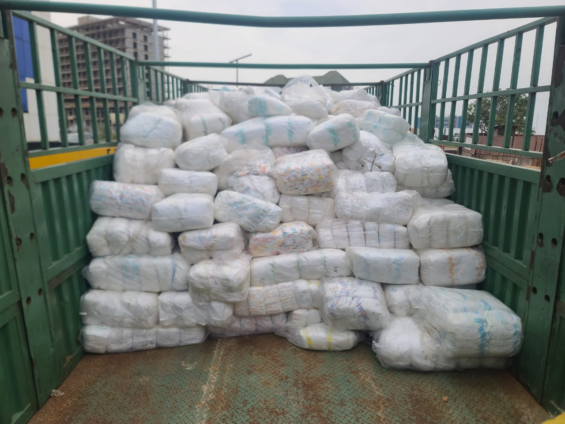
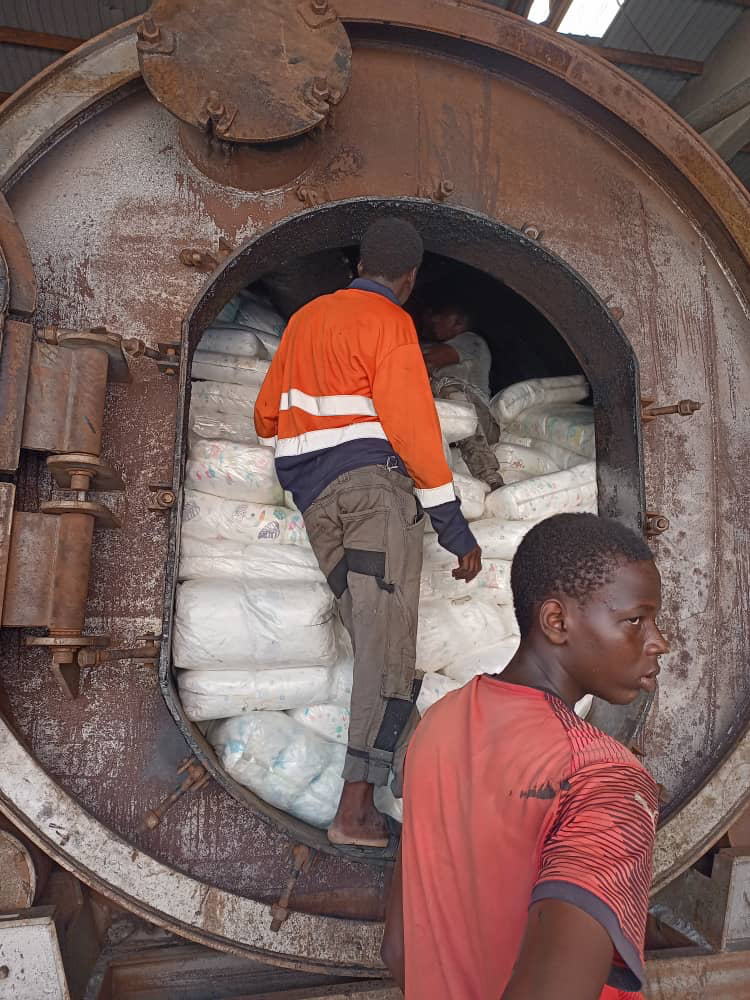
Ghana’s Food and Drugs Authority (FDA) has destroyed over one million counterfeit diapers that had infiltrated the local market.
The diapers, which were seized in two separate shipping containers, were deemed hazardous to public health and have now been permanently removed from circulation.
The incineration exercise, which took place under strict environmental and regulatory supervision in Ashaiman, marks a critical step in Ghana’s battle against the rising tide of counterfeit hygiene products.
According to the FDA, the operation is part of a larger framework to eliminate low-grade baby care goods that fail to meet national health and safety standards.
However, what has sparked even greater alarm is the source of many of these counterfeit products.
In March this year, China’s state-run broadcaster CCTV revealed during its annual “3.15” Consumer Rights Day program a disturbing supply chain: used diapers and sanitary pads were being salvaged from waste, reprocessed by rogue manufacturers, and passed off as new products.
After failing to meet domestic regulatory thresholds, these goods were deliberately redirected to developing markets, including Ghana, and sold at exploitatively low prices.
“These acts are not only unethical—they are dangerous,” said an FDA spokesperson.
“They expose infants to serious health risks such as infections, allergic reactions, and other complications. Ghana will not serve as a dumping ground for rejected or hazardous goods.”
In response, the FDA has ramped up its collaboration with the Ghana Revenue Authority (Customs Division), government agencies, and international partners.
New measures include enhanced border checks, random retail inspections, advanced lab testing, and tighter scrutiny of imports, especially in the hygiene sector.
The Authority has also launched a targeted awareness campaign, urging consumers to be vigilant when purchasing baby care products.
Signs of fake diapers include unusually low prices, unfamiliar branding, poor-quality packaging, and the absence of approval markings.
The public is encouraged to report any suspicious products through the FDA’s helplines or online reporting channels.
The recent destruction exercise is a reaffirmation of the FDA’s core mission: to uphold product quality and protect the most vulnerable.
It also reflects a broader government stance—led by the Ministry of Health and supported by regulatory agencies—that counterfeit baby products will not be tolerated under any circumstances.
“As regulators, we are deeply committed to ensuring every child in Ghana grows up with access to safe and hygienic products,” the FDA emphasised.
“This is not just a regulatory obligation—it is a national duty.”
Latest Stories
-
Pan-African Progressive Front hosts landmark online conference ahead of Geneva Forum
2 minutes -
Civil society is not an adversary of gov’t, but partners in nation-building – Mahama
11 minutes -
Defeamekpor calls for interdiction of Land Ministry’s director of finance
14 minutes -
Atebubu Paramount Chief visits NPA boss to strengthen ties
14 minutes -
TGMA Group of the Year nominees to be announced this week – Robert Klah
19 minutes -
Ex-Effia MP writes: Big Push for infrastructure, Small Push for people
20 minutes -
Interior Minister demands probe into GH¢3m payments made outside GIFMIS
23 minutes -
Ex-Defence Ministry procurement director to face prosecution over GH¢4.8m scandal
39 minutes -
Gov’t committed to finishing Tema Motorway by 2027, says Agbodza
45 minutes -
OSP under threat from political interference — Kissi Agyebeng calls for constitutional protection
49 minutes -
T.I. Ahmadiyya SHS, Kumasi, celebrates 75 years of excellence
58 minutes -
Court orders SHS students to pay compensation for assault on teacher
59 minutes -
Mahama assents to 5 bills, including key amendments on security, education and finance
1 hour -
Students of Nkwantanang M.A 6 Basic School benefit from ‘Break the Silence’ Menstrual Awareness Initiative
1 hour -
Fuel price hike exposing NDCs’ deceitful politics—Mercer
1 hour