

Audio By Carbonatix
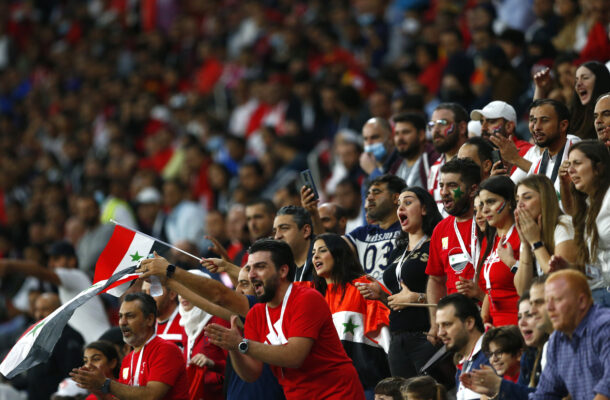
In a defining moment for Arab football, the FIFA Arab Cup2025 ongoing in Qatar surpassed the one-million mark in stadium attendance following the quarterfinal stage, setting a new benchmark for regional tournaments. It also signaled the competition's ascent onto the global stage, while offering lessons for Africa.
The total turnout reached 1,022,592 spectators as the quarterfinals concluded on Friday, with the mark reached in the UAE’s 7-6 victory over Algeria on penalties (1-1 in regulation time).
This figure that represents not merely numbers in seats but a seismic shift in the trajectory of Arab football, and equally as important, a sign to African football that planning and consistency does eventually pay off.
To contextualize the achievement: the 2021 edition drew 571,605 total fans across its entire run, meaning that this 2025 tournament has nearly doubled that figure before even reaching its finale.
A Testament to Growing Stature
The milestone carries particular weight as only the second edition organized under FIFA's umbrella, following the governing body's decision to institutionalize the competition. What began as a regional tournament with sporadic scheduling has transformed into a fixture on the international calendar, with future editions confirmed through 2033.
The group stage alone attracted a record-breaking 812,318 fans across 24 matches, outpacing the entire 2021 tournament before knockout rounds even began. The quarterfinals added over 200,000 more spectators in just four matches, demonstrating sustained engagement rather than isolated peaks.
The numbers tell a story of competitive intensity matched by public passion. The Morocco-Saudi Arabia clash drew 78,131 fans, establishing a new all-time tournament record that eclipsed the previous high of 63,439 from 2021. The Saudi Arabia-Palestine quarterfinal followed closely with 77,197 spectators, transforming Lusail Stadium into what observers described as a cauldron of regional pride.
An inspirational blueprint for Africa’s regional competitions
For other regional tournaments such as Africa’s WAFU, CECAFA and COSAFA, who are all seeking to elevate their profile, the Arab Cup offers a compelling blueprint. Several elements stand out as replicable models:
Infrastructure Investment: Quality venues matter. The Arab Cup benefits from stadiums designed for the highest level of competition, creating an environment where fans feel they are witnessing something significant.
Institutional Backing: FIFA's involvement provides both credibility and organizational expertise. The governing body's commitment to multiple future editions creates certainty that encourages long-term fan investment in the tournament's narrative.
Cultural Integration: Beyond the stadiums, Qatar's fan zones at locations including Katara, Msheireb, Souq Waqif, Lusail, and The Pearl have offered immersive experiences blending entertainment and heritage. The tournament has become more than football matches; it is positioned as a celebration of Arab culture and unity.
Consistent Scheduling: By establishing a regular four-year cycle, the tournament allows narratives to build and rivalries to deepen. Fans can plan around it, creating ritual and tradition.
Competitive Integrity: The quality on the pitch validates the spectacle off it. With established powers and emerging nations competing on relatively equal footing, every match carries genuine consequence.
Why This Milestone Matters
The significance extends beyond impressive attendance figures. For decades, regional tournaments outside Europe and South America have struggled to capture sustained public imagination or international recognition. The Arab Cup's transformation challenges that narrative.
Seven of the participating nations have already qualified for the FIFA World Cup 2026, indicating that the tournament features genuine competitive quality rather than serving as merely ceremonial. The technical level has drawn comparisons to continental championships, with observers noting that the intensity rivals that of the Asian Cup and Africa Cup of Nations.
Perhaps most importantly, the milestone validates FIFA's investment in the tournament. By lending its organizational expertise and global brand, FIFA has helped elevate what was once an inconsistently scheduled regional event into a competition that commands attention. The decision to host three consecutive editions in Qatar through 2033 provides the stability that breeds growth.
The infrastructure tells its own story. Qatar's World Cup-standard venues have proven their versatility, transitioning seamlessly from hosting the planet's premier tournament in 2022 to providing the backdrop for this regional celebration. The six stadiums hosting matches hold minimum capacities of 40,000, and they have been filled with energy that evokes memories of World Cup atmospheres.
Looking Forward
As the tournament enters its semifinal stage, attendance is expected to climb even higher. The trajectory suggests that the 2025 edition will not merely surpass its predecessor but will establish a new standard for what regional competitions can achieve.
For Arab football, the milestone represents validation of decades of development and investment. For global football, and African football in particular, it demonstrates that with the right combination of infrastructure, organization, and cultural resonance, regional tournaments can capture imagination on a scale once reserved for continental and global competitions.
The one-million-fan threshold is more than a number, but a suresignal that Arab football has arrived on the global stage, not as a curiosity but as a force. And for tournament organizers worldwide, it offers an inspiring reminder that with vision and commitment, regional competitions can transcend their traditional limitations and create something truly extraordinary.
The semifinals await, and with them, the opportunity to write the next chapter in what is rapidly becoming one of international football's most compelling success stories.
Latest Stories
-
Health Ministry engages Ga Mantse ahead of Free Primary Healthcare launch
2 minutes -
We can tackle multiple priorities – Sam George defends Anti-LGBTQ Bill push
36 minutes -
Statement: Ghana Chamber of Mines’ Response to Claims in Joe Jackson’s “Ananse Stories about the Economy of Ghana”
38 minutes -
GES opens 2026 teacher recruitment for licensed B.Ed graduates
40 minutes -
Ghana must value skilled trades, build resilient learners — Ibn Chambas
48 minutes -
Ghana must rethink education around relevance, resilience and responsibility — Ibn Chambas
51 minutes -
Prince Harry faces defamation lawsuit from charity he co-founded
53 minutes -
South Korea deploys thermal cameras to track escaped zoo wolf
55 minutes -
Calls for royal meeting with Epstein survivors grow ahead of US visit
58 minutes -
Ibn Chambas advocates blend of technology and human values in education
60 minutes -
UMA improves healthcare access in Asutifi North with GH₵700k ‘Kim Taylor Legacy’ Walkway
1 hour -
Scholarships Authority and Fanaka University offer sponsorship for procurement and supply chain studies
1 hour -
Bisa Kdei drops new single ‘Go N Look’ featuring Medikal
1 hour -
Benin facing rising terrorism in north as French military presence faces growing criticism
1 hour -
UEW Public Lecture Series 2026: Education debate ‘about the soul of Ghana’s future’ — Dr Ibn Chambas
1 hour